Gallery run 15th December

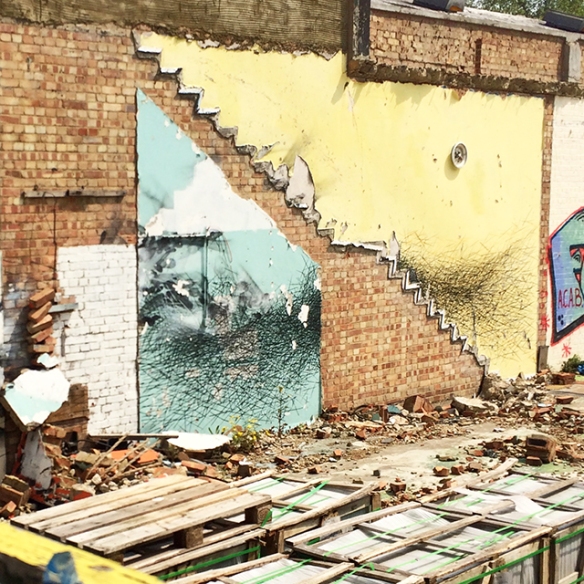
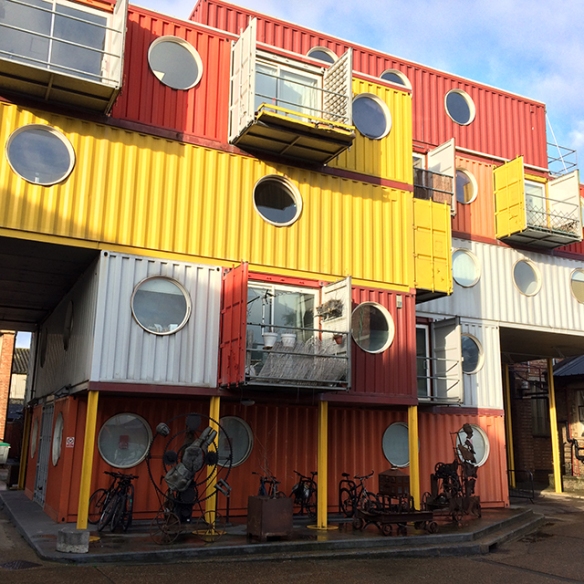
Trinity Buoy Wharf lies in the crook of land between The Thames and the River Lee. Because of the two converging rivers, this area feels fairly isolated from nearby Canary Wharf and the Millenium Dome across the water to the south. It accommodates an artist community, as evidenced by the strange and beautiful sculptures that are scattered around, but it also enjoys a strong connection to the surrounding waters. A lightship is moored at one end of an open yard whilst opposite stands an assembly of crisscrossing shipping crates, populated by creative types who can observe their environment through circular porthole windows. After a bacon roll in Fatboy Diner the time has come to make an arching detour round the loops of the River Lee and across the top right of London’s map into Hackney.

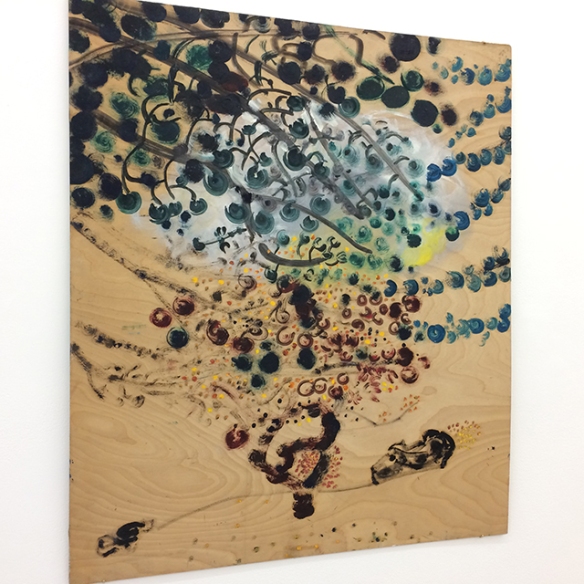
The Approach gallery has drawings and paintings by Bill Lynch, who as we understand from the press release led a free-living existence, taking on decorating jobs to make ends meet, all the while exploring the intricacies of fluid mark-making, prevalent in the tradition of Japanese landscape drawing and calligraphy. A tree appears in one of the artist’s paintings and it is opening up its foliage with the energy of small coiled springs, a state of affairs depicted with tight, circular brush marks amongst the living network of dark twigs and branches.

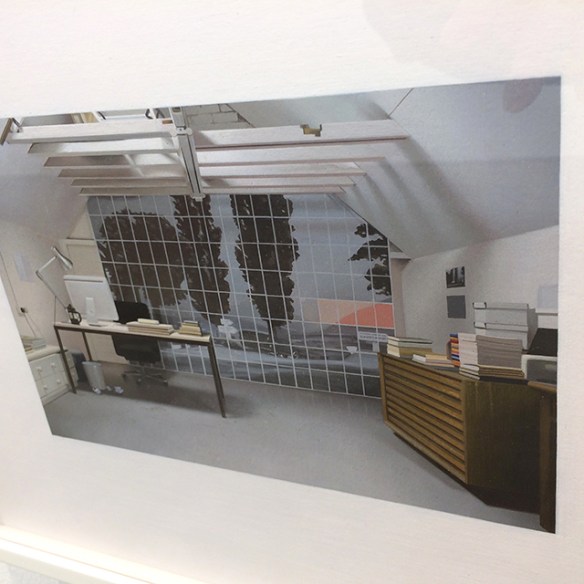
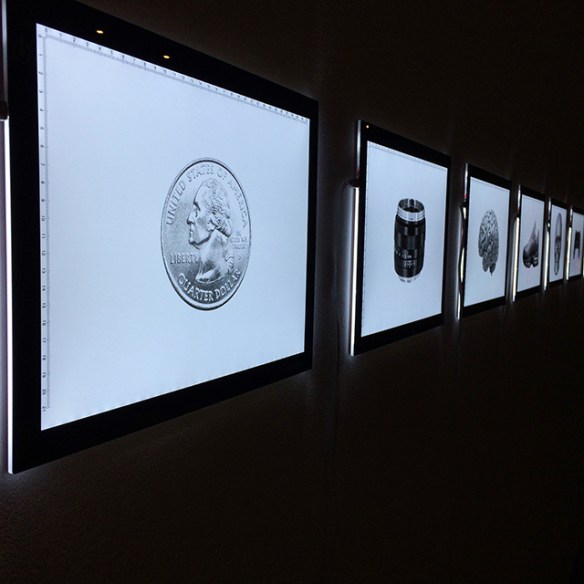
At Maureen Paley, a neighbouring gallery in this East London cluster, Andrew Grassie has made paintings that rival even Vermeer in their precision and use of colour. They are barely bigger than postcards yet carry a wealth of detail. The white beams of an open roof space recede towards a vanishing point, whilst objects associated with a functioning studio, since this is the chosen subject matter of the series of seven paintings, appear as if by magic with minute flecks of coloured paint, all the while being contained within a flawless, photographic-like surface. A few doors away in Herald Street Gallery, a dinner plate sits on a plinth. Oliver Payne seems more interested in the various distractions that might divert us away from art rather than the many objects catalogued in the previous show that are intended to make us think of art-making itself. Indeed, it is a testament to the left-field nature of the present show that none of its objects conform to the canon outlined in the previous show, neither the plate of cold chicken and pasta sitting on the plinth nor the array of eight I-pads that, despite all their powerful processing capacity, have been requisitioned purely for the purpose of displaying a single image, something of course, which could have been done with a piece of back-lit cellophane, were the artist not interested in turning his critical eye on digital technology itself.

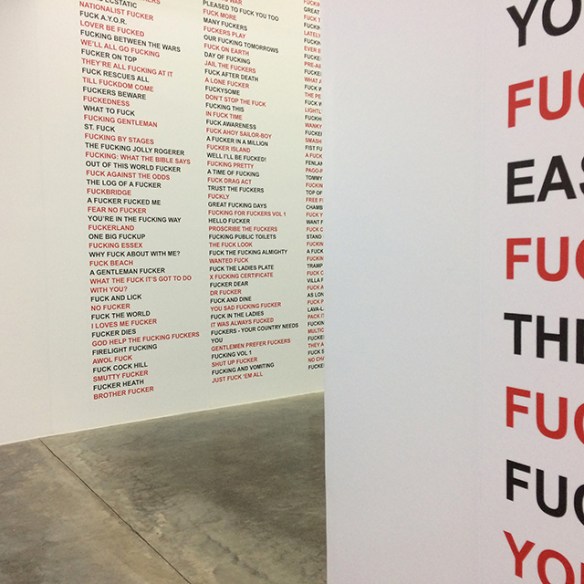
Finally, back south of the river, Gilbert and George have been having a giggle thinking up how the F-word can be inserted into short pithy slogans. As the eye scans across the alternate red and black fonts of F-word wallpaper a kind of rhythm emerges. The two artists switch between being the randy agents of various described acts outlined in block capitals on the one hand, to being puppeteers of the English language on the other. Familiar slogans become wilfully distorted as the artists introduce the necessary four letter insert. A game is being played, for which we know the rules, and which all the while is being powered by the free-flowing imaginations of G and G, revealing in the process a sort of inner portrait of the two artists.
941
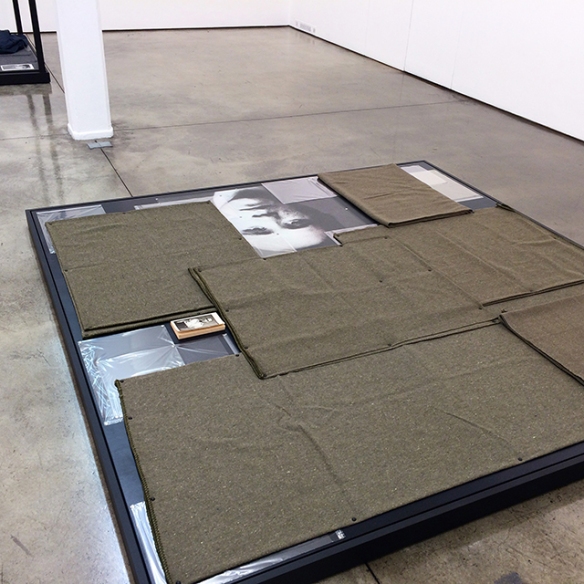
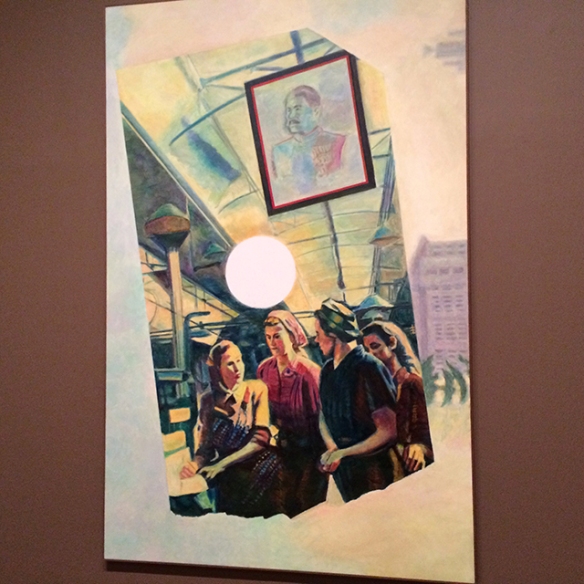
Ilya and Emilia Kabakov at Tate Modern with layered images.
942
Trinity Buoy Wharf.

943
Bill Lynch of The Approach Gallery with paintings on wood that appear to be inspired by the Japanese tradition of prints and calligraphy.
944
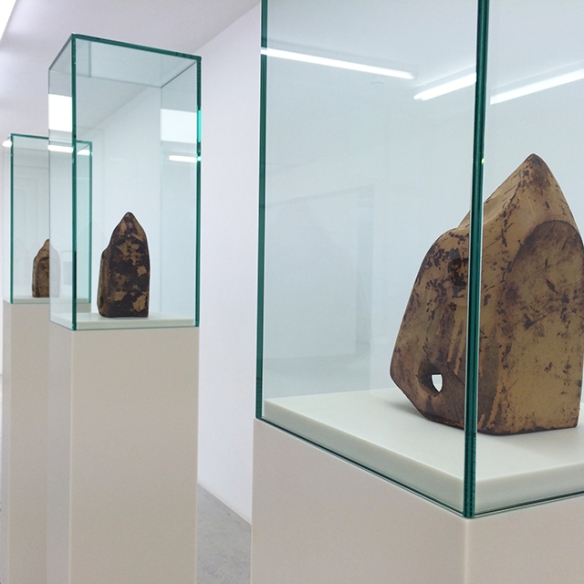
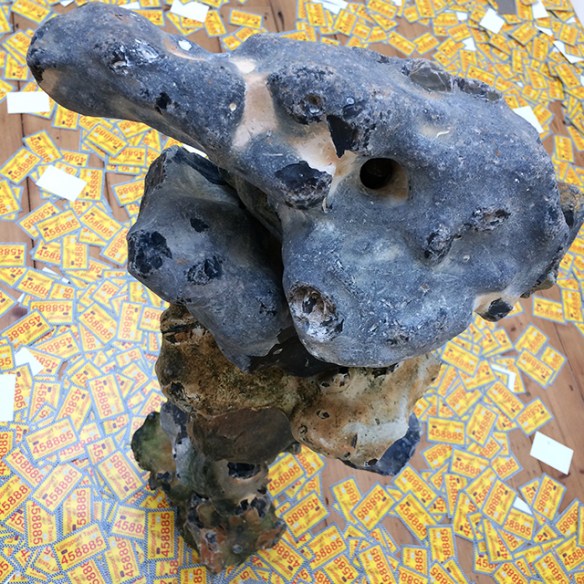
Jack Lavender of Approach Gallery with assembled rocks and taxi cards.
945
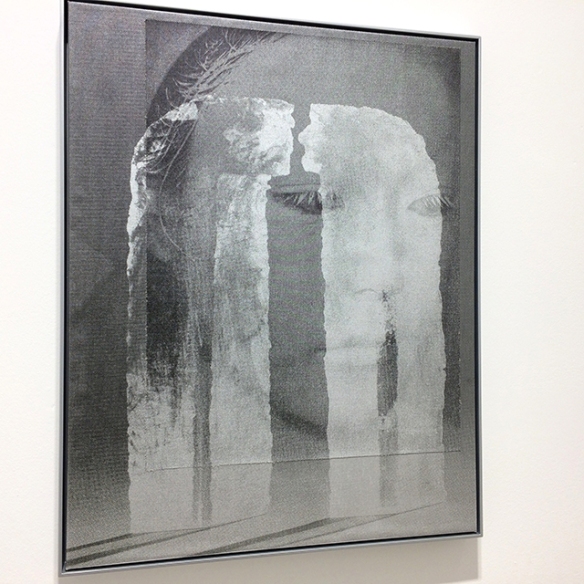
David Noonan of Stuart Shave Modern Art. The artist was there talking to friends about his work and it was great being able to eavesdrop!
946
Andrew Grassie of Maureen Paley with photorealistic paintings.
947
Oliver Payne of Herald Street with a new display format of wall-mounted iPads carrying a single image.
948
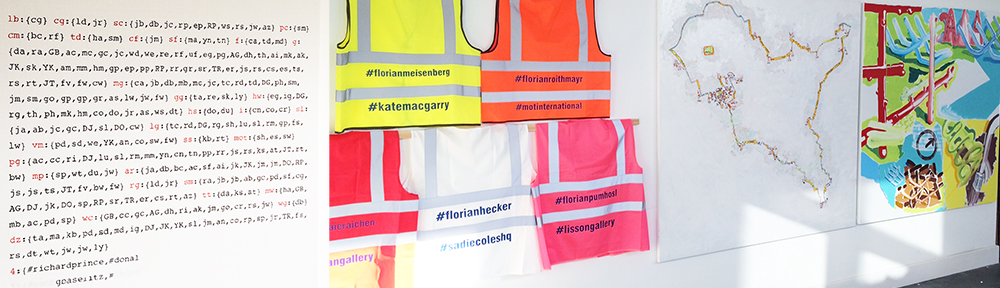
Florian Meisenberg of Kate MacGarry.

949
Gilbert and George at White Cube with rude words wall paper.
Gallery run 20th October

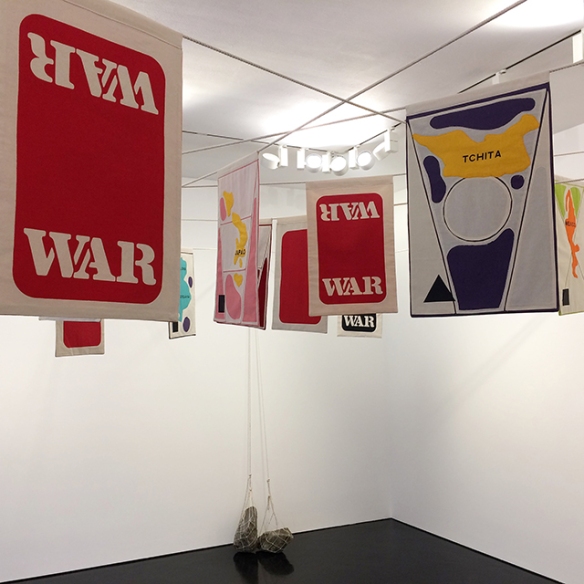
At Stephen Friedman Gallery Rivane Nauenschwander has produced an installation based on the Brazilian version of the board game known in the UK as risk. Flags represent the individual countries that the players would normally roll dice for in their pursuit of world domination. Long all-nighters with friends playing this game have imbued this artwork with a particular aura for me. Round the corner in Grafton Street Sprueth Magers have been doing a refit to their gallery. It looks very slick and the formerly creaking floorboards have now been lovingly preserved and firmly secured. Gary Hume has experimented with gloss paint on paper and the effect is very interesting. The painted surface takes on a mottled form due to the paper support yielding in some way to the gloss, yet it still looks as though it has the solidity of a worked and beaten metal support.

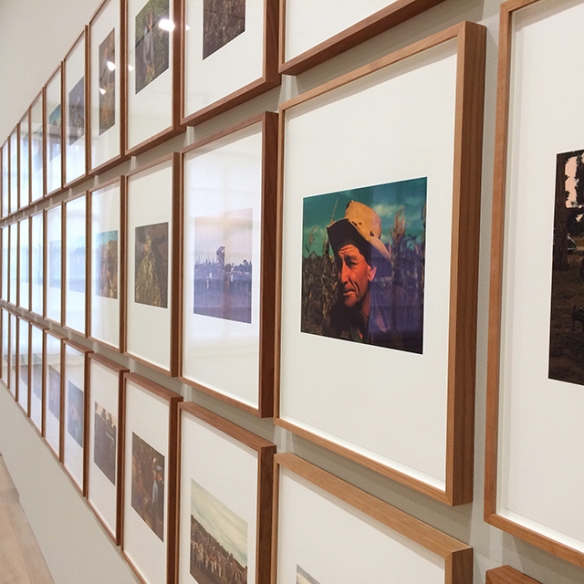
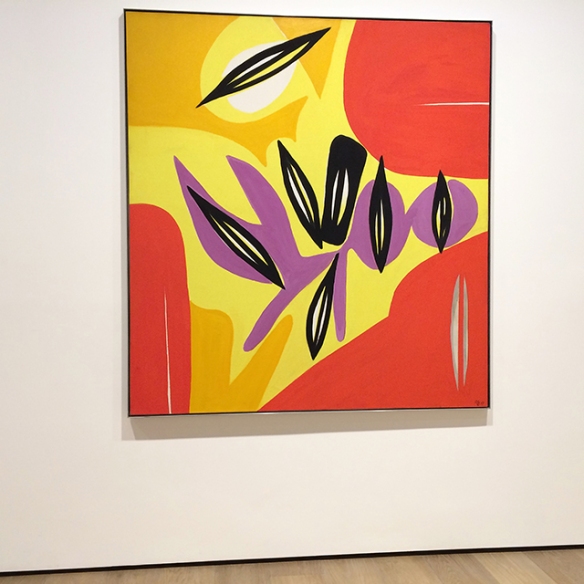
Further down Grafton Street at David Zwirner, Sherrie Levine is displaying work made by re-photographing some iconic images made in a 1940 project to document rural American life during The Great Depression. The display itself is striking with about 50 images hung in a perfect grid on the gallery wall. After visiting this hub of three closely placed galleries the next stop is Grosvenor Hill where Almine Rech and Gagosian have created a new hub comprising two expansive white spaces. The former gallery is showing Ernst Wilhelm Nay. The abstract paintings are reminiscent of seeds and foliage yet they are not restricted to this interpretation. This ambiguity lends them an additional magic which also complements their perfect balance of colour.

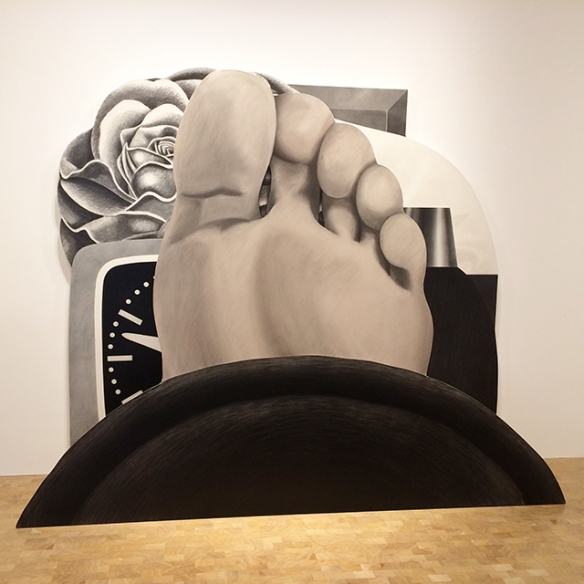
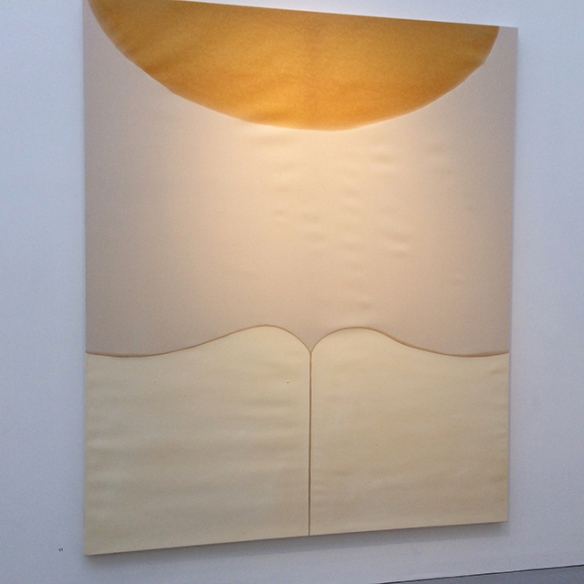
The word is out that Almine Rech and Gagosian have teamed up with the estate of Tom Wesselmann. Both galleries have produced identical press releases describing the artist’s shaped canvases that predominate in his series of bedroom paintings. Various bedside objects such as clocks and designer lamps interweave the limbs, feet and hands that the artist has sketched and then blown up into full size paintings. In the Gagosian on Davies Street a subtle black and white maquette of two painted boards placed in front of one another simulate the two ends of a bed. A large pair of elegant feet obscure the rest of a body whilst the lamp peers out from further behind. This completes the Mayfair region for today and now it is time to embark on the old favourite route along the Regent’s canal whereupon one arrives at the gas storage frameworks that offer a familiar landmark for Hackney.

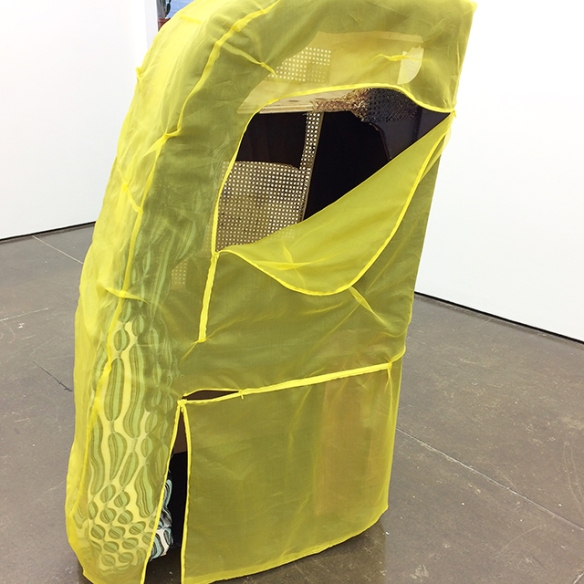
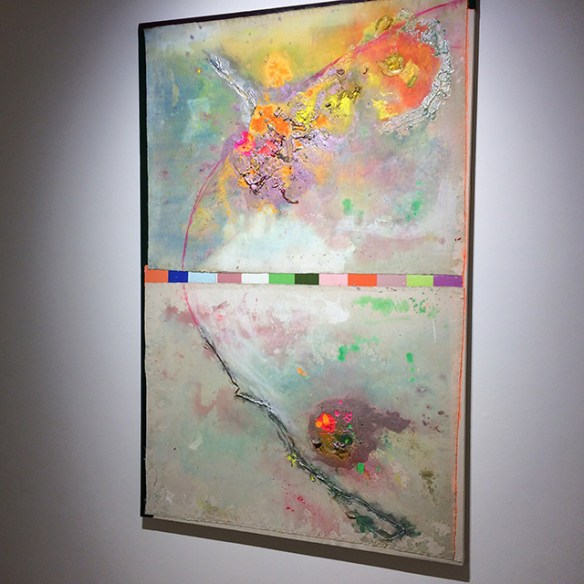
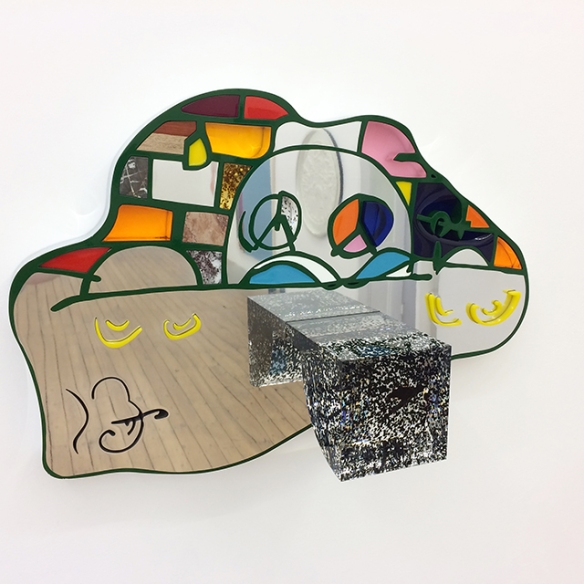
Two of the new galleries exhibiting at Frieze this year are Campoli Presti and Hales gallery, whilst a new artist has been taken on at Herald Street, called Jessi Reaves. These additions offer the chance to see three new artists in this region of the city which is really the birthing place for new talent and with its exceptionally high rate of Turner Prize nominations is also sustainable in its own right with no need to interact with or be fostered by the Mayfair galleries to the west. Jessi Reaves is an American artist and hence of international importance, who makes sculptures from old furniture. The assistant in the gallery invites me to sit down on the rebuilt comfy chairs and this highlights the critical space that the work operates in, being utilitarian in some respects but stripped of any designer chic. Concluding this exploration after a quick stop at Beigal Bake is a visit to Hales gallery. Since its early days on Deptford High Street as a well respected gallery cafe, it has now become important internationally. Frank Bowling is one of seventeen artists on their books and he is showing colourful abstract paintings incorporating small objects offered up by friends, as well as cutting and sewing, which all contribute to a complex and interesting surface.

861
Rivane Neuenschwander of Stephen Friedman Gallery with an installation based on the board game risk. Each flag represents a risk territory. On the back is written “war”. This would be “risk” in the Uk version.

862
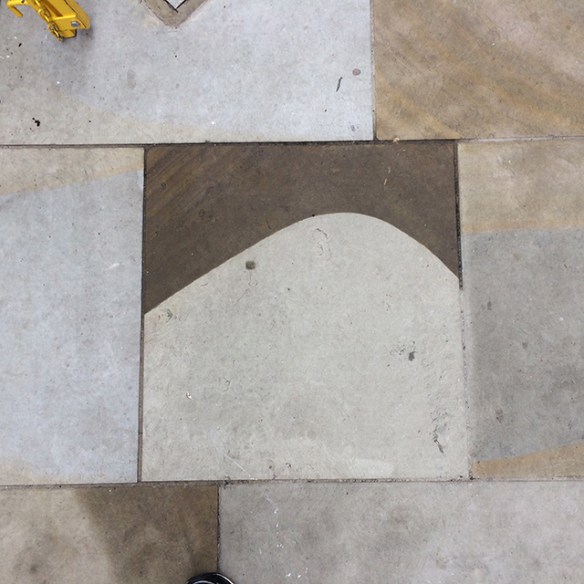
This paving slab on Grafton Street appears to be made up of two parts?

863
The gallery is open again! Gary Hume of Sprueth Magers uses his trademark gloss to produce a mottled finish on paper in his new works.

864
Sherrie Levine has rephotographed and appropriated American Depression photos of farmers by Russell Lee. What was once an attempt to boost morale when they were made in 1940 has now become historical document. Shown at David Zwirner gallery.

865
Ernst Wilhelm Nay at Almine Rech Gallery. Beautiful images with natural motifs but in bright colours.

866
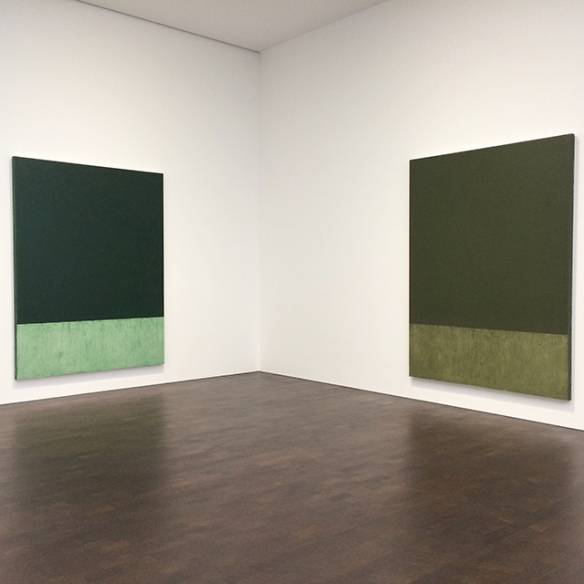
Brice Marden of Gagosian using terre verte, green earth pigment, from several well known paint suppliers, has produced 9 canvases of varying greenness.

867
Tom Wesselmann at Gagosian with Bedroom Paintings.

868
Jessi Reaves of Herald Street with sculpted furniture, cut up and reassembled.

869
Frank Bowling of Hales Gallery with abstract compositions on stitched canvases.

Frieze week 5th October

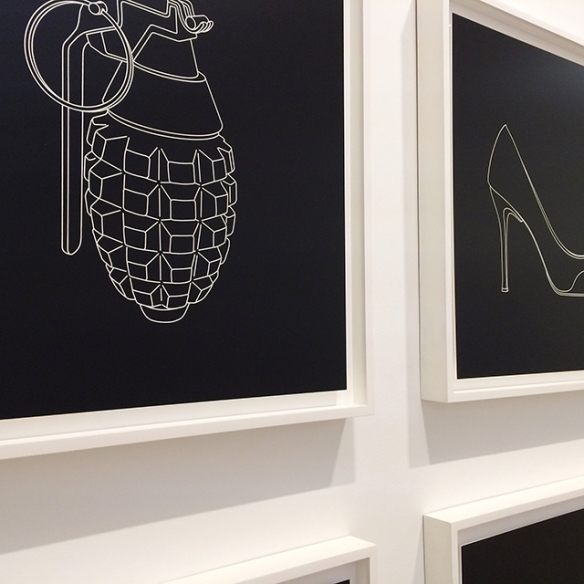
It is Frieze week and the galleries are all together under the Regent’s Park awning. Consequently there is little opportunity for a run. However, earlier this week I am given the opportunity to run up to Alan Cristea Gallery and review the new Michael Craig Martin exhibition of prints. Prints are the speciality of this gallery. To one side of the gallery, the newest work uses an altogether new method of duplication using a laser cutting process to remove a thin black surface and reveal portions of the white under-layer. The bonus of this process is the durability of the surface and these works look striking without even needing a sheet of protecting glass.
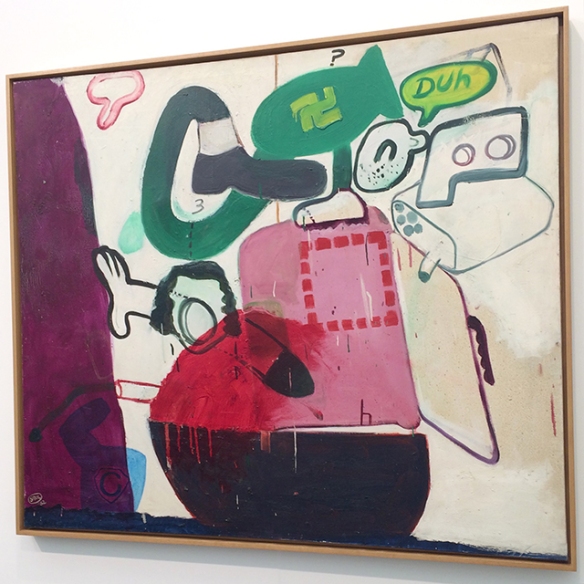
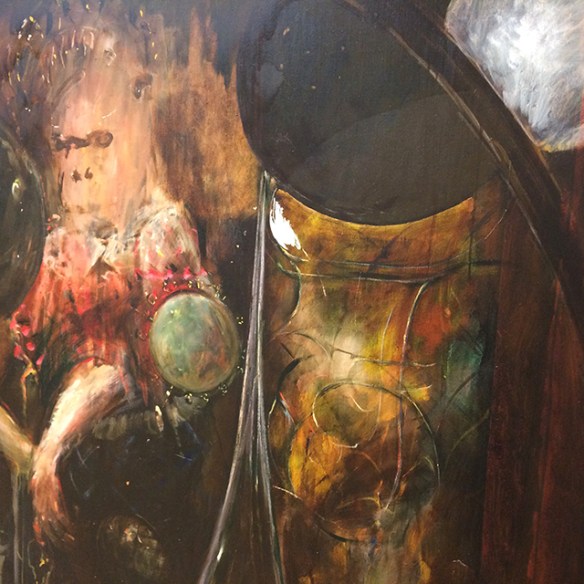
Two days later it is my chance to visit Frieze. The stand out works include some great ones by Ivan Seal, Mary Reid Kelley, Djordje Ozbolt, Patricia Treib, Sheila Hicks and Daniel Richter. A recent addition to Michael Werner Gallery called Peter Saul catches my eye in particular. It seems popular too on the Instagram feed with the most likes and as I look at the image it leaves this intense desire to produce a work of my own in a similar style. This of course will never happen. The work is great though, being a sort of dismantled figure with recognisable foot and hand emerging from some central tank-like container.
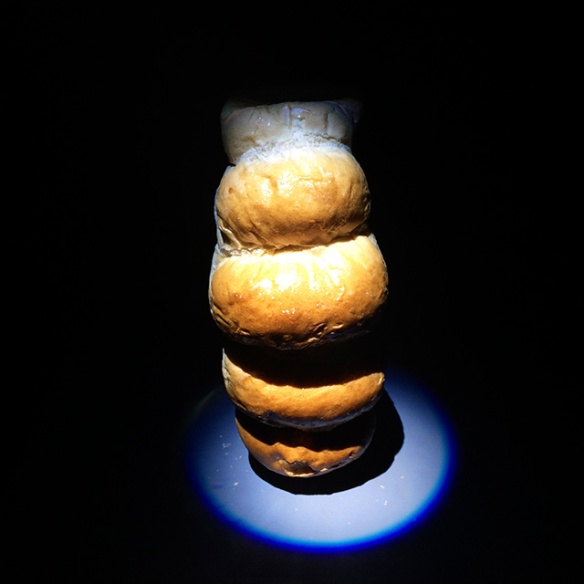
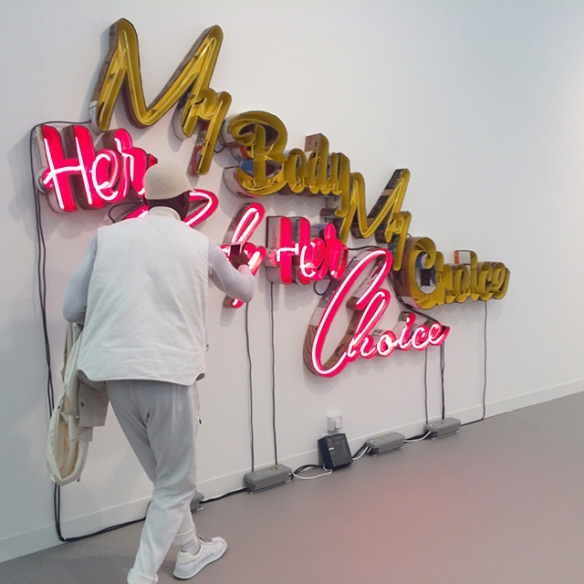
Lastly, a neon piece by Andrea Bowers is flashing away at Andrew Kreps Gallery, and since this is Frieze week, New York lies only a few seconds from London. The concourse between the neighbouring cubicles replaces the expanse of the Atlantic Ocean. A cardboard cowling surrounds the neon letters and frames their pithy slogan, but also lends to their slick form an impromptu feeling, due in part to bits of random image left on the cardboard surface. This is almost the end of Frieze experience for me, but the same evening there is a bonus of seeing a talk by the Slade professor Andrew Stahl. A mutual friend has invited us to a rather exotic venue in Mayfair, home of the Woman’s University Club, and the evening assumes a slower and more relaxed rhythm.

841
Michael Craig Martin at Alan Cristea Gallery with laser cut plastic as a medium for his new drawings.

842
Sheila Hicks of Alison Jacques Gallery at Frieze 2017.

843
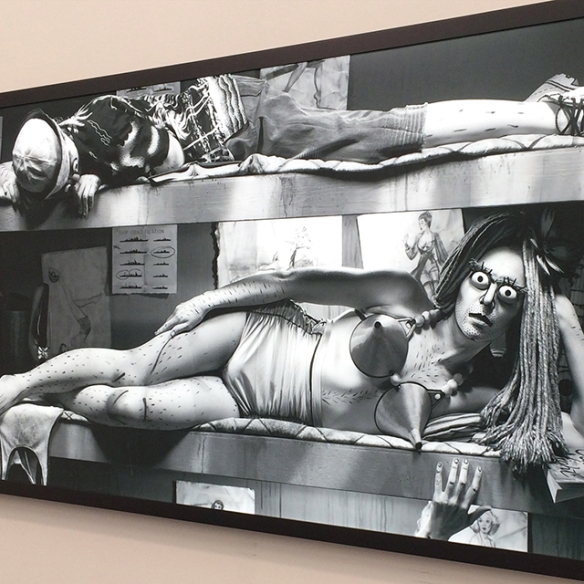
Mary Reid Kelley of Pilar Corrias at Frieze 2017. Images and props from a recent film are artworks in themselves.

844
Ivan Seal of Carl Freedman Gallery at Frieze 2017.

845
Djordje Ozbolt with Herald Street at Frieze 2017.

846
Patricia Treib of Kate Macgarry at Frieze 2017.

847
Peter Saul of Michael Werner at Frieze 2017.

848
Daniel Richter with Galerie Thaddaeus Ropac at Frieze 2017.

849
Andrea Bowers at Andrew Kreps Gallery.

Gallery run 14th July

The annual Goldsmiths MA show is the first stop on today’s run. Spread across the old swimming baths and the stunning Ben Pimlott building with views across London, the show has a variety of interesting architectural back drops. These are matched in no small part by a great painting from Daniel Arcand displayed on the top floor of the Ben Pimlott building. The artwork has a Manga-like quality to it with excellent mark-making and a great economy of design.

From here, the quickest route to Victoria Park is through the Greenwich foot tunnel and then north along the Regent’s canal. The Approach Gallery is showing a retrospective of its artists as well as previous exhibitions spanning twenty years. Works by Rezi Van Lankveld and Gary Webb stand out in the group show, whilst in a side room there is a film of speeded-up highlights from the previous shows here from which I recognise in their younger years some of my former Goldsmiths colleagues.

Then after a stop at Wilkinson Gallery with some evocative work by the late Derek Jarman, Herald Street plays host to the next three shows. At Maureen Paley there are abstract sculptures depicting cubic volumes of mainly empty space, adorned with a few intriguing objects including books and carpet tiles. Tom Burr is a thought provoking artist and writer who is new to this gallery having transferred from Stuart Shave Modern Art. A few doors down at Laura Bartlett, a group show has lovely small pieces by Koak who depicts female figures in slightly unusual ways. The images seem to fulfil their remit of challenging the viewer’s gaze by showing the figures engaging only with each other and without any additional acknowledgement of the viewer.

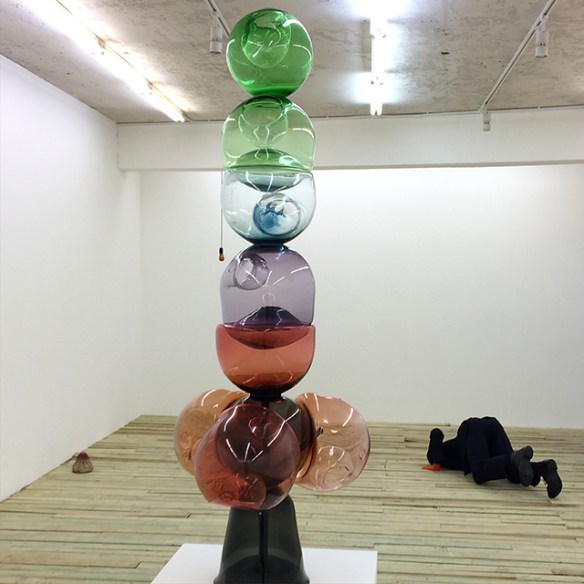
At Herald Street Gallery there is a great installation by Klaus Weber. The gallery assistant warns me of the hazards of a temporary rickety floor and protruding cactuses. The planks spring up slightly across the joists, whilst the cactuses penetrate these planks through round holes. Meanwhile a policeman-figure is kneeling down, with head below floor level accessed through yet another circular hole. There is also a stack of coloured glass spheres raised up on a plinth that, we are told, represent a type of humanoid figure. This perhaps needs more explanation and comes from a story told in Plato’s symposium. Essentially these figures were described by the Greek philosopher as mythological beings that Zeus callously cut into two halves, bisecting them from top to bottom. As these half-beings entered into ancient history they then matched up to the anthropomorphic form we currently reside in. The truth of this myth seems to lie in its ability to articulate our constant psychological need to find our other missing halves.

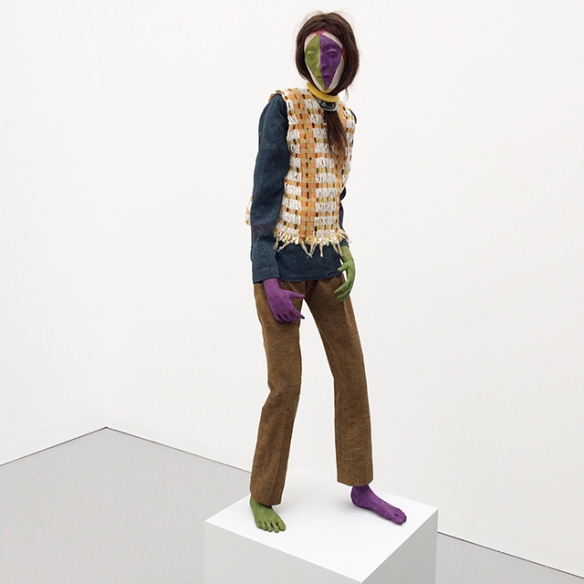
After a quick lunch at Bagel bake, which seems to have had a cash injection as there is now a new air conditioning system and workmen replacing tiles, I stroll down to Kate MacGarry Gallery finishing off a last few bits of apple strudel. Inside there are works by four artists including Francis Uprichard. She has presented two gothic figures that resemble harlequins. They are smaller than life size, but have a powerful presence due partly to their positioning on plinths but also because of their excellently rendered faces imparting, not for the first time today, a challenge to the gaze of the viewer. With that now recorded and the Hackney galleries fully explored, there just remains a return back South to complete this week’s run.

731
Daniel Arcand at Goldsmiths MA Degree Show with a great fluent painting with drawn outlines.

732
Rezi Van Lankveld of The Approach with a lovely loosely rendered painting.

733
Gary Webb of The Approach with a colourful resin-based wall sculpture.

734
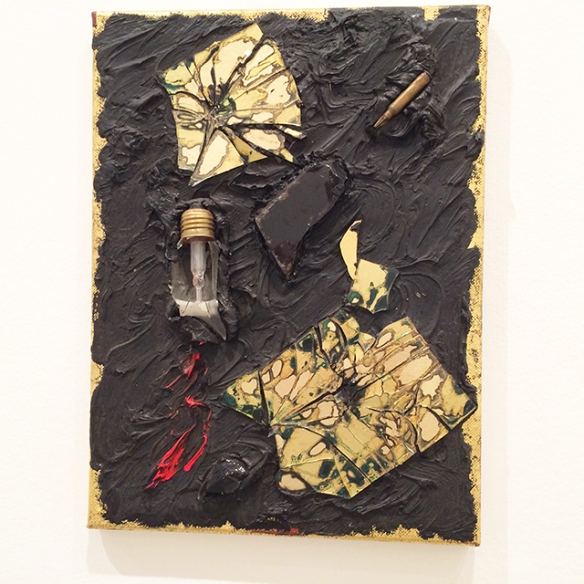
Derek Jarman of Wilkinson Gallery with a series of black paintings incorporating objects.

735
Gretchen Bender at Wilkinson Gallery with works that explore how images are propagated through our media.

736
Tom Burr of Maureen Paley.

737
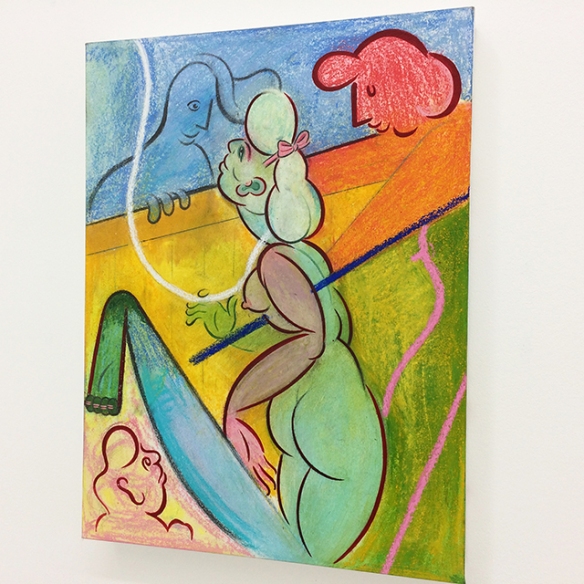
Koak at Laura Bartlett Gallery with figurative paintings that have a strong drawing quality to them.

738
Klaus Weber of Herald Street with sculptures that depict a mythical human form made from globes that Plato had written about.

739
Francis Upritchard of Kate Macgarry Gallery with gothic figures.

Gallery run 19th May

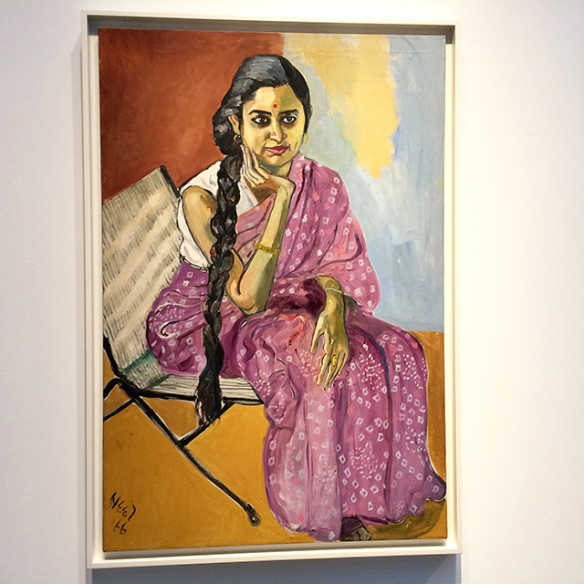
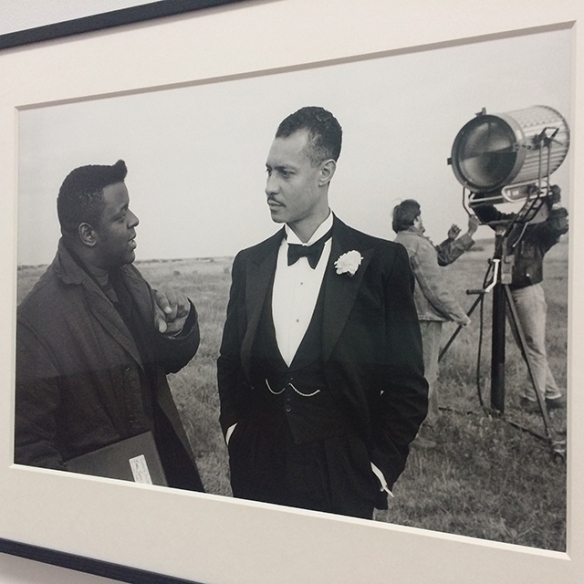
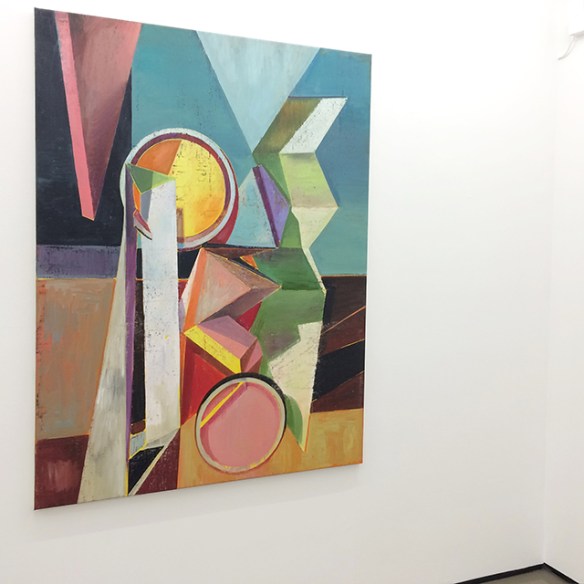
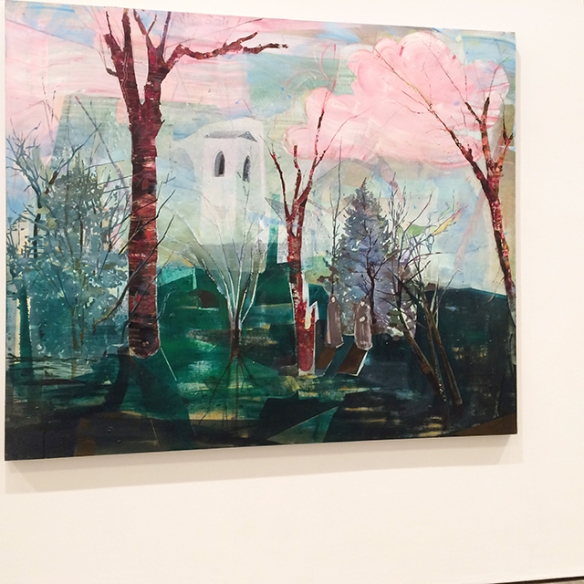
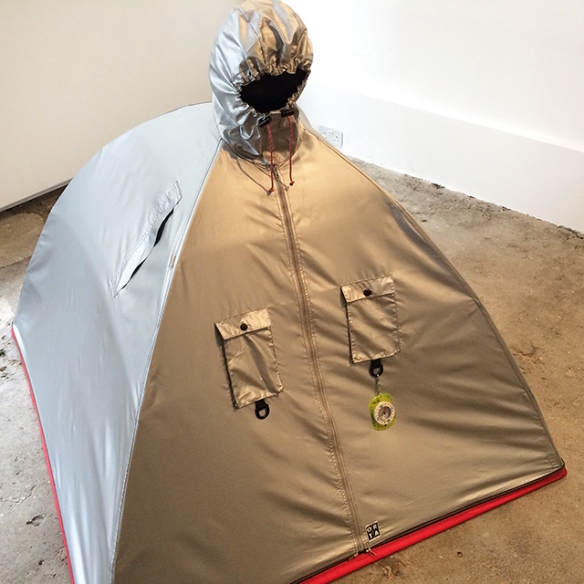
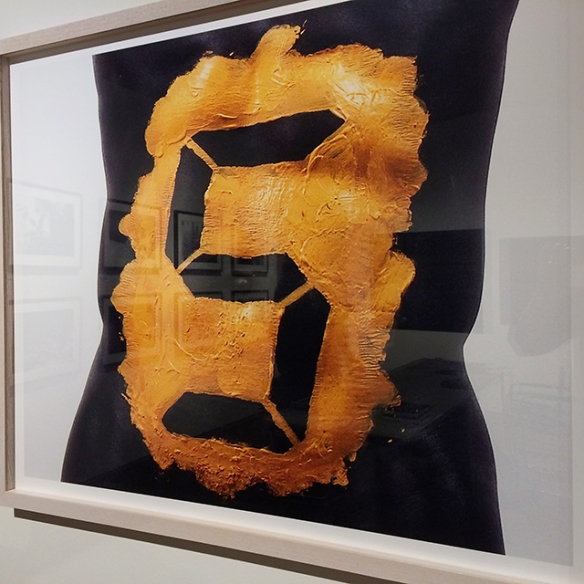
Today I would be zigzagging along the Regent’s Canal, catching the early openers such as Victoria Miro Gallery before doubling back to visit the later opening Hackney galleries. Soon the hump of the canal appears on Dalston High Street just behind a mosque. The run to Victoria Miro requires an exit at Wharf Road, about 5 or 6 bridges along. I am greeted warmly by a tall chap near the door. Alice Neel’s paintings are of friends and neighbours in Spanish Harlem, where she settled with her husband. The women all have strikingly graceful hands. Upstairs Isaac Julien displays atmospheric stills from a film. From here the route to Beers, the next gallery on the run, takes me across a main road coming down from Islington. Strong, colourful, geometric forms based on architecture fill the gallery. The shapes cast artificial shadows upon themselves whilst the surfaces are pleasingly distressed as though to upset the geometric perfection and allow the eye to feast upon the rich colours. Then a return up Wharf Road and onto the canal makes for quick progress to Wilkinson Gallery near Victoria Park. The current show comprises beautiful, intricate paintings of trees and landscapes by Elizabeth Magill. Branches divide the landscapes into gridded mosaics and in a few places where it suits the composition, the artist has not been afraid to overpaint the branches with background pushing their knotted forms deeper into the composition. There would be two more gallery stops nearby on Herald Street. First I see a powerful sound-based installation by Lawrence Abu Hamdan. Mobile phone footage flashes up on monitors accompanied by shouts and shrieks. But when the sound quietens the monitors appear to switch off. These intermittent images on about 10 different screens powerfully depict an incursion by a crowd across a barbed-wire frontier into Israel. Meanwhile in Herald Street Christina Mackie has displayed beautifully coloured objects in a way that highlights their surfaces and basic forms. Any sense of what the objects may have been used for in the past is lost in the form of the artwork. I jog back to Brick Land through a lovely park and church yard and then weave through a small warren of walkways. Then on towards The City. Raven Row near Shoreditch is an old Huguenot house and the curator and co-director of the gallery has brought together female artists who have added an edgy twist to domestic objects. Lucy Orta has made fantastic live-in objects including a tent with attached hoodie which peers out of the top like a strange periscope. Finally I return west along the River Thames and arrive at Photo-London in Somerset House. Tatsuo Miyagima, an artist I am familiar with from Lisson Gallery, has photographed a fantastic digitalised number 5 created with orange paint on the toned stomach of an athlete.

662
Alice Neel at Victoria Miro with portraits of her neighbours in Spanish Harlem New York, though she would later move to Upper West Side.

666
Isaac Julien of Victoria Miro with stills from his film Looking For Langston.

667
Genti Korini at Beers London with paintings inspired by fantastical architecture.

663
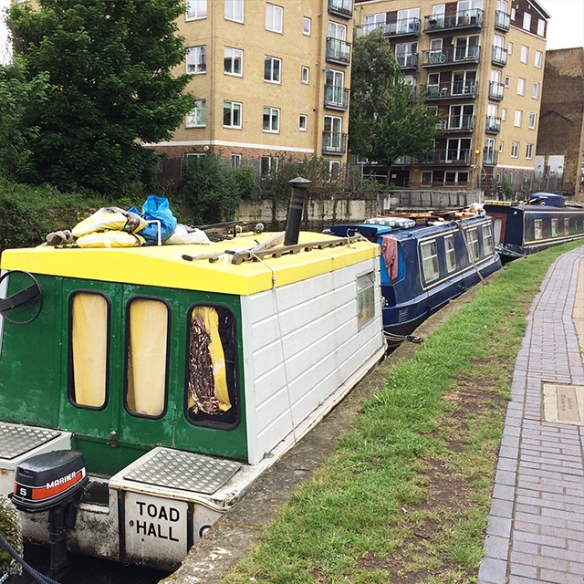
On the Regents Canal today.

661
Elizabeth Magill of Wilkinson Gallery with paintings of landscapes comprising tree branches in the foreground. Excellent rendering of the broken planes of colour between the branches.

665
Christina Mackie of Herald Street with an installation of colourful objects in unusual arrangements.

668
Lucy Orta at Raven Row.

669
Tatsuo Miyajima at Photo London.

664
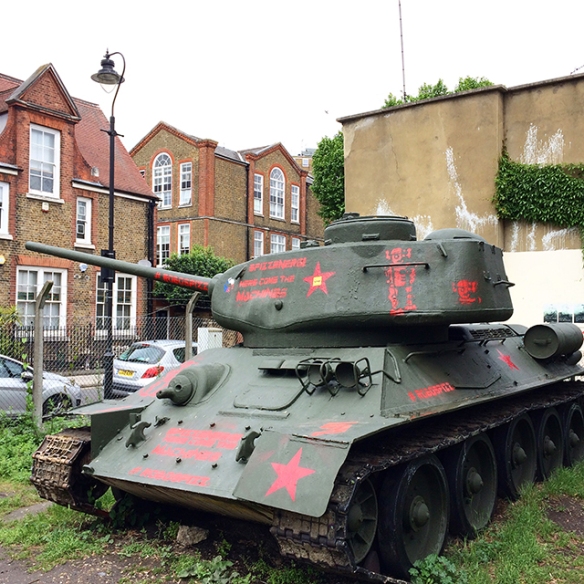
A tank parked up off the Old Kent Road near Peckham.

Gallery run 10th March

Regent’s Canal to Hackney.

571
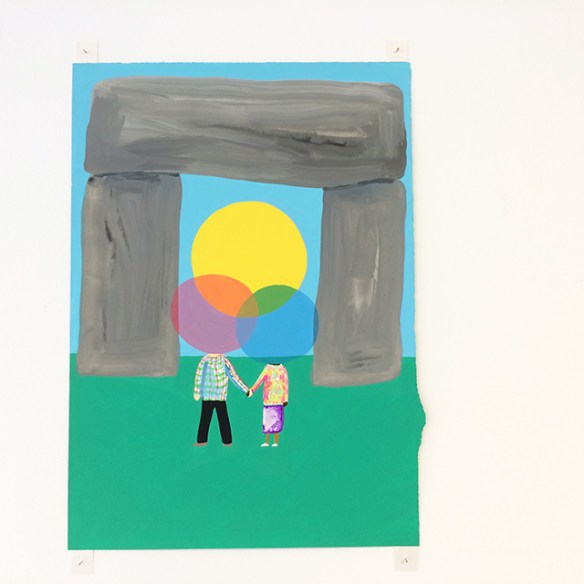
Peter McDonald of Kate MacGarry with figures revealing an inner life through brightly coloured Venn-diagram-like head spaces.

572
Laure Prouvost at Serpentine Galleries with an atmospheric installation using sound and dimly lit objects.

573
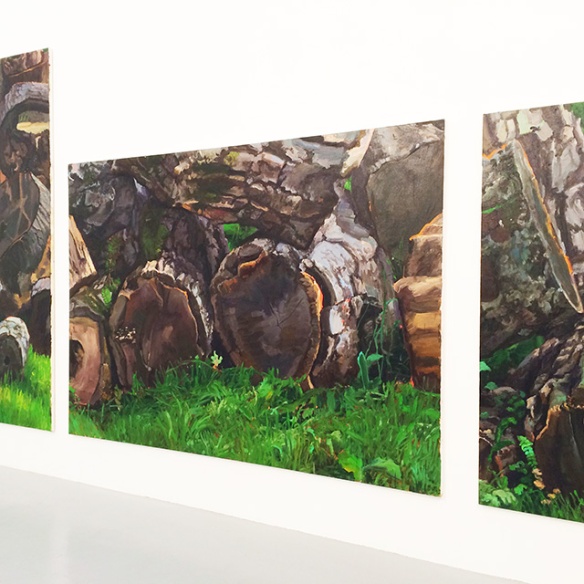
Simon Ling of Greengrassi with piled logs and characteristic orange under and occasional over-painting.

574
Dee Ferris at Corvi Mora with natural forms in abstract compositions.

575
Gerard Hemsworth at Raven Row in a group show recreating their 70’s show at Exhibition House. Excellent tutor at Goldsmiths and this early text work reminds me of many of his pearls of wisdom delivered in tutorials.

576
John Latham at Serpentine Galleries in a retrospective.

577
Matt Paweski at Herald Street with aluminium constructions incorporating swirly motifs.

578
Maja Ruznic at Beers London.

579
Susan Hiller at Raven Row. Group show celebrating the 70’s exhibition space Gallery House with the original participating artists.

Gallery run 26th January

West to East.

519
Augustus Thompson at Almine Rech Gallery with evocative paintings made on aluminium honeycomb.

518
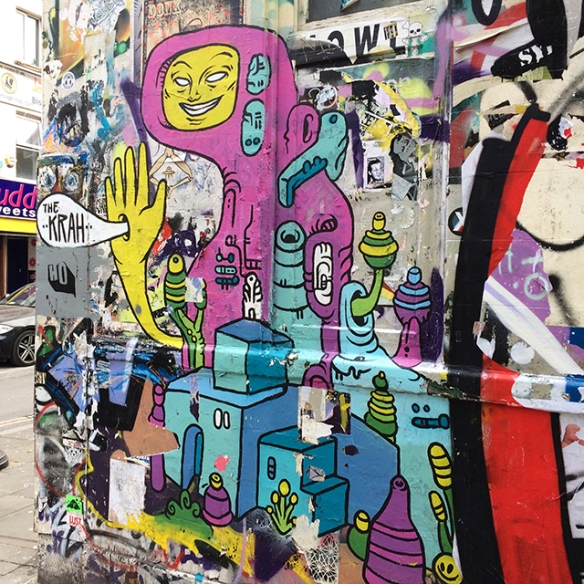
Street art on Brick Lane.

517
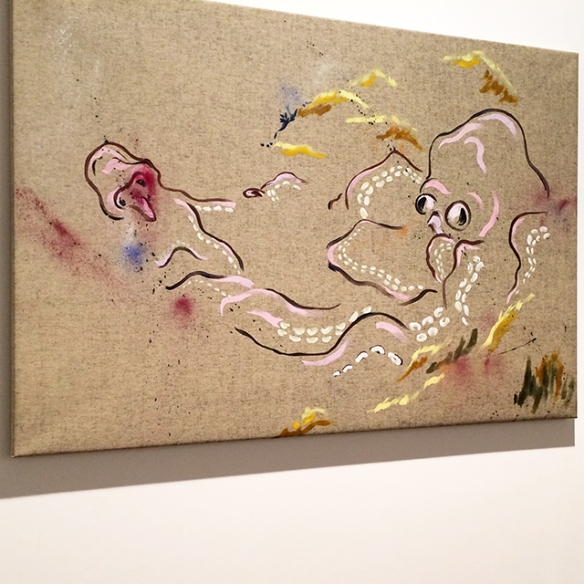
Anna Zacharoff of Vilma Gold with sea life imagery.

516
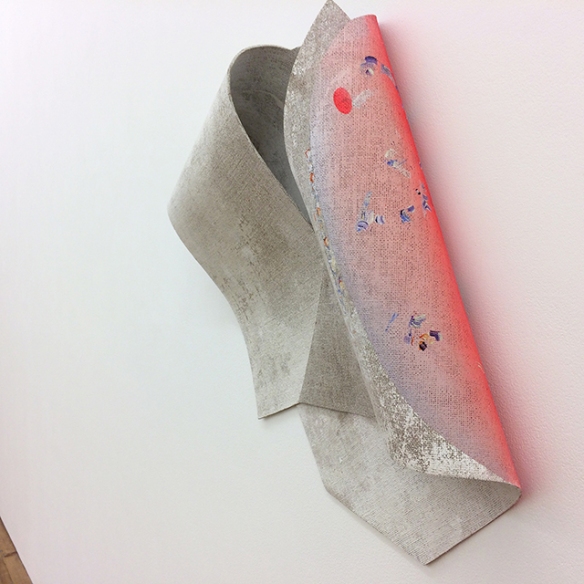
Sophie Bueno Boutellier of The Approach with delicate paintings on folded canvas.

515
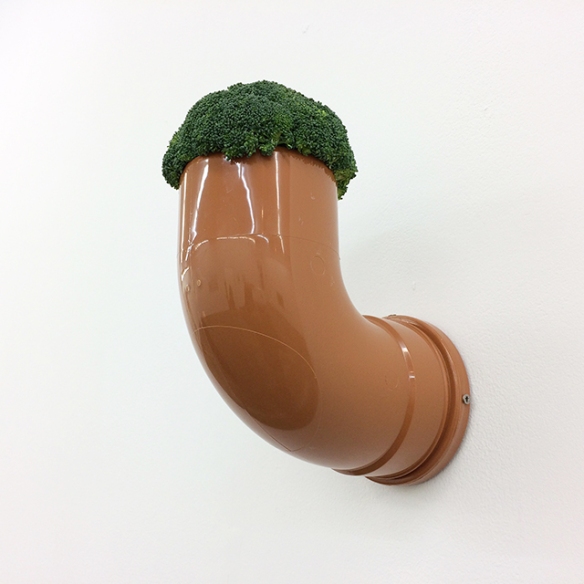
Amalia Pica of Herald Street with a sculpture using a drainpipe and broccoli.

514
Peter Liversidge at Kate Macgarry with objects with faces on.

513
Park Seo Bo of White Cube with paintings made of fine mulberry pulp paper that have been shaped and scored with a stick.

512
Takashi Murukami at auction in Christies.

511
Wilhelm Sasnal at auction in Christies.

Gallery run 25th November

Regent’s Canal to Hackney and Old St.

431
Patricia Treib at Kate MacGarry with delicate paintings using repeated motifs.

432
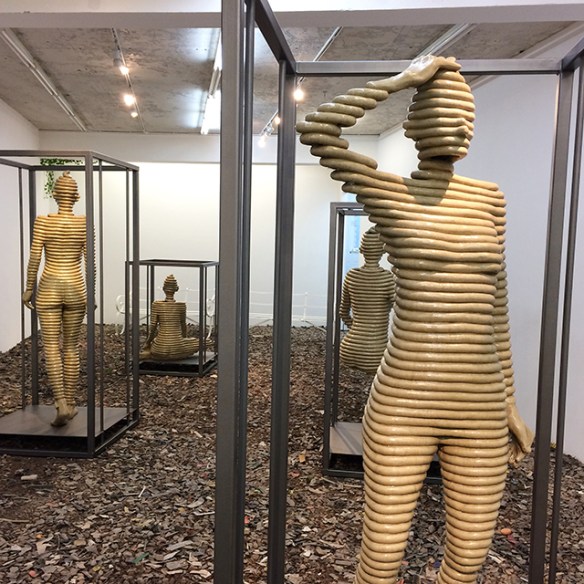
Matthew Darbyshire at Herald Street with images of his partner and muse made from extruded clay tubing bent to the contours of the figure.

433
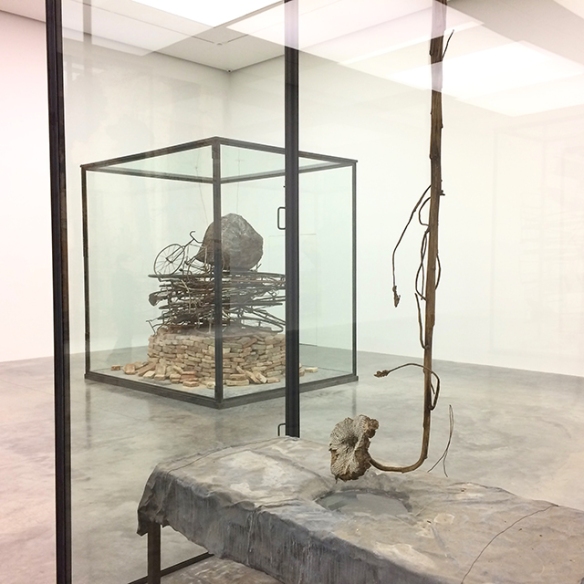
Anselm Kiefer at White Cube with vitrines and sculptures using lead sheet and the iconic sunflower.

434
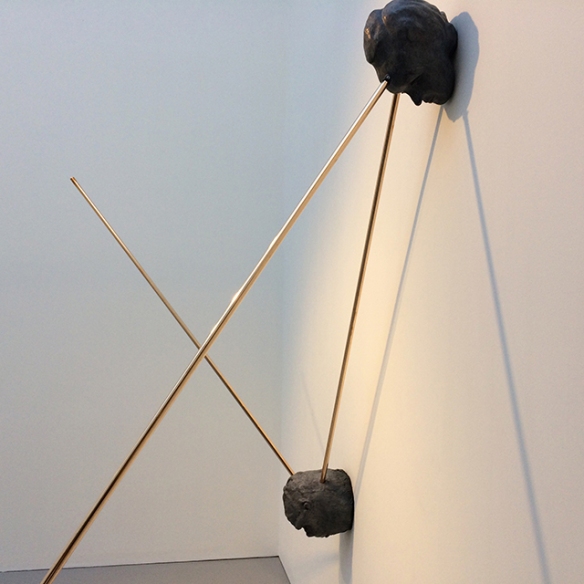
Goshka Macuga at Kate MacGarry. The pipes symbolise exchanges of ideas.

435
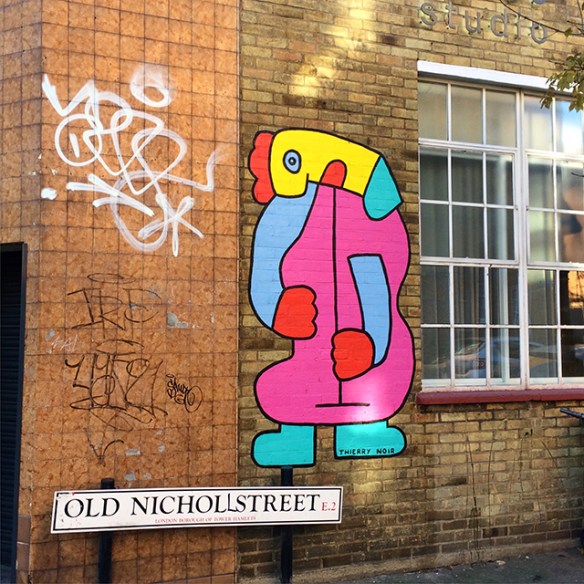
Thierry Noir

436
Alex Hartley at Victoria Miro.

437
Bojan Sarcevic at Stuart Shave Modern Art.

438
Fergal Stapleton at Carl Freedman Gallery with lit objects against dark backgrounds.

439
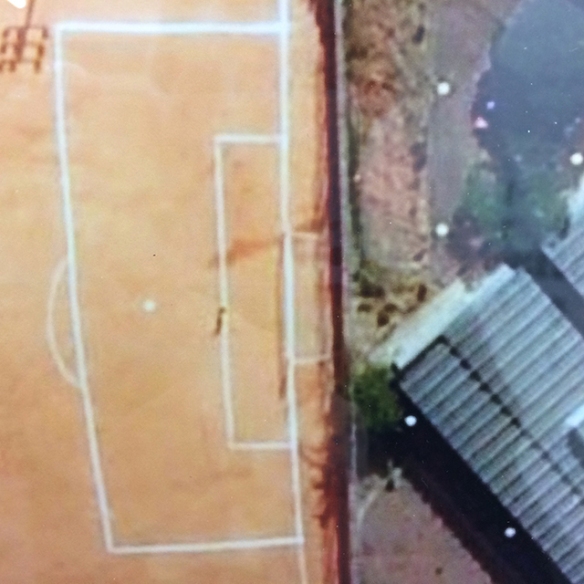
Joachim Schmid at Hollybush Gardens showing a series of Brazilian football pitches with irregular dimensions due to encroaching roads and houses. Aerial photograph.

Gallery run 29th June

Lambeth Bridge, Tate Britain, then west to RCA show 2016. North over Battersea bridge, Hyde Park and into the Serpentine Pavilion. Pizza in Goodge Street. East to Angel and along the Regent’s canal then south to Bloomberg Space. North to Carl Friedman then onto Herald Street. Finally to opening at Vilma Gold and then back south.
261
Jim Isermann of Corvi Mora at Bloomberg Space. Vinyl wall patterns and interacting objects.

262
Paula Linke Sunrise at Royal College of Art show 2016. Great placement by the sinks creates doubt!

263
Brian Griffiths at Vilma Gold. Checkered motif and cut up billboards gives a new take to previous tarpaulin works.

264
Wolfgang Tillmans at Maureen Paley.

265
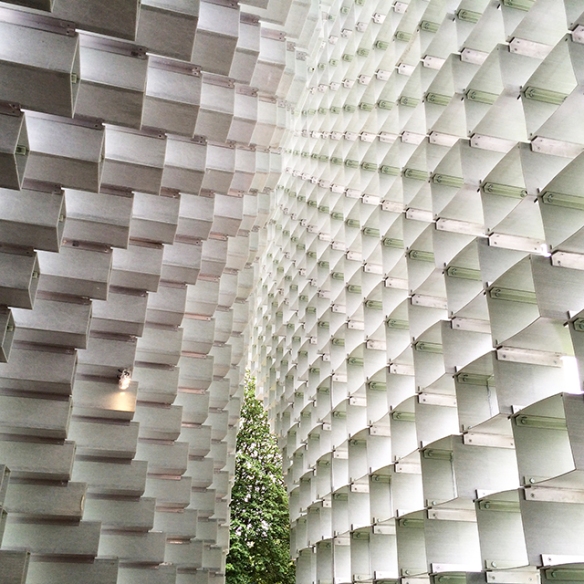
Serpentine Pavilion.

266
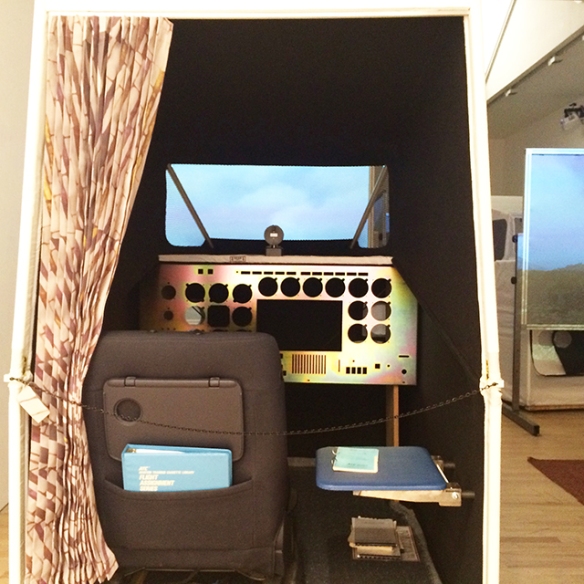
Michael Stevenson at Carl Freedman. Flight simulator machine replicas take us on flight journeys and weave in a cultural narrative.

267
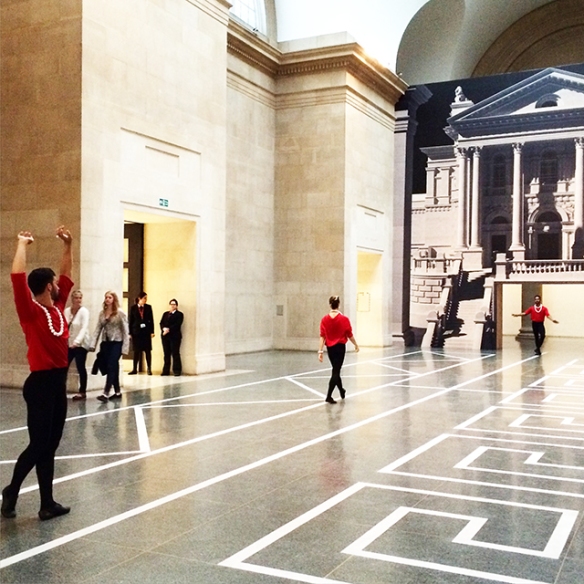
Pablo Bronstein of Herald Street at Tate Britain. Dancers perform against a classical setting of theatre backdrop and neoclassical colonnades.

268
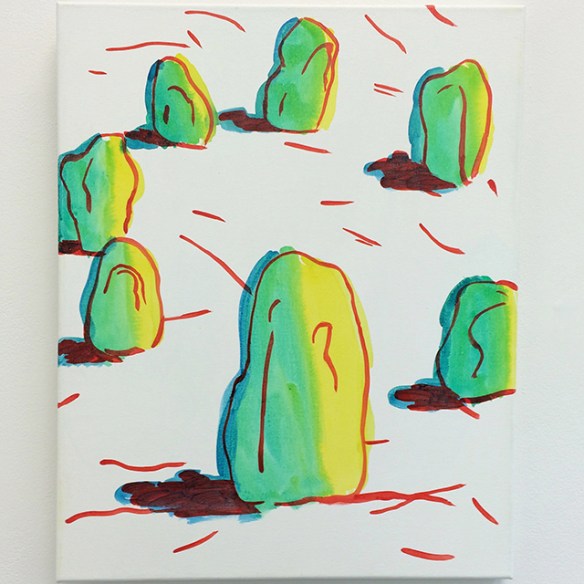
David Schroeter The Seven Stones at Royal College of Art show 2016.

269
Nick Relf at Herald Street.

Gallery run 12th May

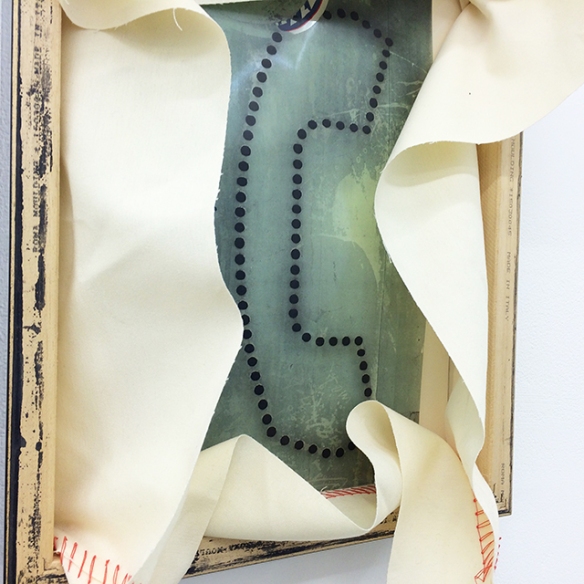
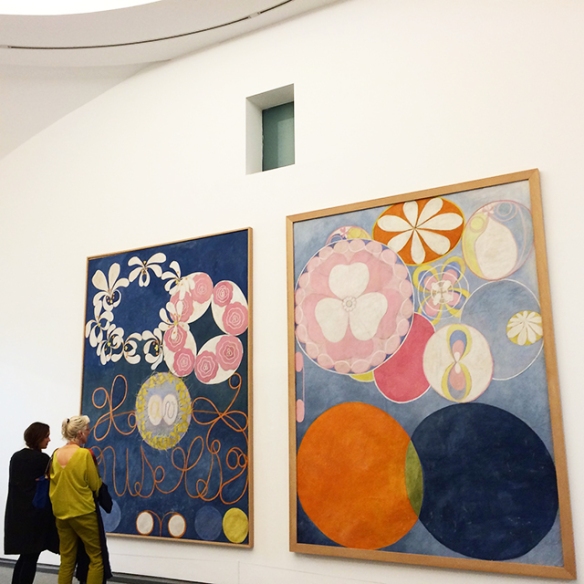
Recontextualised artefacts and modified objects from contemporary artists and spiritualism from Hilma af Klint.

191Hilma af Klint at Serpentine Galleries.

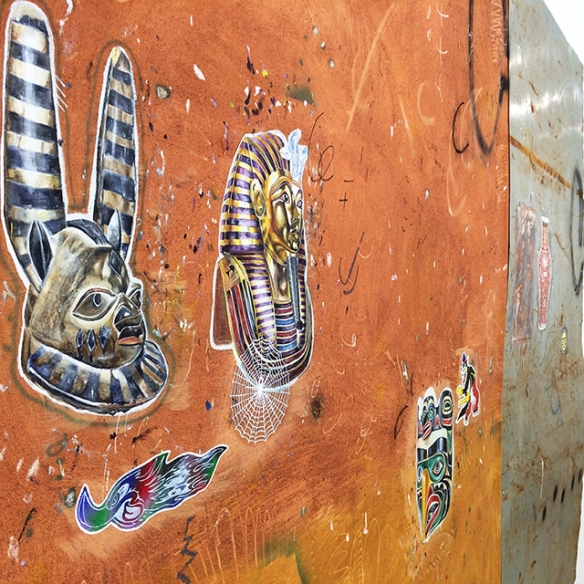
192Paulo Nimer Pjota

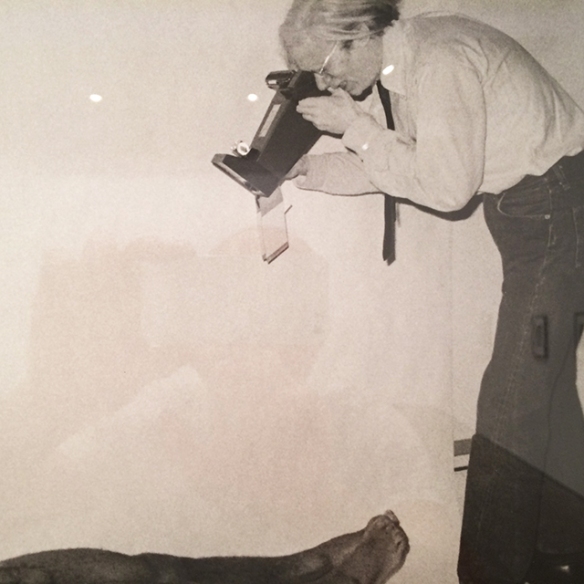
193Jimmy Desana at Wilkinson Gallery with a photo of the famous pop art icon at work photographing a nude shown here cropped.
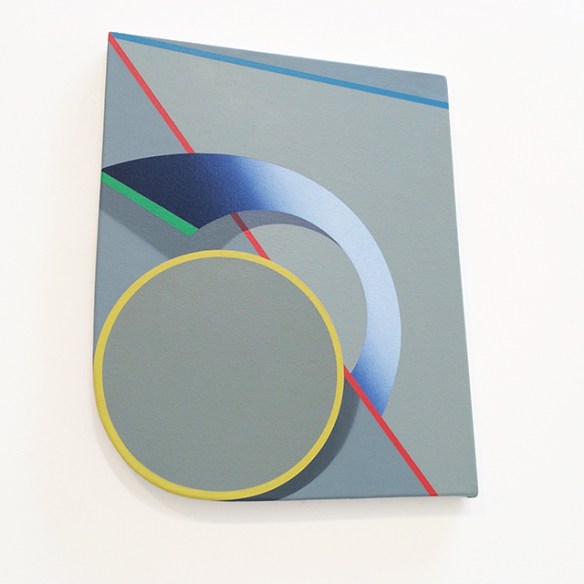
194Tomma Abts at Greengrassi

195

196Cyprien Gaillard at Laura Bartlett with teeth from drilling equipment shown as artefacts.
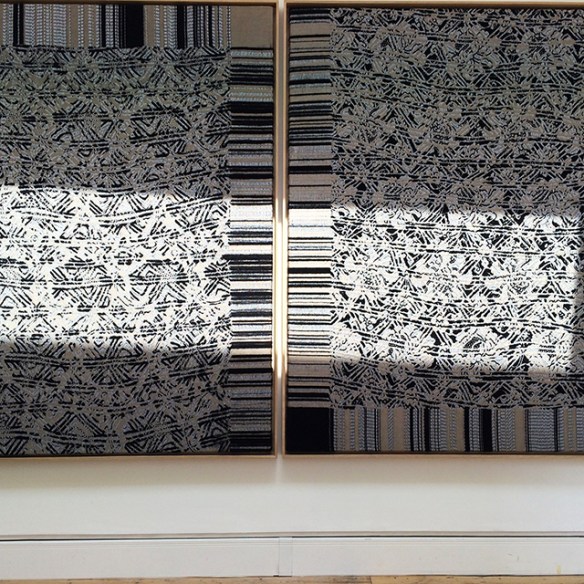
197Lisa Oppenheim at The Approach on a very sunny day today.
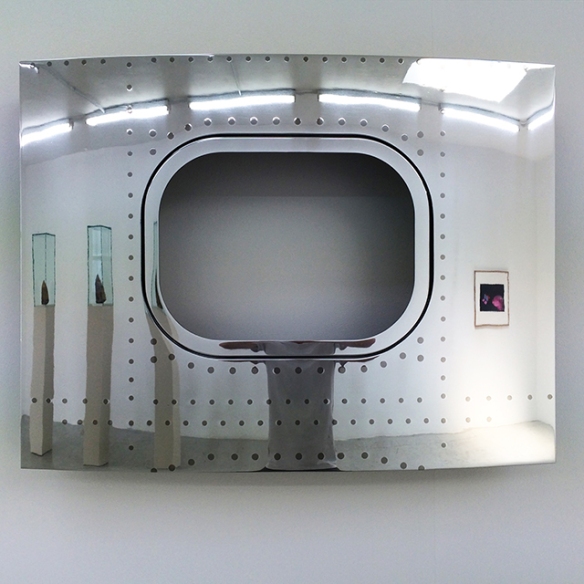
198Michail Pirgelis of Spruth and Magers is showing at Laura Bartlett with more aeroplane inspired artwork.
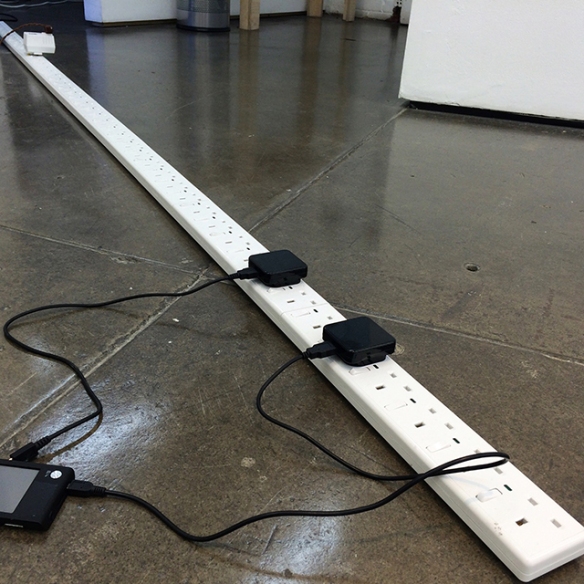
199Rob Chavasse who makes gallery holes and interconnections between rooms, from The Sunday Painter, is showing at a group show at Herald Street. The socket extends across the gallery and into the office and powers both computers and artworks.