This week’s gallery run was in Oxford and in search of John Ruskin. He was an inspirational writer and art critic of the 19th century and championed the then radical Pre-Raphaelites. For Ruskin, a visit to see great art would require considerable build-up, perhaps involving travel to a foreign land and then a long walk and even picnic, all recorded as part of the experience. In honour of this method of art criticism, which reached its apotheosis in The Stones of Venice, I would be checking out some stones that Ruskin himself had quite literally laid down, as philanthropist, in Oxford with help from several of his students including Oscar Wilde.
The day began with a jog to Paddington, before a train then whisked me to this city of spires in which I had spent four years as a student. Although not entirely an island, at least not physically, the city is bounded by rivers running off both the Cotswolds to the West and the Chilterns to the East. One hundred and fifty years ago this was causing a considerable drainage problem and it was one that Ruskin had set about fixing in one small area by building a stone road. This would allow carriage traffic from a nearby village to gain access both to its immediate neighbour and also perhaps more importantly to Oxford stood nearby. The geography is fairly complicated but essentially there are several tributaries of the Thames out to the West. One encounters these leaving the city along the Botley road. But such was the impact of these waterways on the landscape in Ruskin’s day, that one needed to navigate them over a series of small wooden bridges before embarking a ferry to cross a further tributary at North Hinksey.
It is this village that one eventually reaches via a footbridge outside Oxford. A nearby building called Ferry Cottage matches up to the historical account of the North Hinksey ferry crossing. Then an old thatched cottage appears next to the village road with its green plaque declaring the historical importance of the site. This was indeed Ruskin’s workplace one busy summer a hundred and fifty years ago and those iconic stones now preserved for perpetuity at least to the imagination, reside under an immaculately laid asphalt surface. Then looking back at the city of Oxford one sees the spires that Ruskin would have looked at in his daily treks across the meadows to the city where he taught.
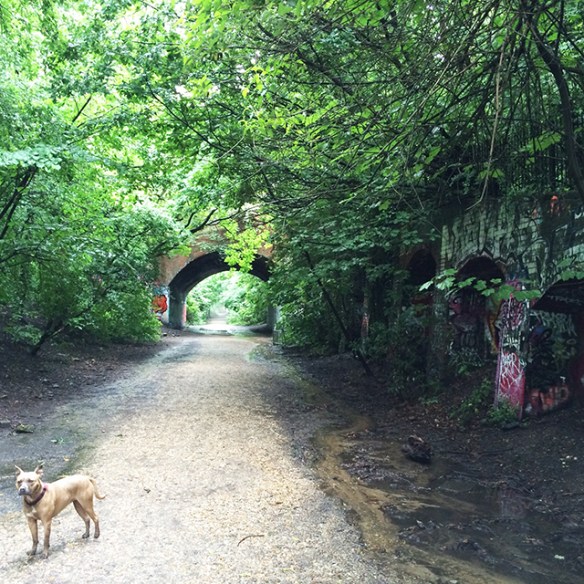
My own return would involve spiralling around to the east and then making further progress across college grounds. That was the plan. Initially it worked well but as the rivers started to complete their own circuit round Oxford before unifying in the Thames, they began to cordon off regions unpredictably and I also found myself starting to sense the boundaries of private property. A public footpath lay just out of reach on the other side of a small river whilst a conveniently placed walkway across it turned out to be locked with barbed wire suggesting that this was a place that members of the public were not meant to go. Wading across the river was no more fruitful as its soft muddy bed started to give way after the first few steps. This was to be the end of the run for today as I headed, instead to college buildings and evicted myself past a porter’s lodge and onto the busy streets of the city centre.
This week’s 9 pictures are from this run round Oxford’s meadows and also include a visit to Modern Art Oxford.
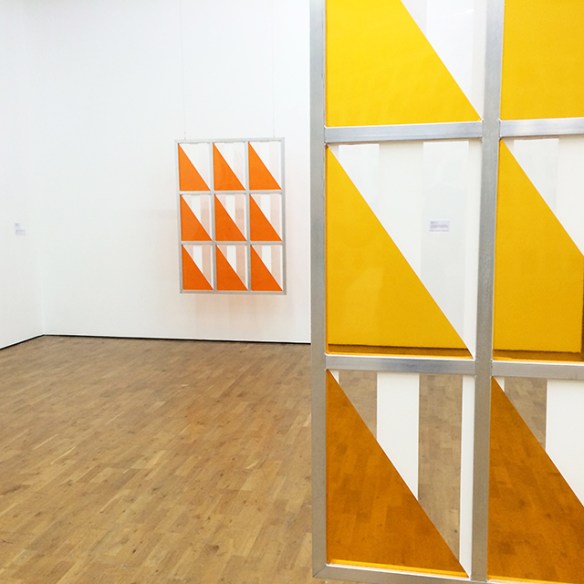
Daniel Burren at Modern Art Oxford in Kaleidoscope Mystics and Rationalists. Colour interventions in the gallery space.
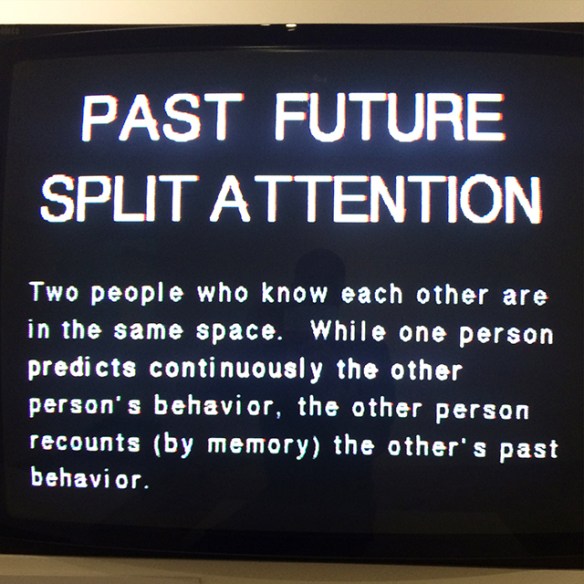
Dan Graham at Modern Art Oxford in Kaleidoscope Mystics and Rationalists. Text that appears before Dan Graham’s filmed performance of two people. The performers each discuss the other’s behaviour, one, past and the other, possible future.
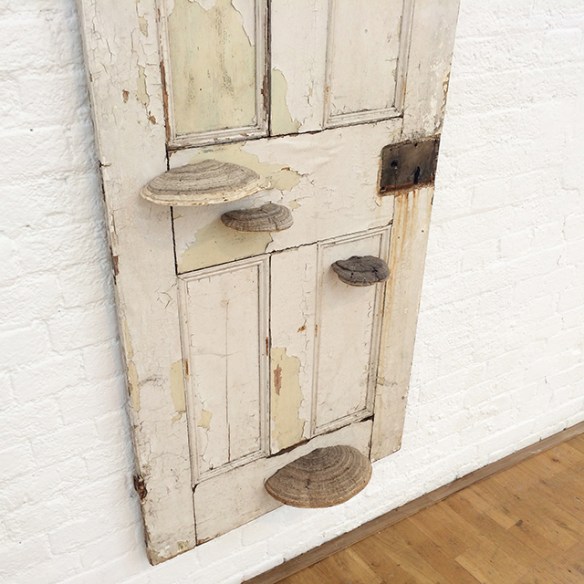
Dorothy Cross of Frith Street Gallery at Modern Art Oxford in Kaleidoscope Mystics and Rationalists. Tree fungus on a door carries the idea of damp and humidity associated with this artist but in a different direction.
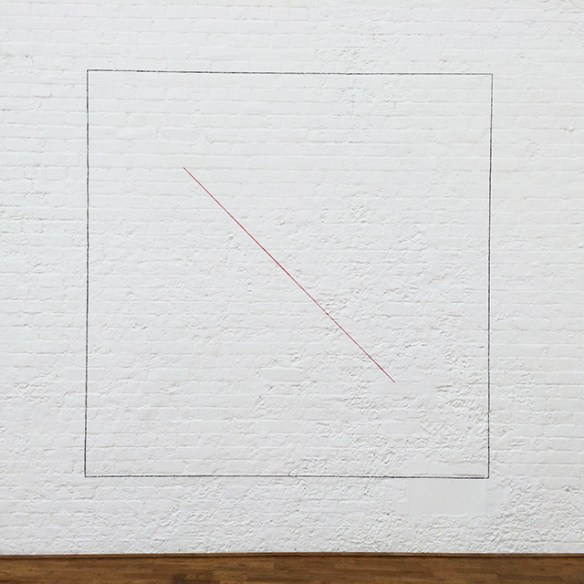
Sol le Witt at Modern Art Oxford in Kaleidoscope Mystics and Rationalists.
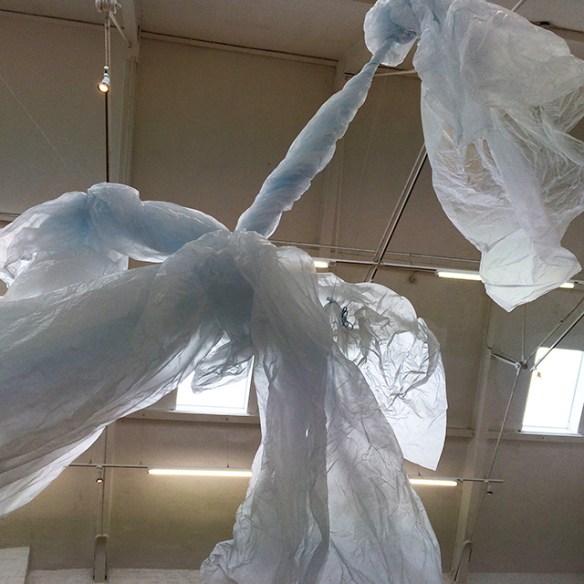
Karla Black at Modern Art Oxford in Kaleidoscope Mystics and Rationalists with a translucent fabric piece.
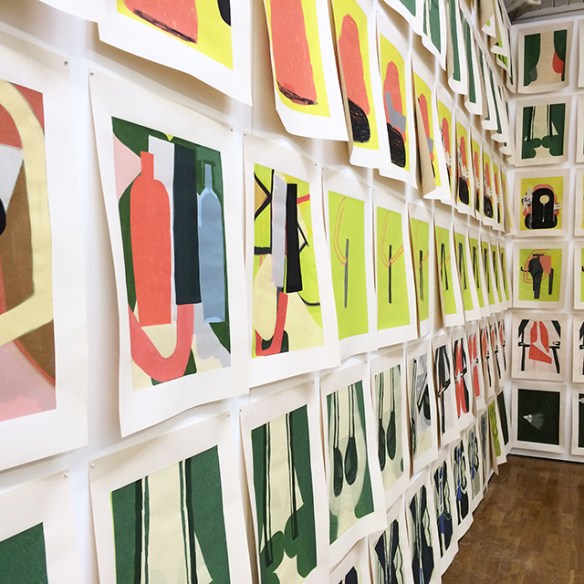
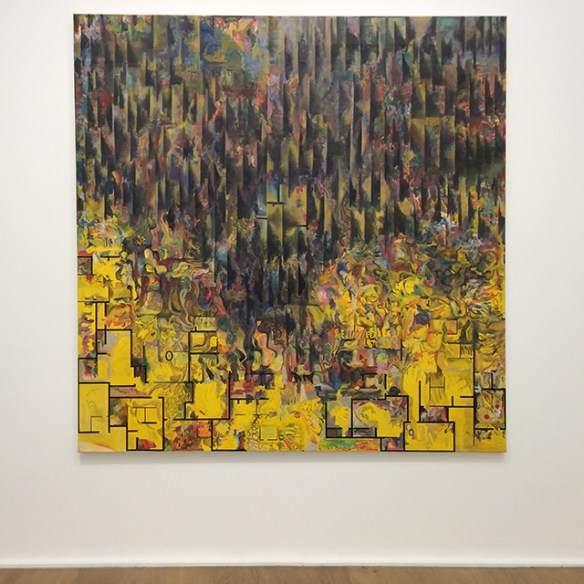
Amy Sillman of Thomas Dane Gallery at Modern Art Oxford in Kaleidoscope Mystics and Rationalists. Sequences of printed images are on show, which she has made for what she calls “possible paintings”.
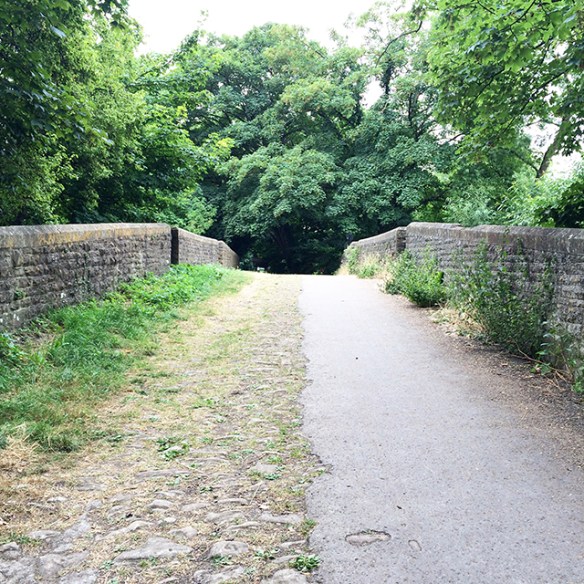
In search of John Ruskin? Cross this bridge into North Hinksey to find the road he first built.
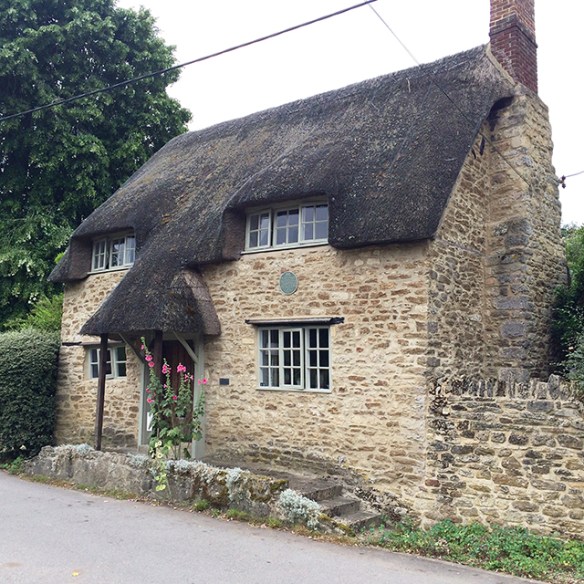
Cottage bearing a green plaque dedicated to John Ruskin and situated on the road he first built with a team of students including Oscar Wilde.
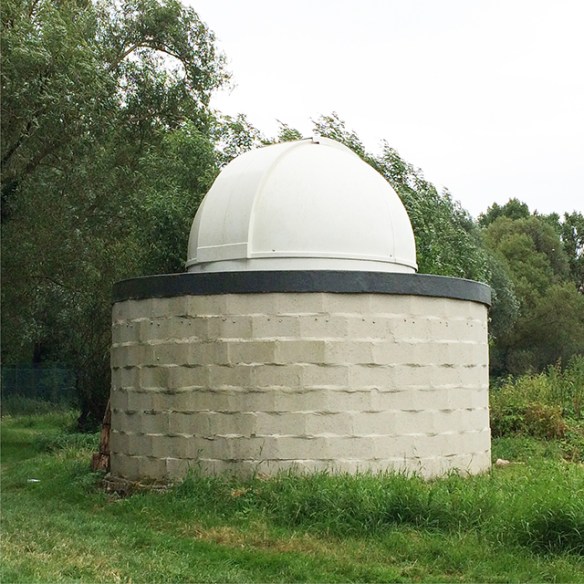
Found this oddly positioned telescope next to St. Catherine’s College Oxford cricket pitch.
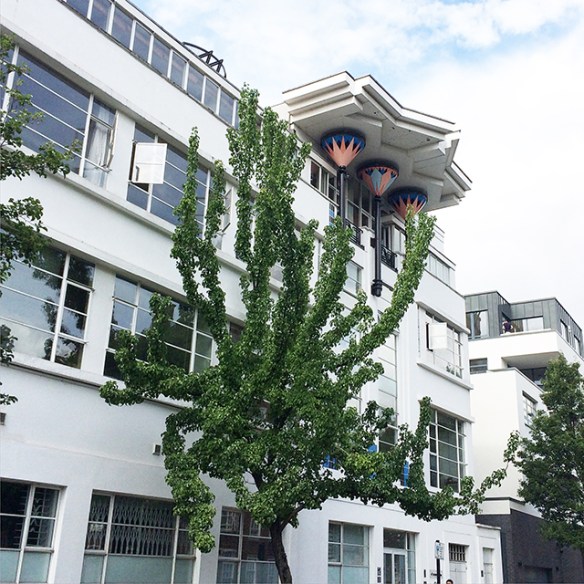
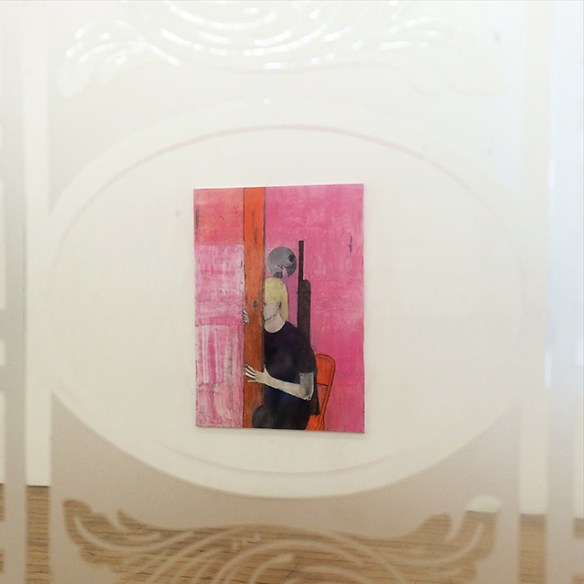
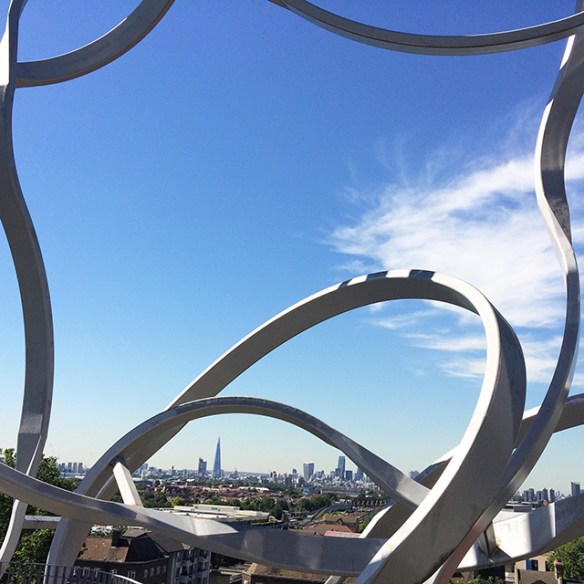
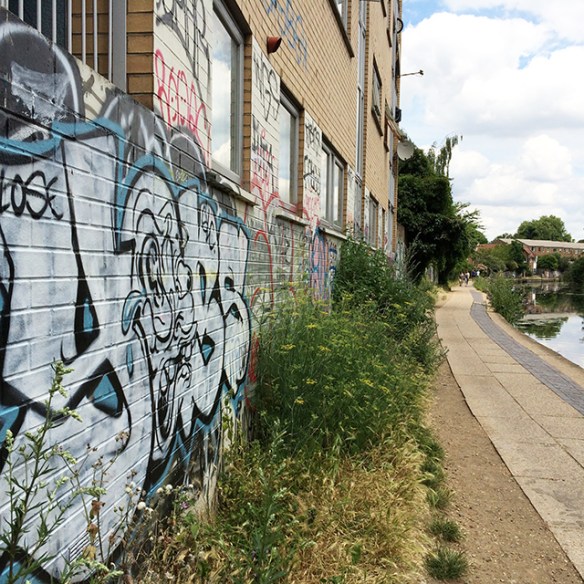
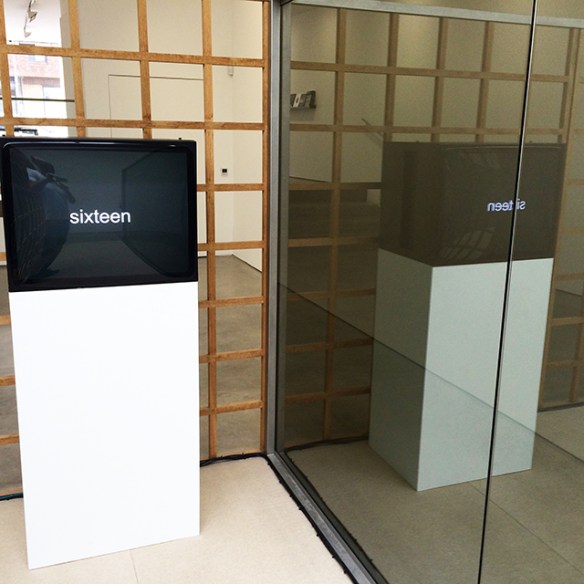
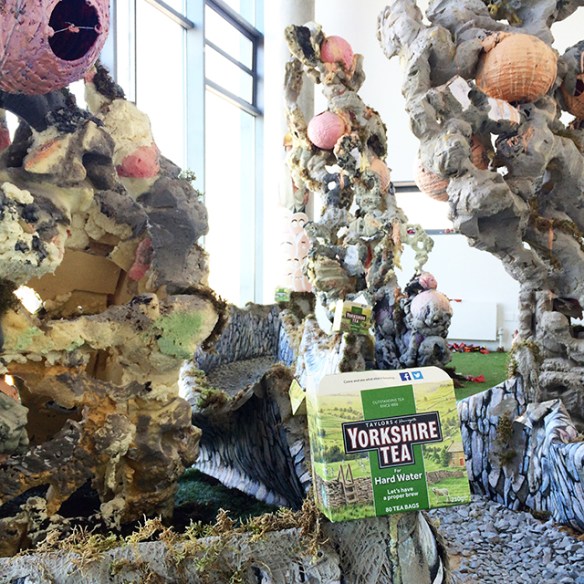
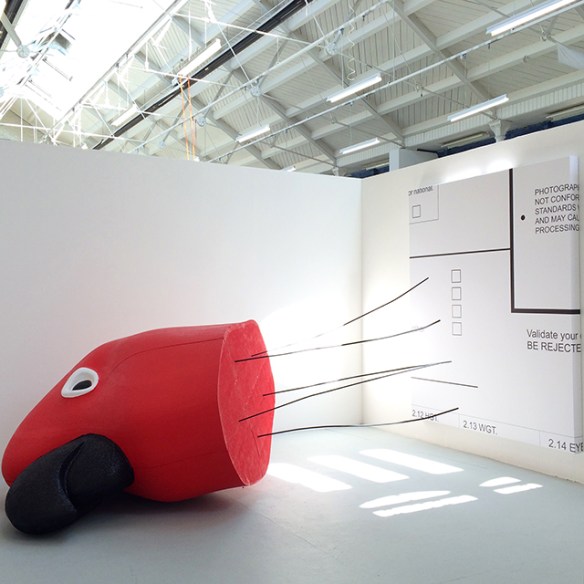
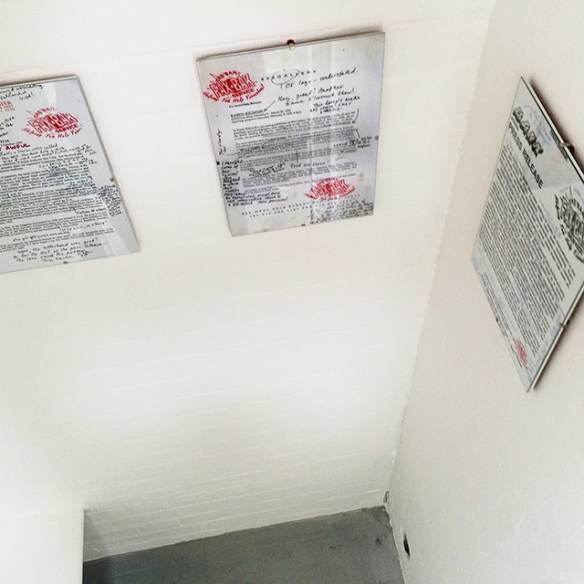
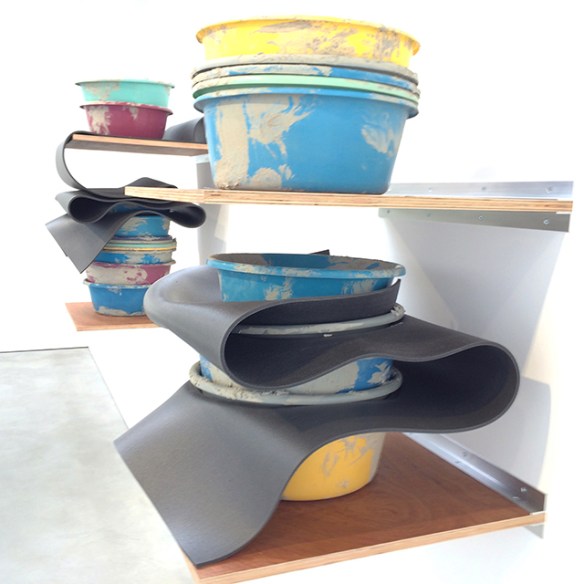
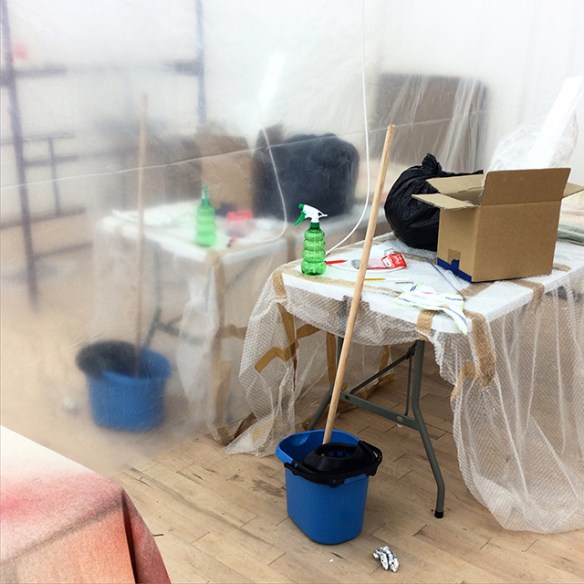

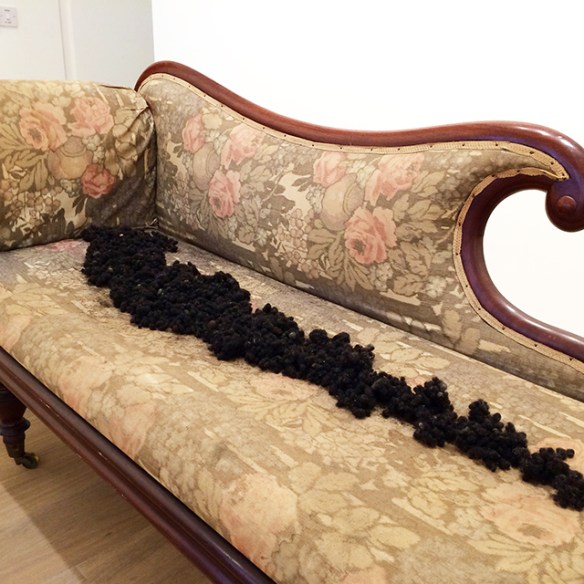
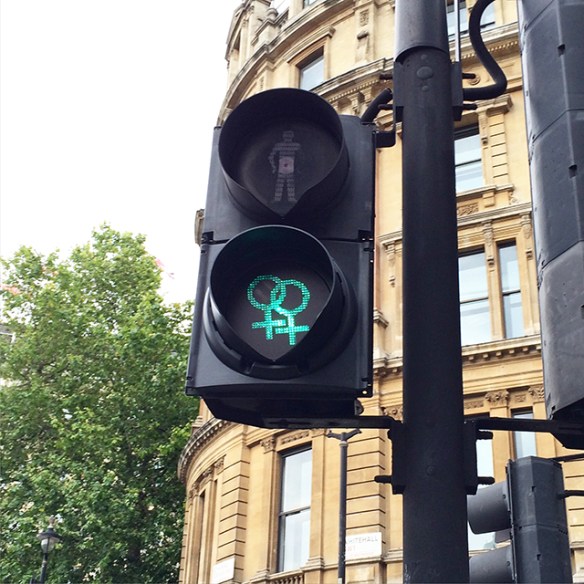
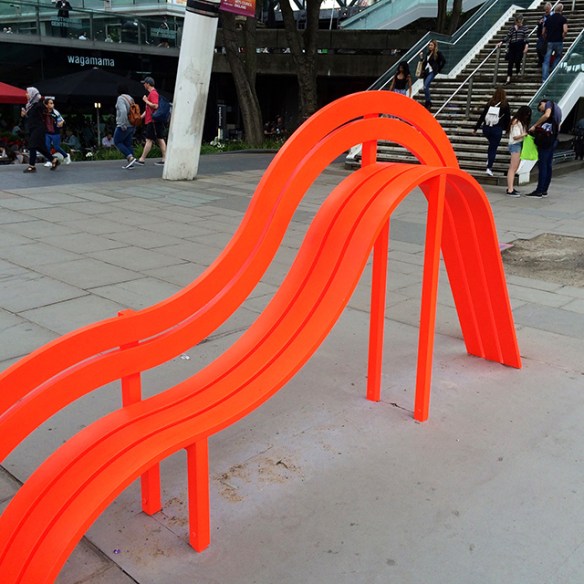

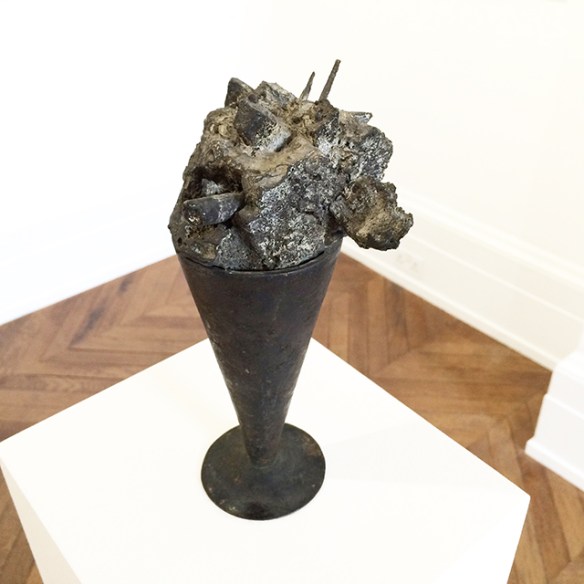


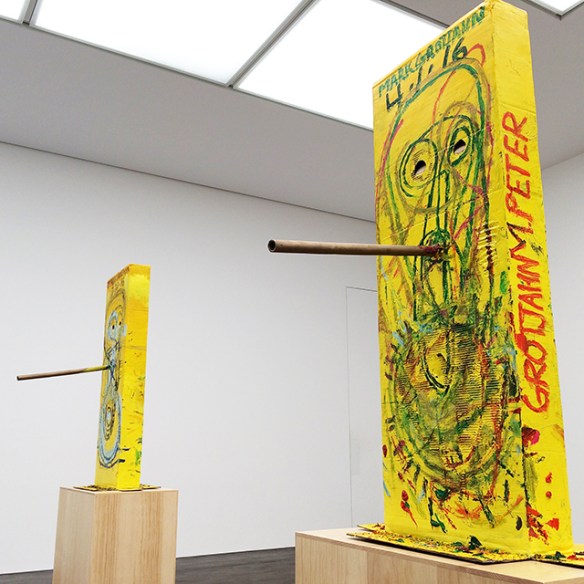



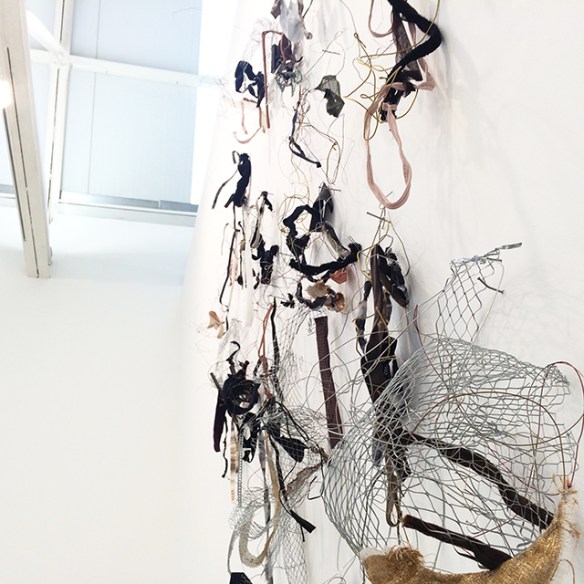

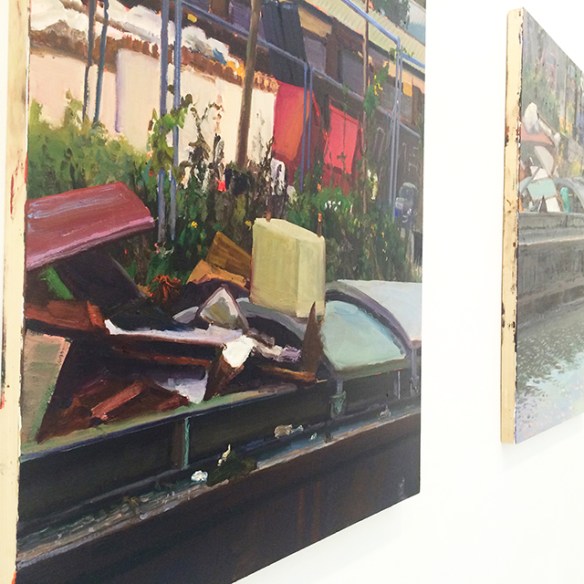
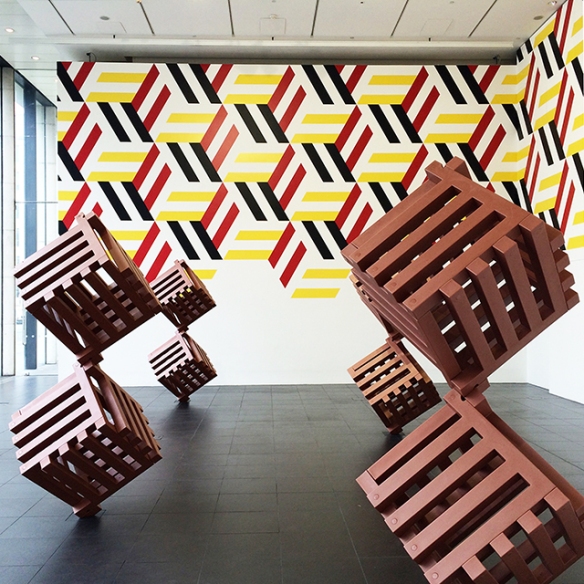
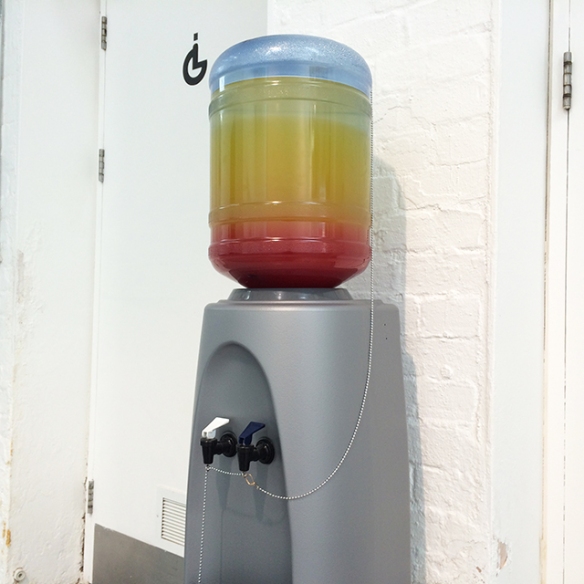
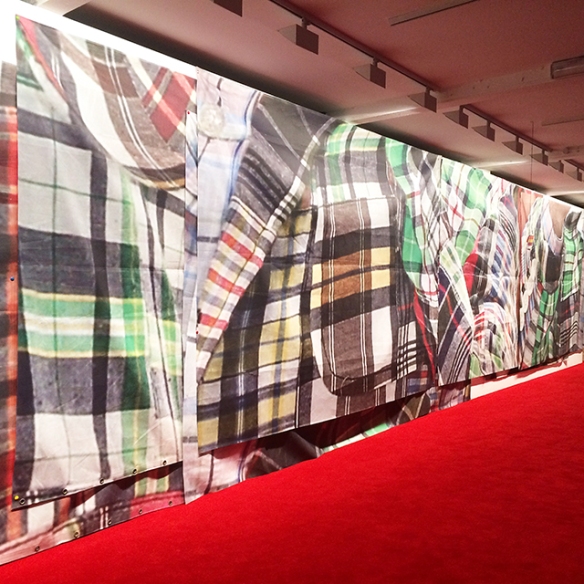
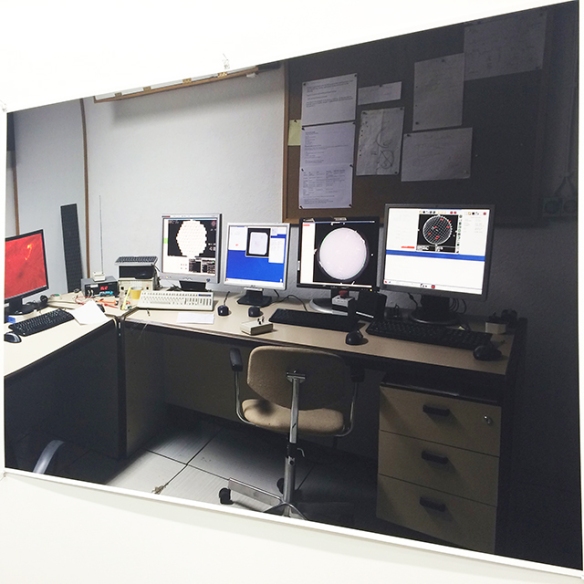
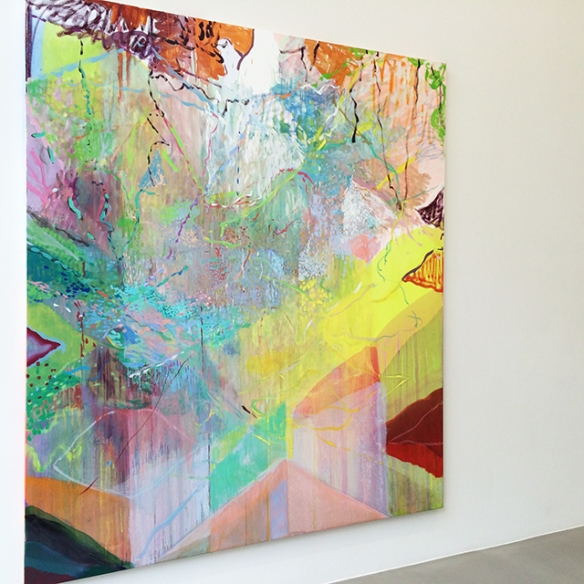
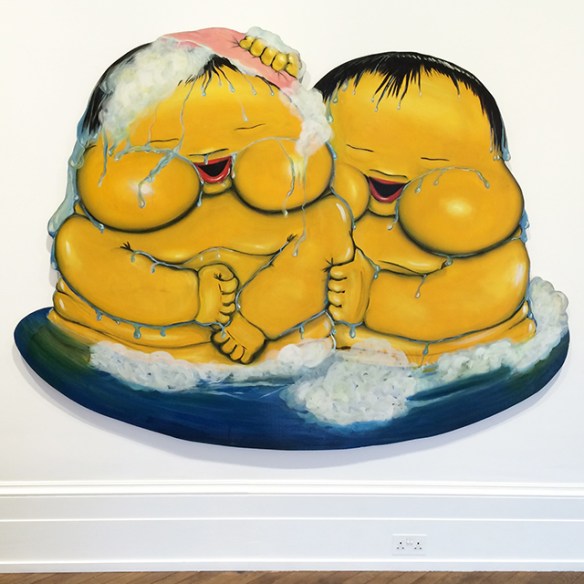
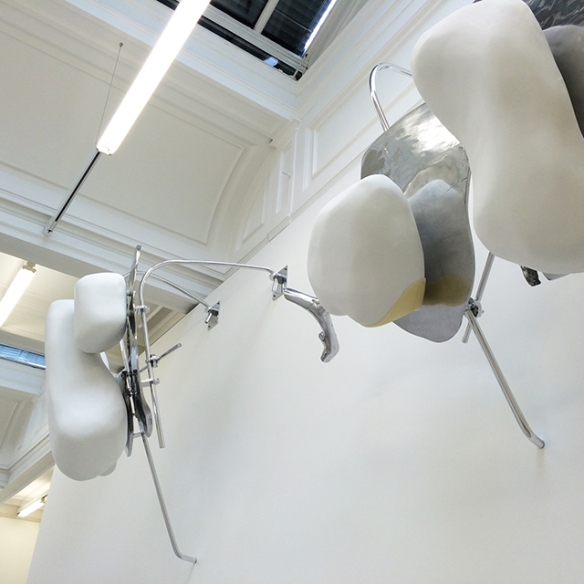
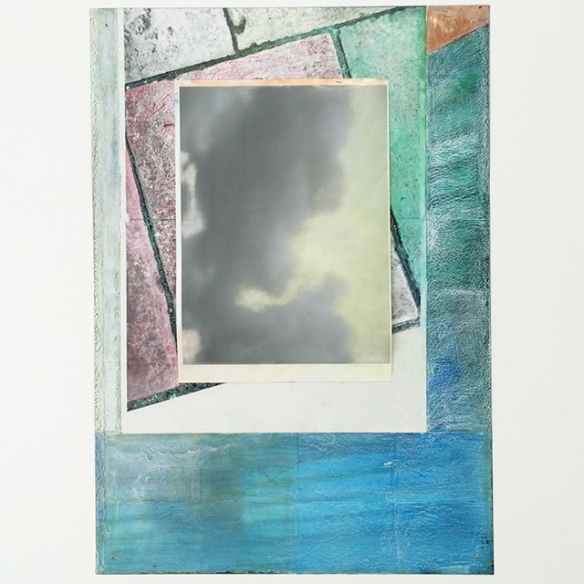

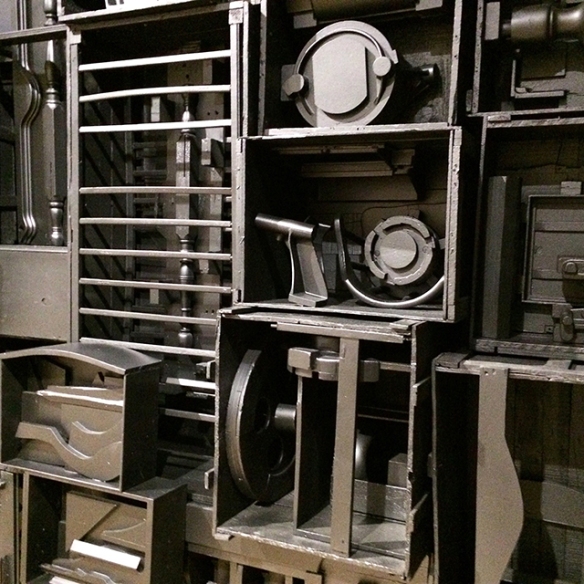 Louise Nevelson at Pace London.
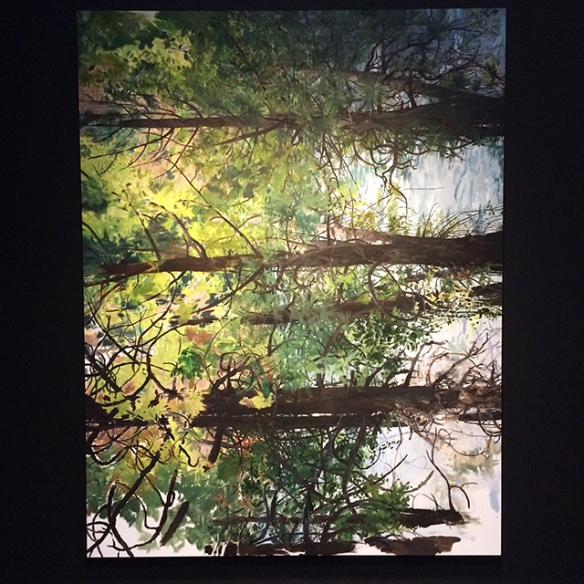 Robert Buck at Stephen Friedman. Yes, the painting is hung as shown.
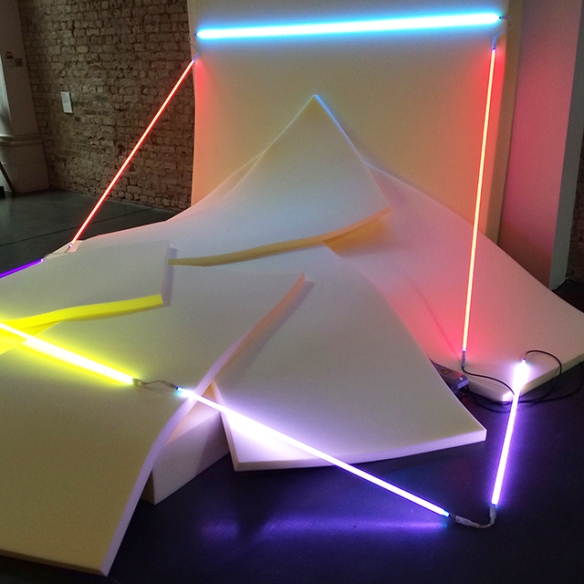 Keith Sonnier of Pace at Whitechapel Gallery.
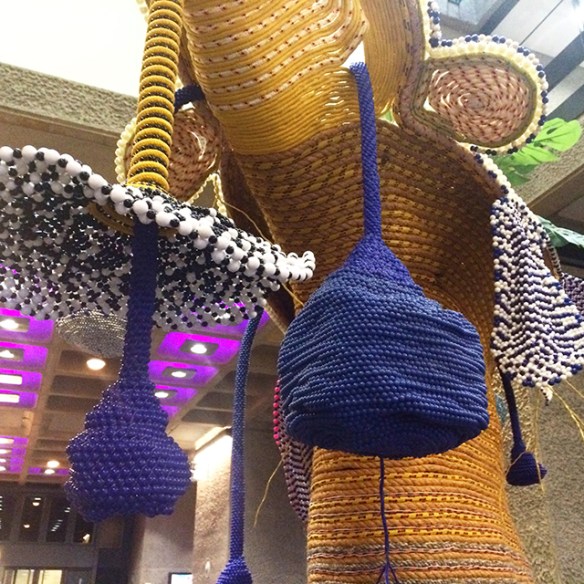 Maria Nepomuceno of Victoria Miro showing at Barbican.
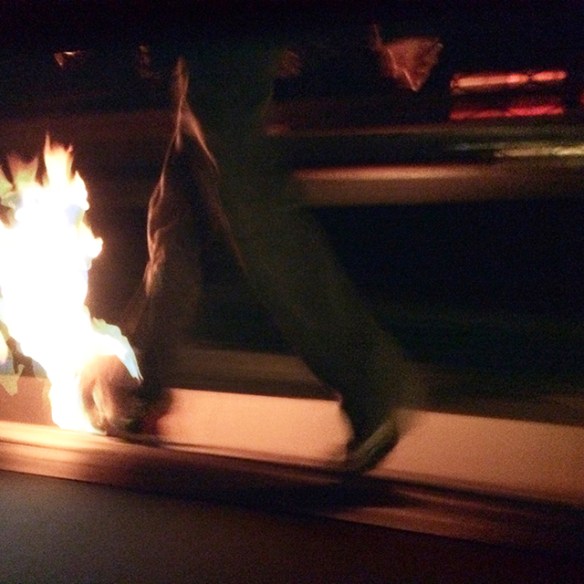 Francis Alys at David Zwirner kicking a flaming football through the run-down streets of a Mexican town.
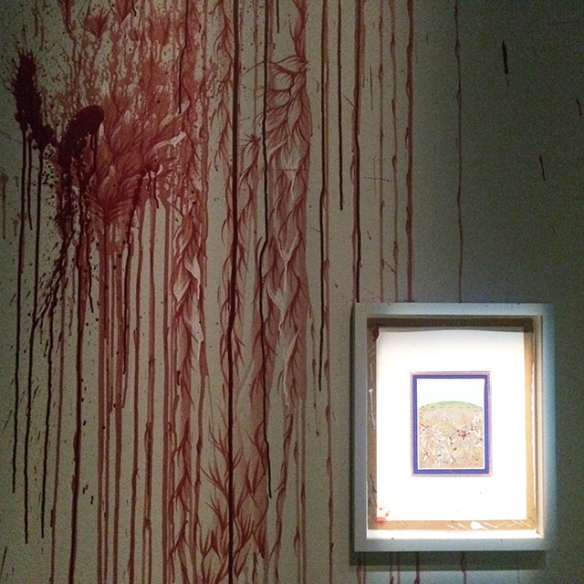 Imran Qureshi of Corvi Mora at Barbican Curve. Miniatures with enlarged marks on the gallery wall and floor.
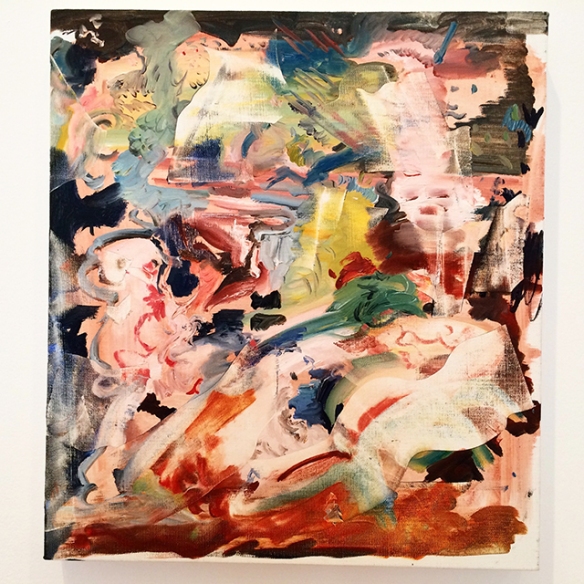 Cecily Brown at Thomas Dane. This small piece looks great.
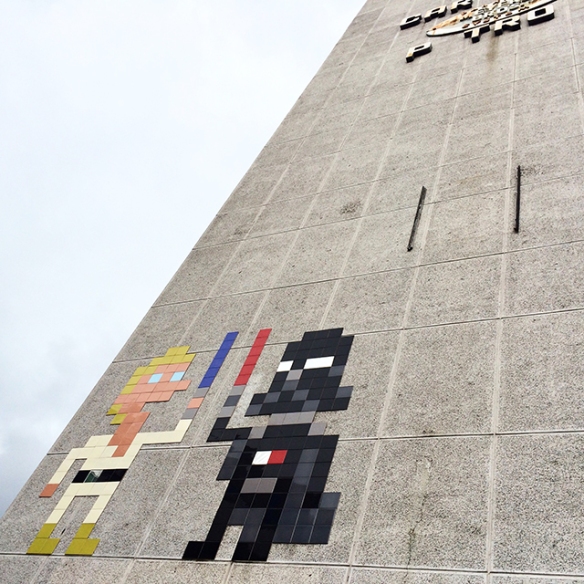 Invader pixilated image on Curtain Road.
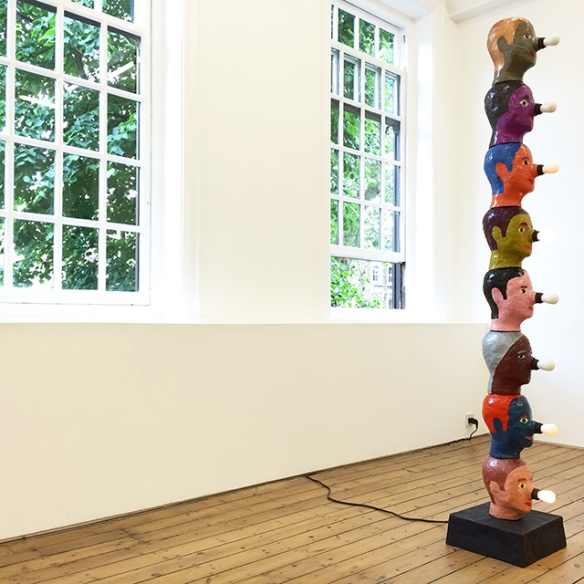 Evan Holloway at The Approach. He usually creates coloured arrays of natural forms. Here is something different.
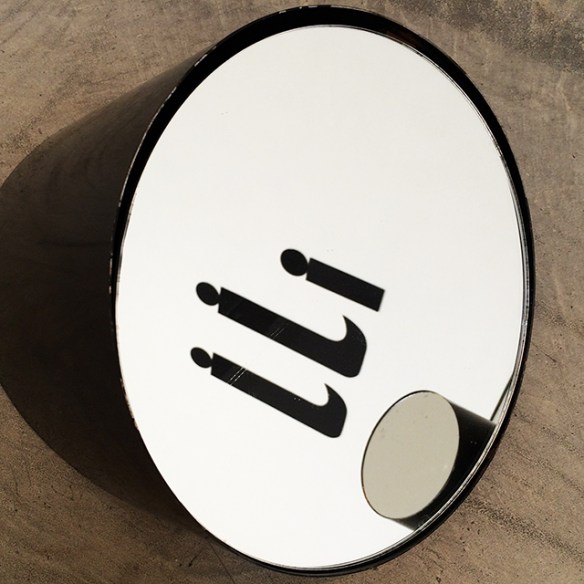 Ketty la Rocca at Wilkinson Gallery was a 60’s Italian artist who explored personal identity. Her beautiful black i sculptures are shown here, actually photographed through a separate mirror installation of hers.
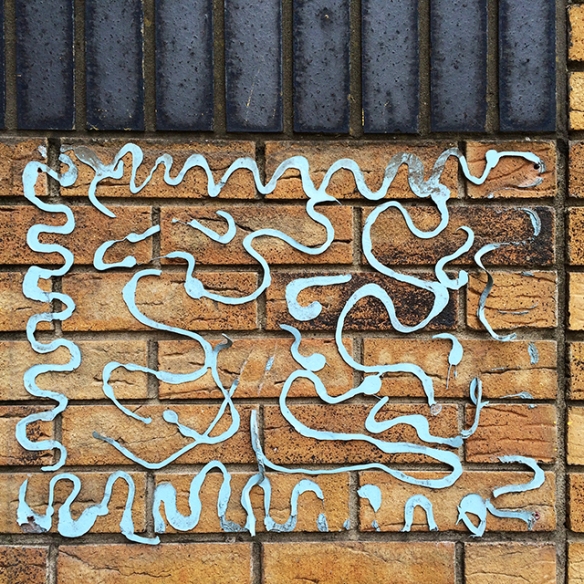 I saw this on Wharf Road.
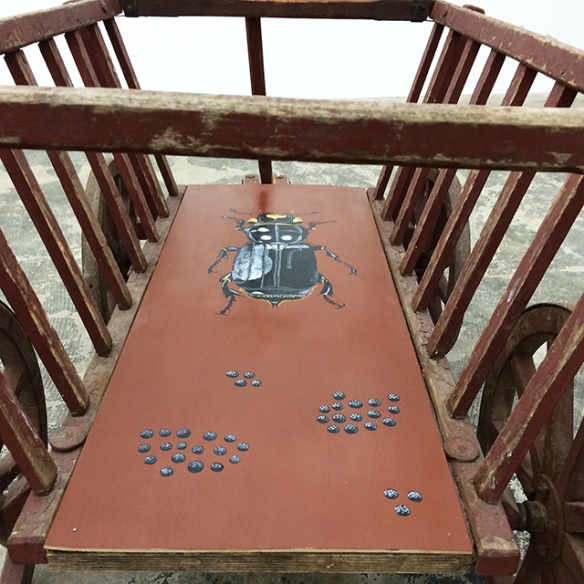 Lubaina Himid at Hollybush Gardens with decorated trolleys.
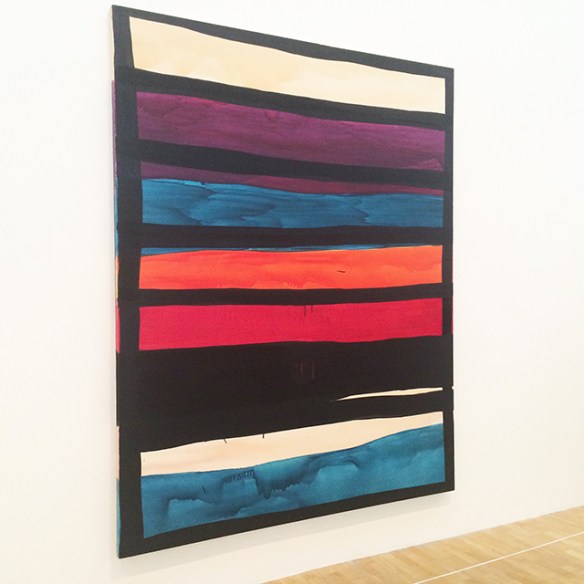 Mary Heilmann at Whitechapel Gallery with images that are gridded yet expressionist.
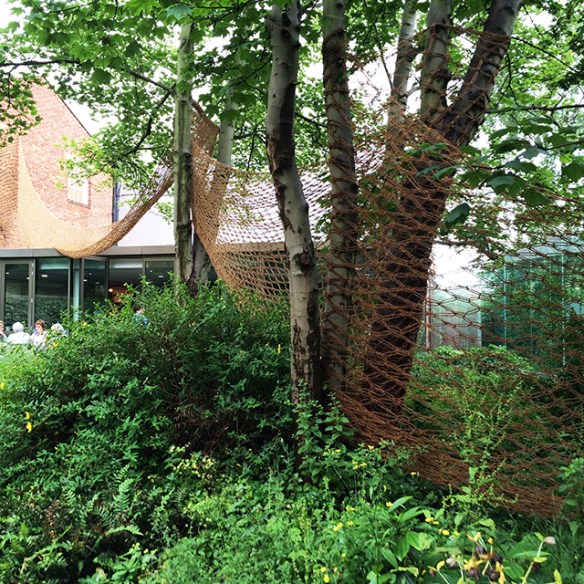
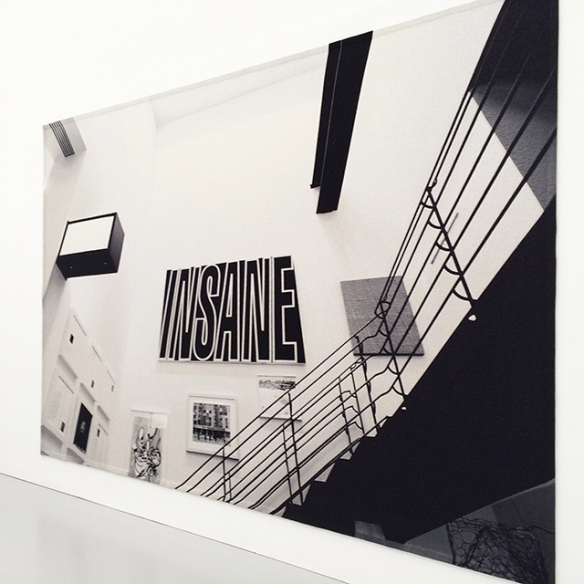 Goshka Macuga at Kate Macgarry with a wool tapestry originally shown at the Berlin Biennale 2014.
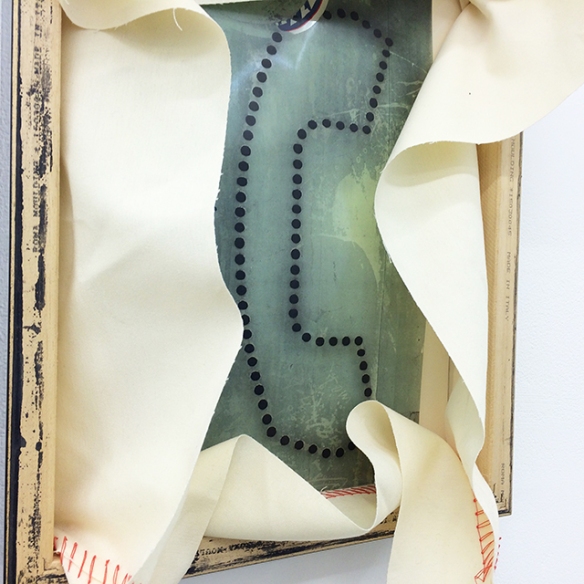
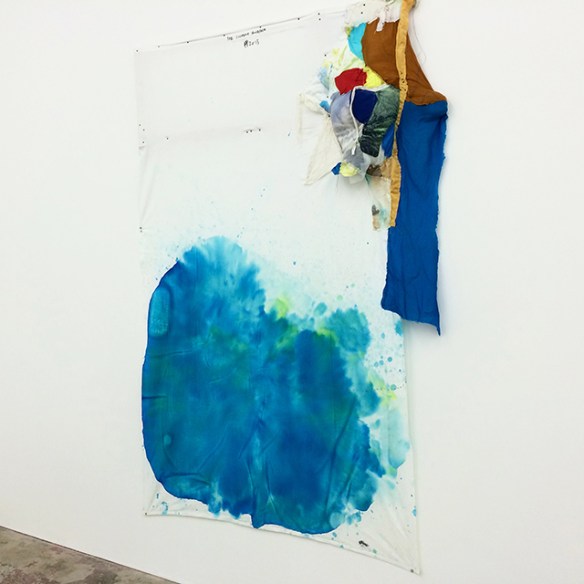 Reto Pulfer at Hollybush Gardens with casually stitched fabrics and dyed canvas.
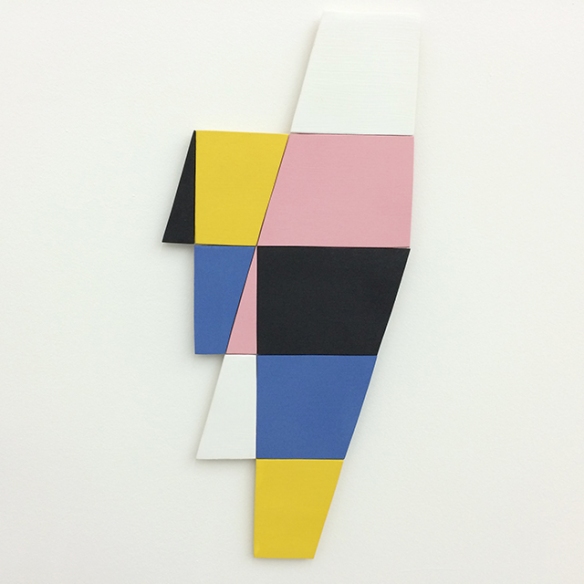 Knut Henrik Henriksen at Hollybush Gardens with artwork inspired by packaging.
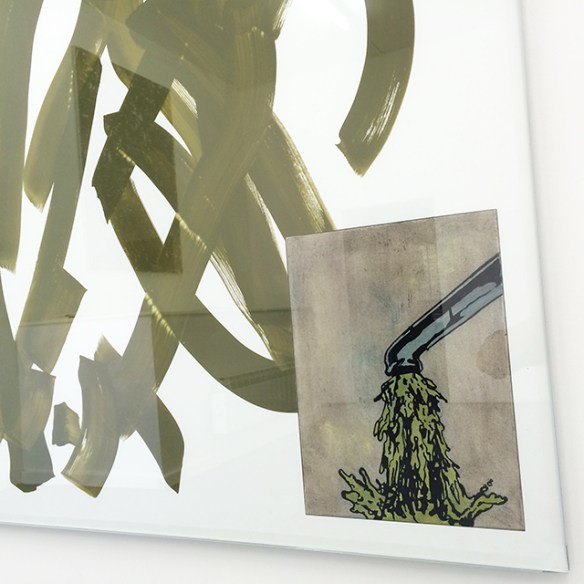 Will Benedict at Rob Tufnell with work inspired by a scientist’s battle with the pesticide industry.
 Alex Katz of Timothy Taylor showing at the Serpentine Gallery. This wide portrait is of his wife Ada Katz.
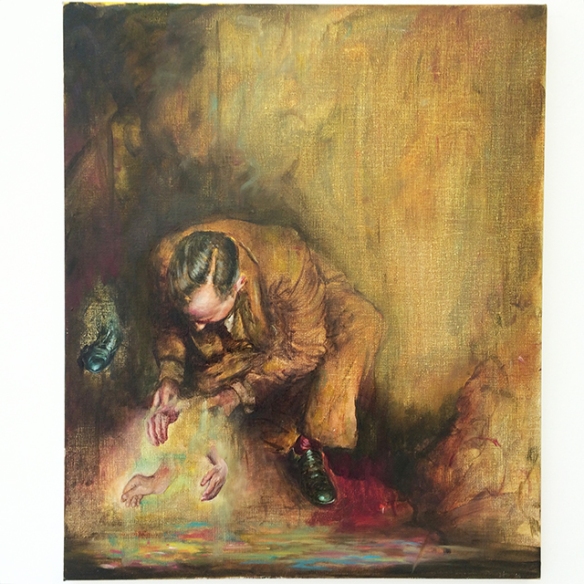 Christopher Orr at Ibid. Light projections and stacks of books at his studio, we are told, help free up the imagination in the work.
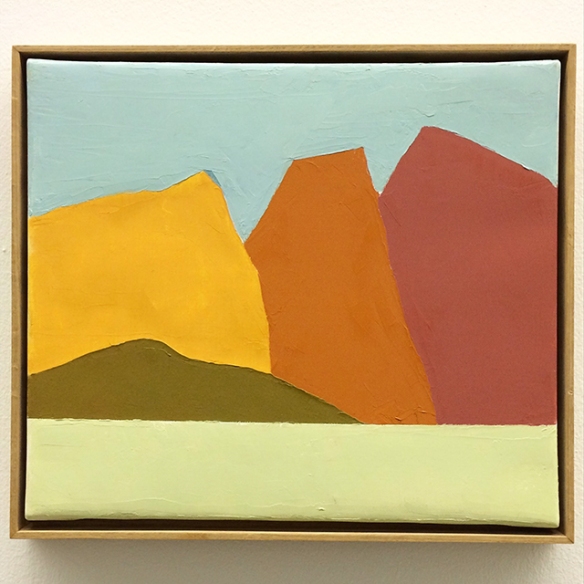 Etel Adnan of White Cube showing here at Serpentine Gallery. Beautiful bumpy landscapes.
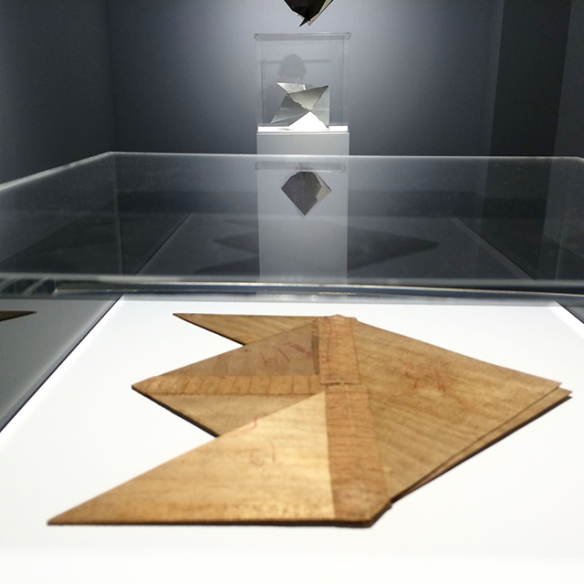 Lygia Clark at Alison Jacques Gallery. This is the first design for her famous folding aluminium pieces. They represent animals or critters. This was a crab.
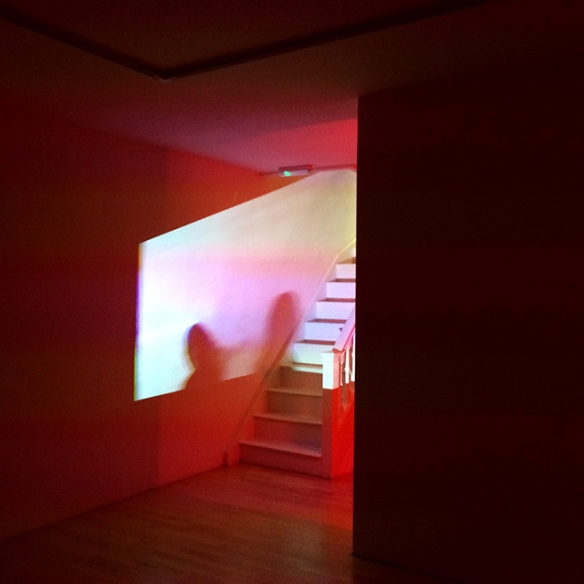 Massimo Bartolini uses a rotating projector at Frith Street Gallery along with a soundtrack and bright red neon sign.
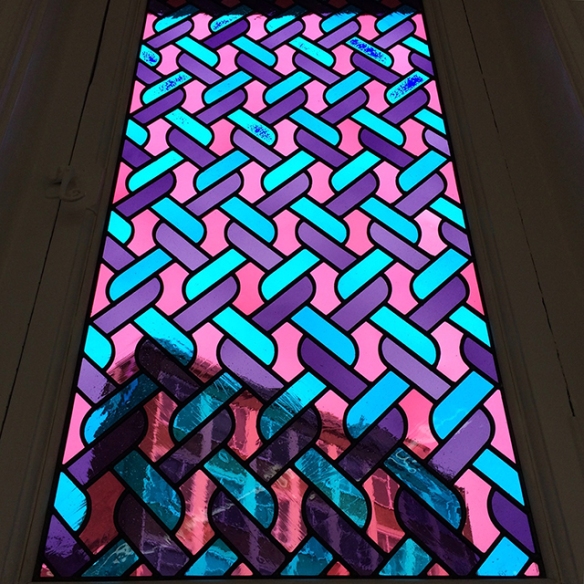 Christodoulos Panayiotou at Rodeo Gallery uses light in this piece overlooking busy Charing Cross road.
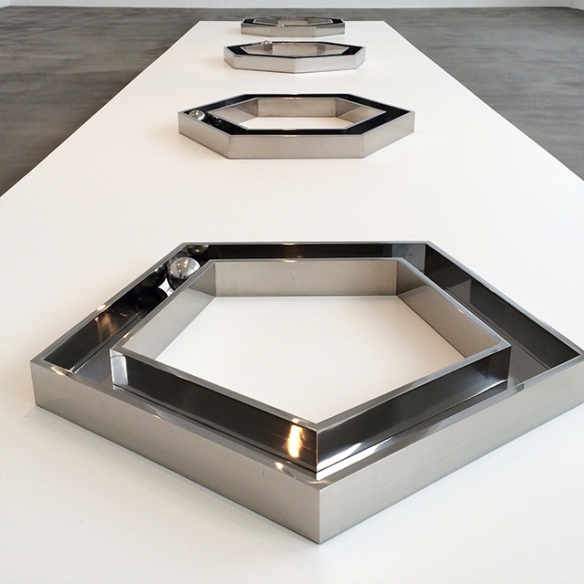 Walter de Maria at Gagosian.
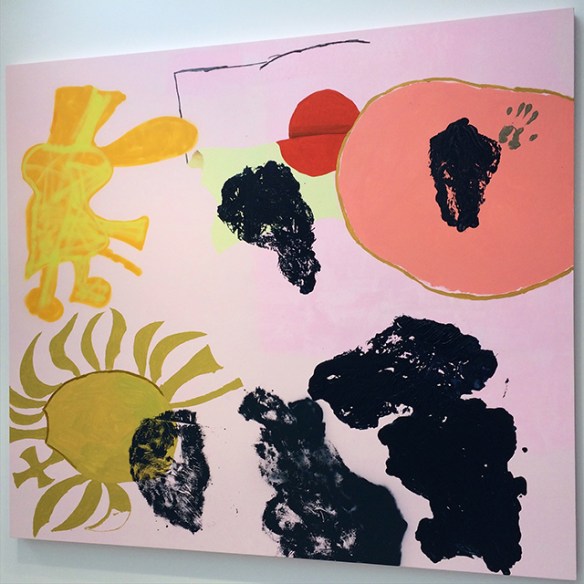 Torey Thornton at Stuart Shave Modern Art. Childlike imagery is striking.
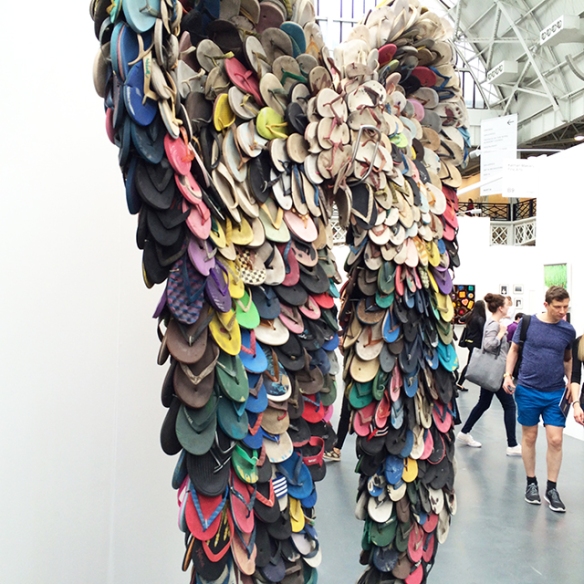 At Art16. Alfredo and Isabela Quilizan produced these flip-flop angel wings.
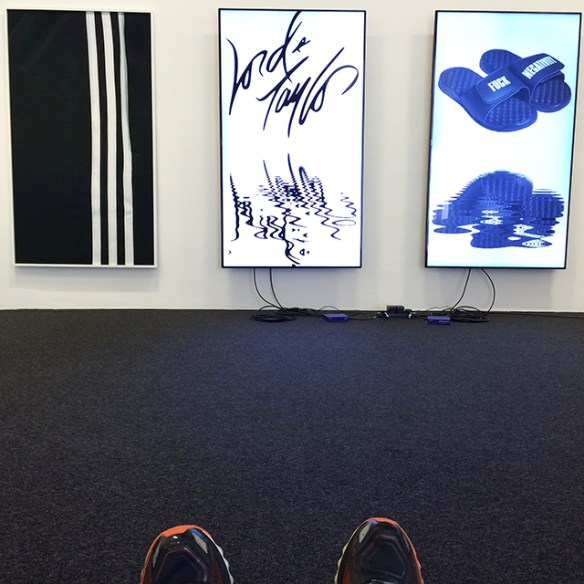 Cory Arcangel at Lisson Gallery. The digital displays are altered, the software hacked. The alphabet of corporate symbols is appropriated by the artist.
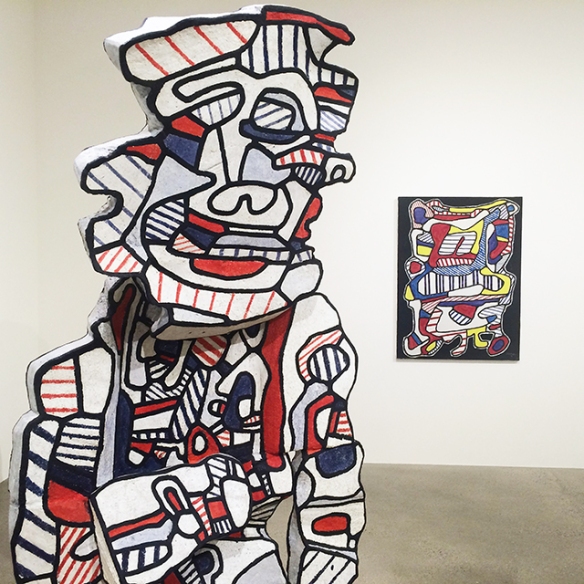 Jean Dubuffet at Timothy Taylor. These fab sculptures grew out of red and blue biro doodles, we are told. The artist had made them whilst on the phone.
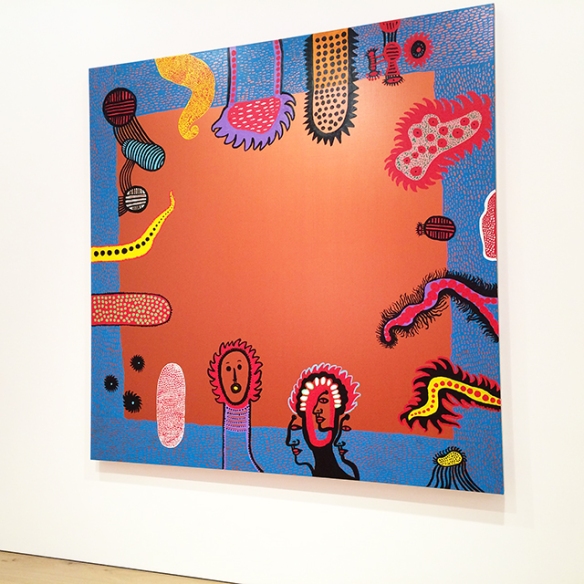 Yayoi Kusama at Victoria Miro.
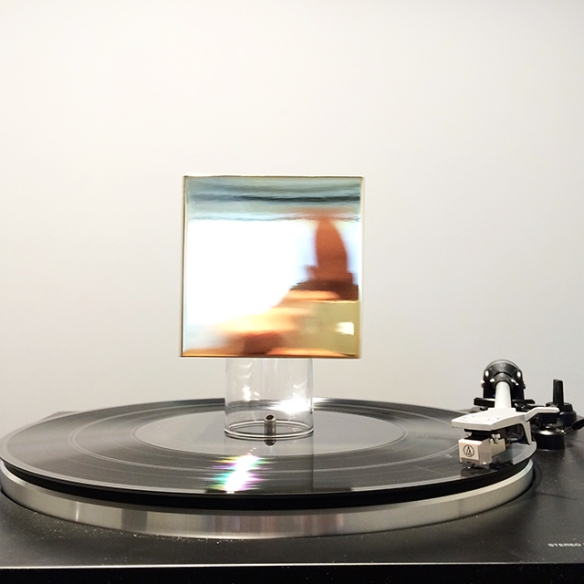 Massimo Bartolini at Frith Street Gallery. The artist’s sound piece is played on this record player crowned with a brass cube. This unusual addition pays homage to Golden Square, the location of the gallery.
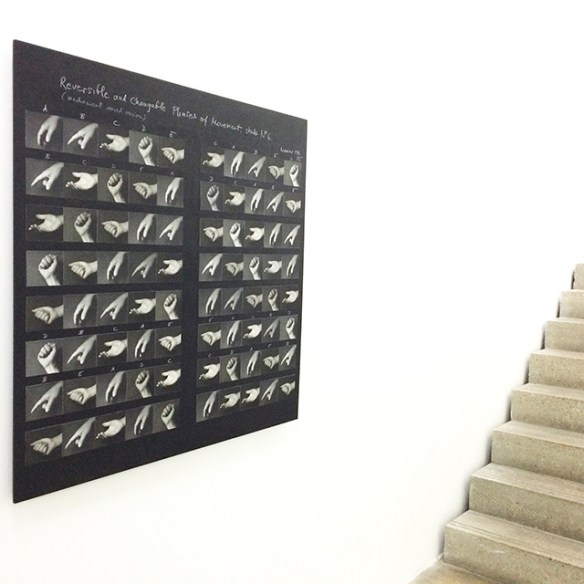 Dora Maurer at White Cube. The hands form an alphabet of gestures.
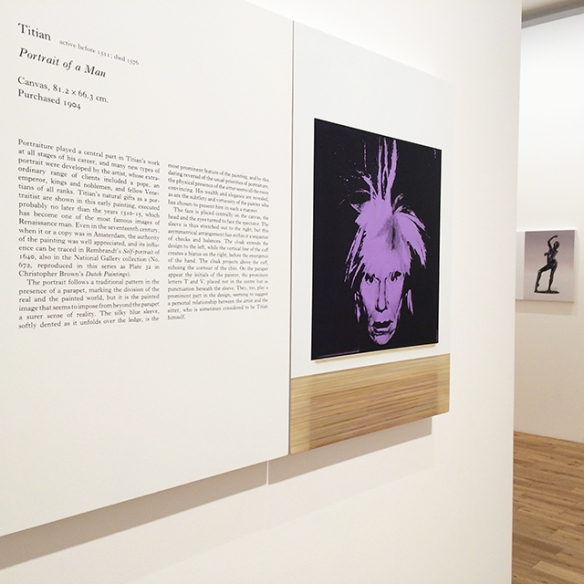 Stephane Graff at Almine Rech. A juxtaposition of text and image that is intended to jar one with the other.
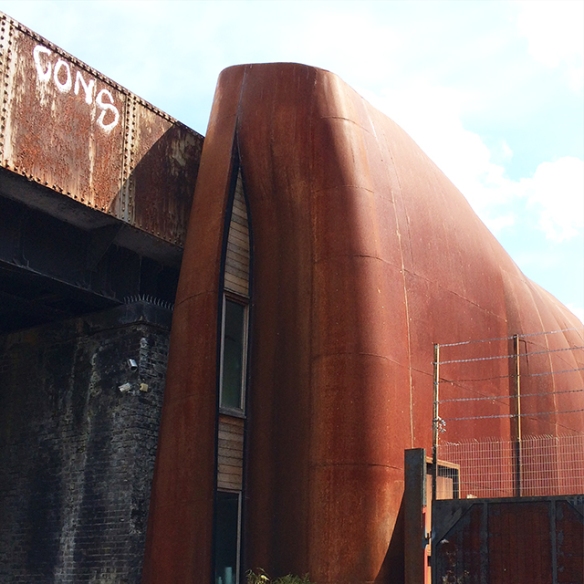 Galleryrunner saw this house connected to a railway arch near Walworth Road.
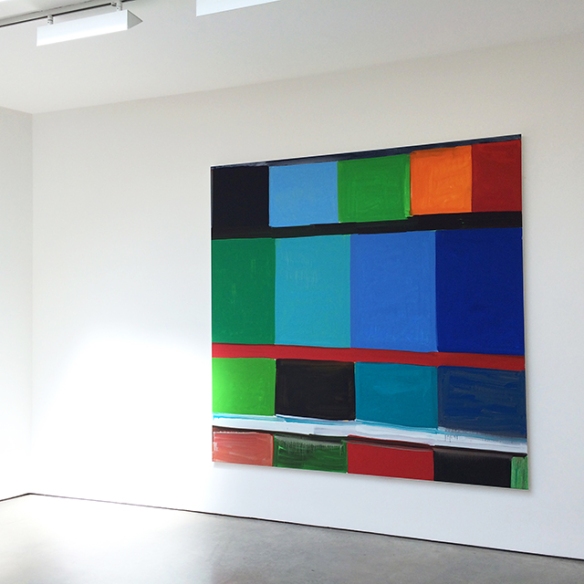 Stanley Whitney at Lisson Gallery. These pastel grids put beauty before formalism.
 Gallery Runner