Gallery run 15th November

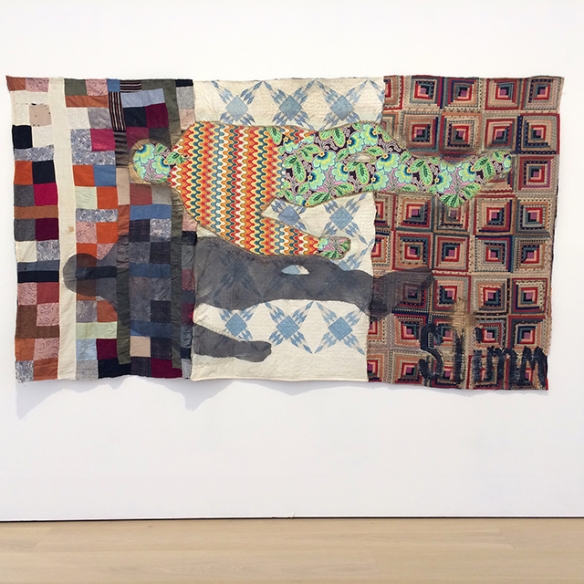
With a lap round The Serpentine in Hyde Park taking the time up to ten o’clock, the first gallery of today’s run should now be open. But alas, my check of opening times on the internet last night was not done accurately enough and it turns out the gallery is in fact closed today for refurbishments. Fortunately one of their artists, Sanford Biggers, is showing just a few hundred metres away at Phillips auction house. The good fortune of spotting the gallery artist in this alternative venue is further enhanced by the quality of the work. It comprises a delicately stitched, embroidered quilt cover with a back story that it was donated to the artist along with many others from families whose ancestors were effected by slavery. This has become part of the rich historical narrative of the artwork itself.

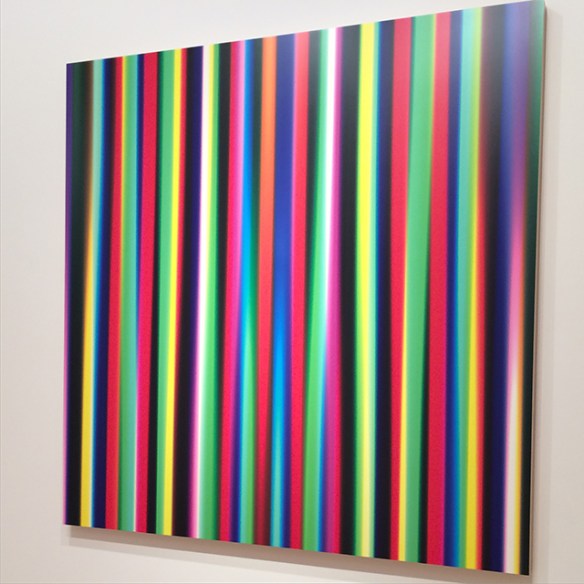
A few blocks along in Victoria Miro, Stan Douglas is displaying photographic-based work. Although primarily the show focuses on high-resolution photographic reconstructions of the London riots of 2011, there are also two abstract works. These additional abstract works are fascinating because they are actually based on simple jpeg images of geometric shapes but where the information of the original digital files has been altered in a systematic way. The resulting rhythmic patterns, we are told, reveal the wave patterns that make up the structure of all jpeg files.

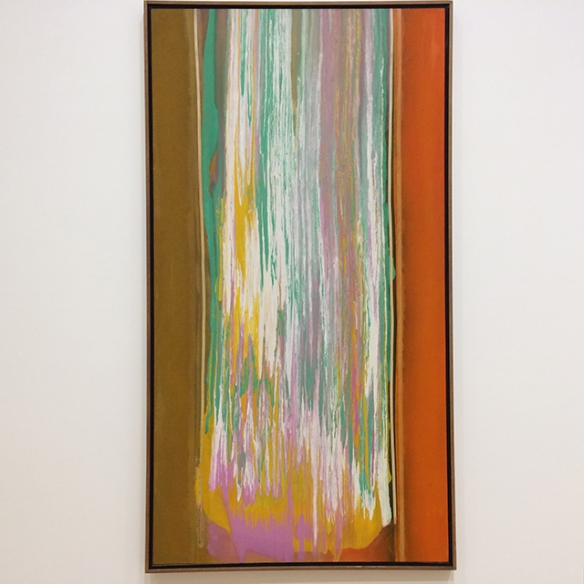
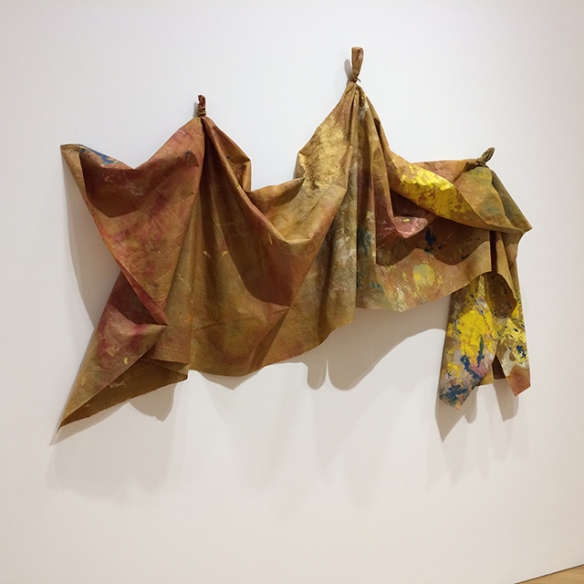
Nearby in the hub of galleries close to the Royal Academy, Pace Gallery is showing some of the American Abstract Expressionists. The dominant figure in this group, at least from an historic perspective, is Kenneth Noland, and the show builds on this popularity by also including works from other important artists from that movement including Frank Bowling and Sam Gilliam. The former has poured paint down the canvas and despite the absence of a brush, has created an elegant and ordered painted surface, evidenced by the clean boarders on either side of a main channel that comprises a complex multi-layered surface of paint. Meanwhile, the latter artist has removed his canvases from their stretchers altogether. They have been bunched up into a few hanging points and suspended from the gallery walls.

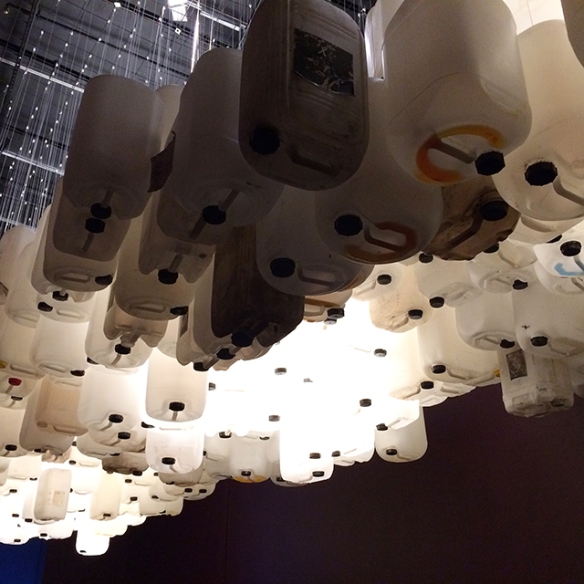
The London art scene is buzzing right now with the Basquiet show at the Barbican. Today’s run actually takes in a concurrent show in the building’s second gallery, known as The Curve. John Akomfrah has collected a multitude of chemical containers with their coloured residues still visible in white plastic grooves. He has then suspended them from the ceiling where they mingle with the lighting to create a stunning spectacle of glowing white plastic. The artwork actually references the anthropocene, an emerging name for Earth’s most recent age, and one that is characterised by human influence rather than geological change. On this account, the artwork draws more attention, in fact, to the pollution of these chemical containers than to their sublime beauty. Perhaps also on this solemn note, it is where today’s blog comes to a close, though the run itself would take in David Blandy at Seventeen, Omar Ba at Hales Gallery, Alan Belcher at Greengrassi and Abel Auer at Corvi Mora, all offering great exhibitions over the rest of the day.
901
Sanford Biggers of Massimo De Carlo on show, and for auction, at Phillips.
902
Stan Douglas at Victoria Miro with a manipulation of a jpeg file. These familiar digital files, used for storing images, use clever techniques to compress them and the artist has intervened in some way to produce an image that reveals this underlying technique as an image of its own.
903
Frank Bowling often represented in London by Hales Gallery on show here at Pace Gallery.
904
Sam Gilliam at Pace Gallery with a detached canvas.
905
John Akomfrah represented by Lisson Gallery showing at Barbican. These are chemical containers that the artist has used to represent, with some beauty, the Anthropocene, our current geological time period by some accounts.
906
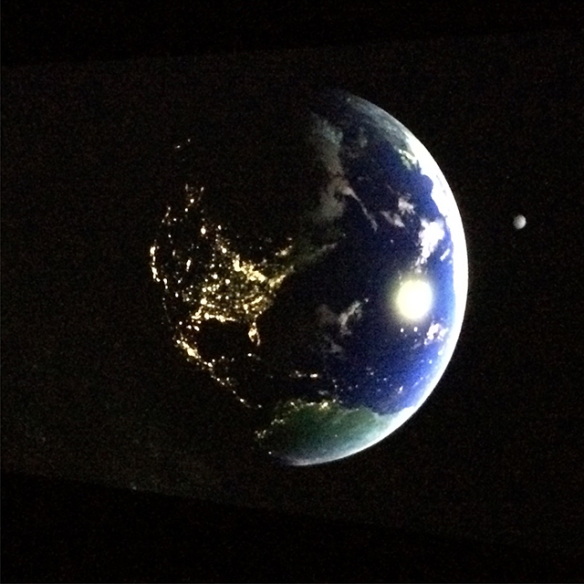
David Blandy of Seventeen Gallery with a digital reconstruction of the solar system.
907
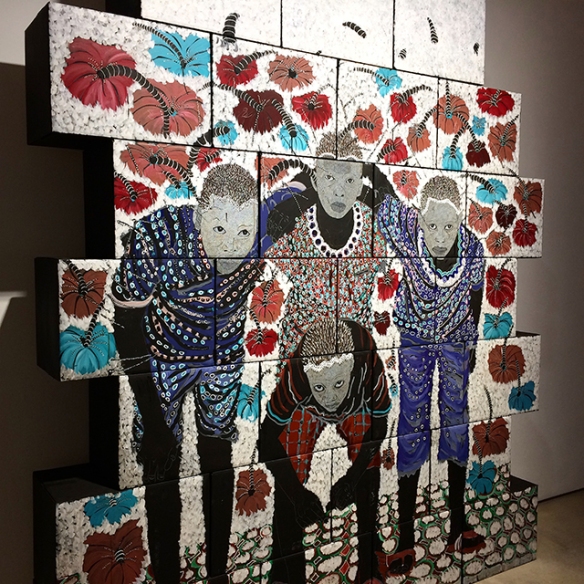
Omar Ba of Hales Gallery draws on the experiences of his native Senegal to develop his rich symbolic language in paintings.
908
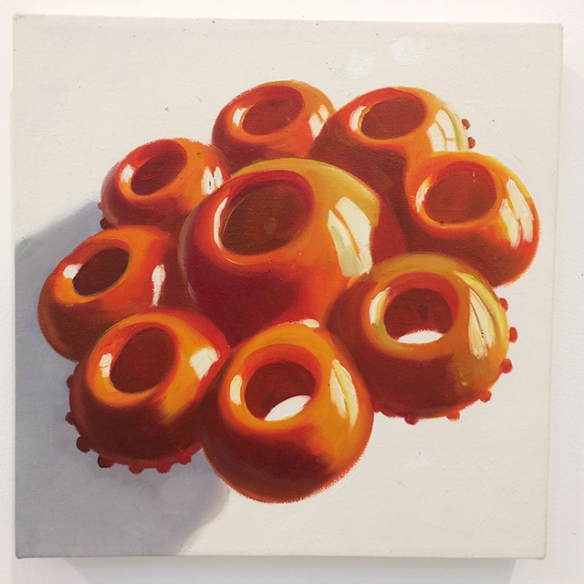
Alan Belcher at Greengrassi with paintings of geometric objects that accompany, in his show, paintings of ducks, fish and shellfish each having a surreal quality.
909
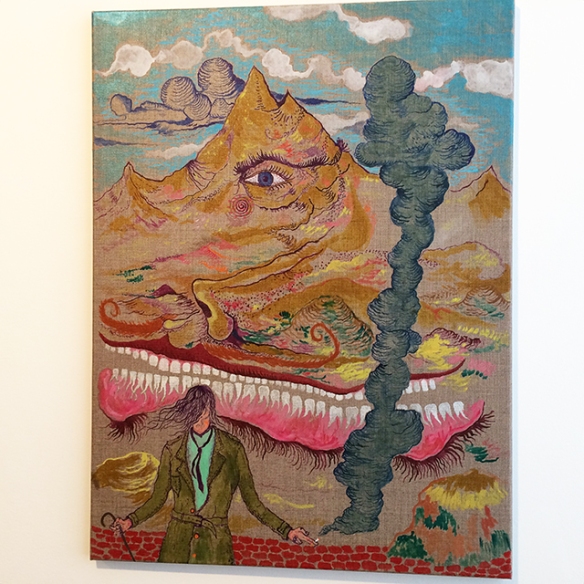
Abel Auer of Corvi Mora.
Gallery run 12th October

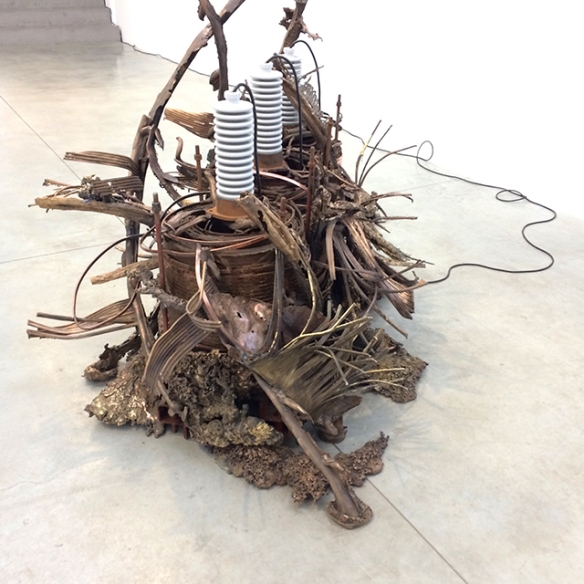
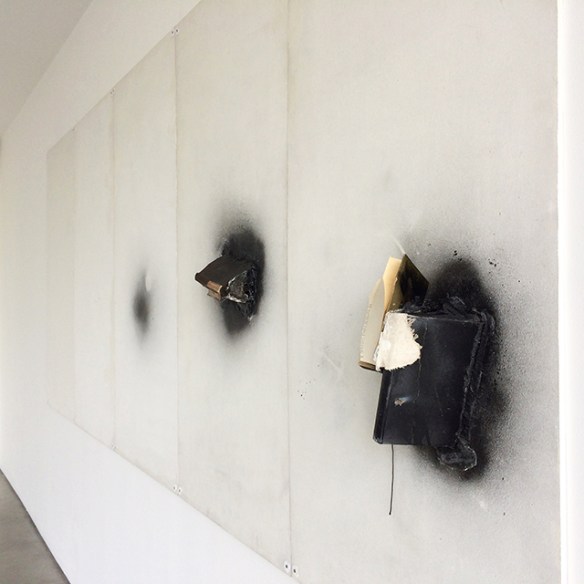
One of the most enjoyable runs is along the Regent’s Canal from Lisson Gallery to Wharf Road, where Victoria Miro and Parasol Unit are situated. Having been to neither gallery for a while there are new shows to see at each and with the addition of an exceptionally fair autumn day the planets are aligned for a good run. At Lisson Gallery, Allora and Calzadilla have installed a display that very obliquely criticises America’s policy towards Puerto Rico and other affiliated states. These states don’t get a star on the US flag and furthermore, according to the artists, suffer from the ambiguity of their legal status of being “Foreign in a Domestic Sense”. They are foreign in some respects and domestic in others but in a way that gives them generally a bad deal, as the critique continues. How could this critique be presented as an artwork?, one might wonder. Partly through drawing attention to the phrase above in its use as the show title and partly also through arguing that the work itself by a sort of mimetic response, embodies contradictory aspects in its own form. On display is a transformer plugged into a domestic power socket making a surprisingly large humming sound off what is presumably a 13 amp plug. With various bits of foliage and earth surrounding it, the electrical equipment does indeed seem to deliver this contradictory response to the viewer that the artists had hoped for. The artwork is actually rather scary to get close up to for the photograph.

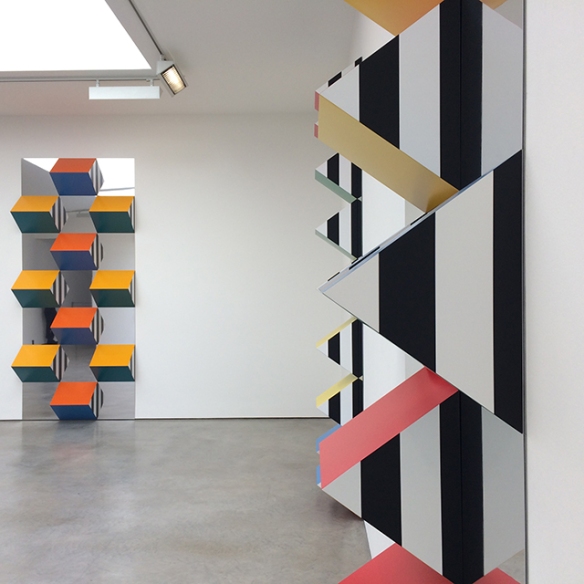
At the other gallery Daniel Buren has installed beautifully finished powder-coated, coloured modules against a mirror background. This encourages the simple conceit on my part of trying to pick up reflections from across the gallery and uniting the different modules in single camera shots. Buren’s characteristic 8.7cm vertical stripes unite all the modules together and this is a geometric feature which the press release diligently draws attention to.

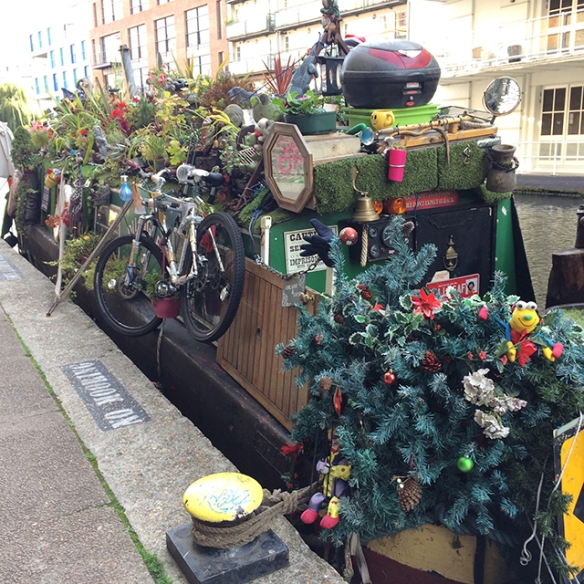
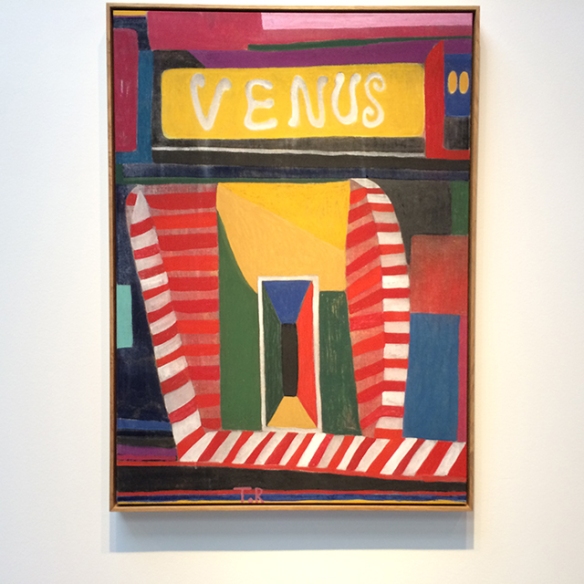
The canal is looking good today adorned by the sparkling sun and the towpath is full of walkers and cyclists. Though the canal is not a short cut, it allows the mind to switch off and soon enough one arrives at Wharf Road, 5 miles away. Tal R is showing his sex shop paintings which are a lot less explicit than they sound. Indeed it is the very barrier of the front door and plain facade of the shop that the artist likens to a physical barrier of the painted canvas. The critique continues that the canvas obscures various desires forever hinted at but unrealised through the medium of paint. The images are painted from photographs but rather than this being a negative feature in the sense that the images are only copies, the photographs add a performative aspect to the artwork. For these photographs are collected randomly by the artist’s friends and thereby remove some sense of the artist’s own taste and instead allow the subject matter to be presented as a simple phenomenon.

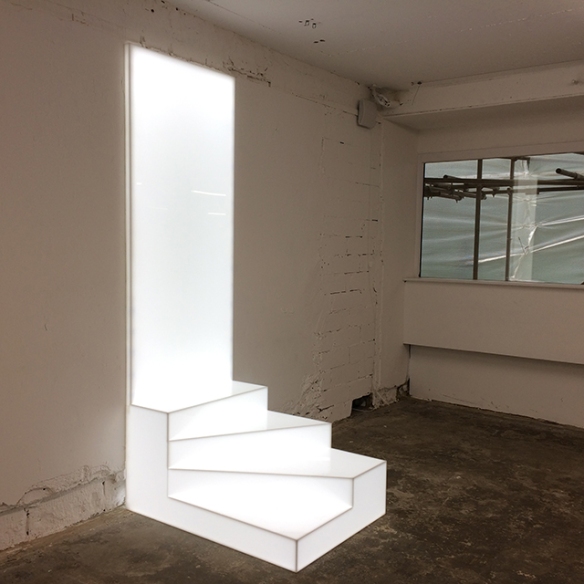
Having also seen some more great artwork at Parasol unit, the last destination is The Strand where Lisson Gallery have taken over a building. The building is scheduled for demolition and has temporarily assumed the name of Store Studios. Here the Lisson artists have executed some of their installations in this new setting and of particular note is Ryan Gander’s sculpture depicting glowing steps ascending to a rectangular doorway, which is actually a sheet of back-lit plexiglass. The effect is to suggest some transcendental ascent to those climbing those steps (but as they number only three and are built of plexiglass too, cannot be walked on) set within the shabby walls of the condemned building. With the index of Lisson artists largely addressed in this show and the earlier works from the morning further drawing from that index, the day has finished with a decidedly minimalist Lisson-like feel.

851
Daniel Buren of Lisson Gallery with wall mounted pieces based on his characteristic 8.7cm wide black and white stripes.

852
Allora and Calzadilla of Lisson Gallery. Foreign in a Domestic Sense is a legal American phrase which the artists feel is unfair to certain of its allies.

853
Regent’s Canal.

854
Tal R of Victoria Miro with his new series of paintings based on photos of sex shops, many of which were sent to him from around the world.

855
Martin Puryear at Parasol Unit with beautifully crafted sculptures.

856
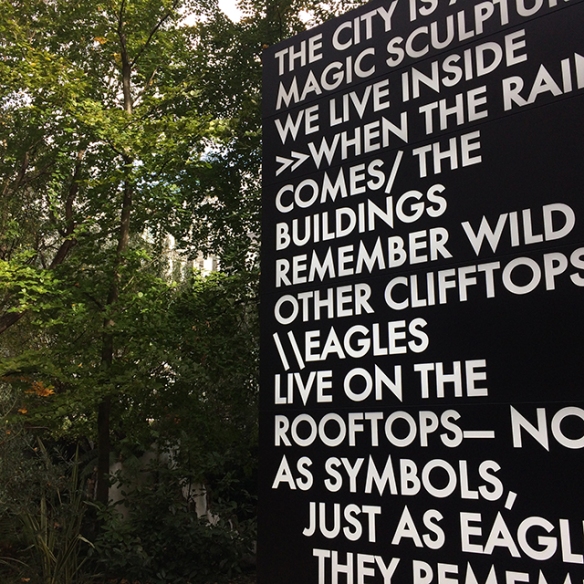
Robert Montgomery at the Parasol Unit with a large outdoor text piece.

857
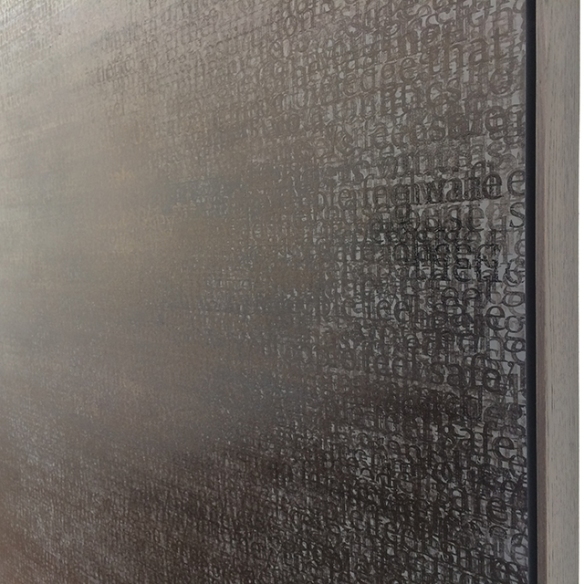
Idris Kahn of Victoria Miro with delicate text-based paintings.

858
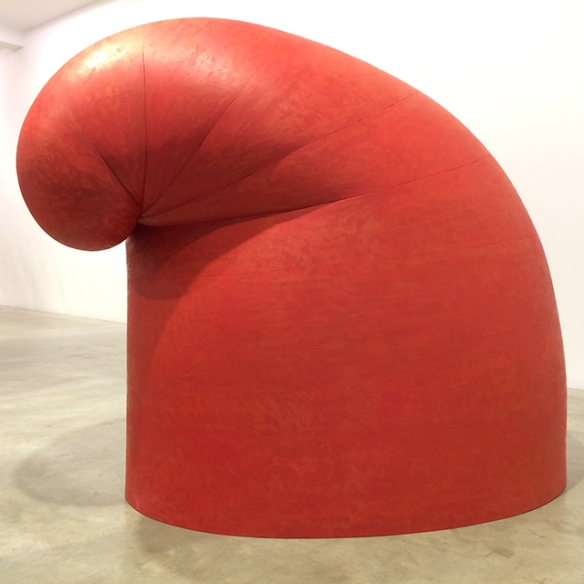
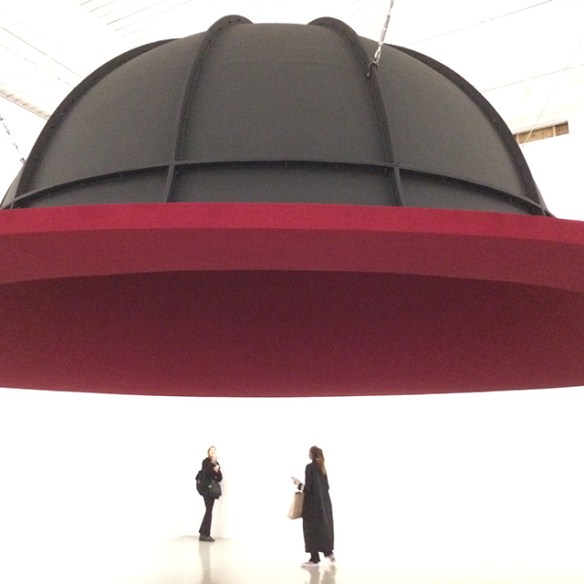
Anish Kapoor of Lisson Gallery showing at Store Studios on The Strand.

859
Ryan Gander of Lisson Gallery at Store Studios on The Strand.

Gallery run 11th August

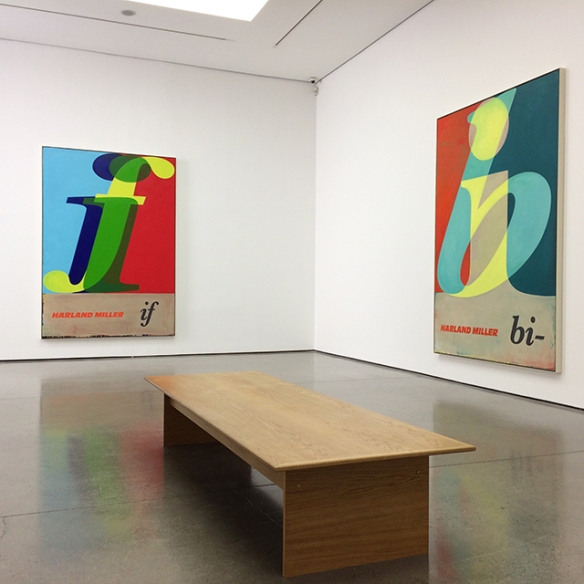
The day starts with a run up to White Cube Gallery near St James’ Park, followed by a visit to Gagosian just across Piccadilly and up past Berkeley Square. At White Cube, Harland Miller has painted more imaginary book covers using the 70’s style idiomatic of self-help manuals. He seems to look back at that era with affection and there is a suggestion in the blurb that it marked a time when such projects on oneself were seen as augmentative to an already ok self whereas now the self has become categorised by science as being afflicted by a range of disorders perhaps best left to the professionals to remedy. After these thought provoking issues, Peter Marino’s work consisting of several patinated bronze trunks, serves up a healthy serving of bling preventing any further circumspection of the soul. Above each of these floor-based works are priceless artworks by Bacon, Picasso and Warhol all hung on the wall. Taken from the Gagosian group of elite artists, these works provide a sort of imaginary setting which no doubt many rich collectors will identify with as home.

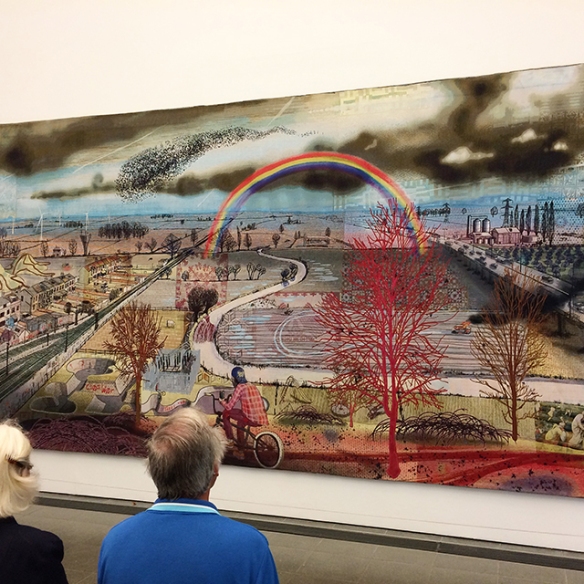
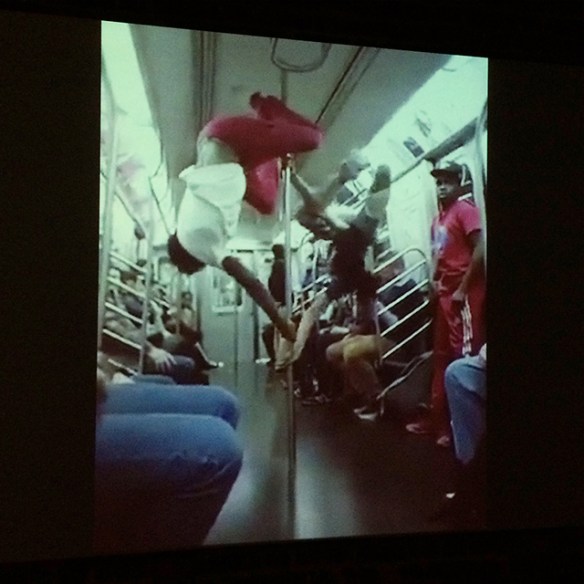
Initially when I then arrive at the Serpentine Gallery in Hyde Park and see the slogan “The most popular show ever” before being asked to queue, I wonder who might have written this in their revue. Then I realise it is the title of Grayson Perry’s new show. He is displaying vases and tapestries and some gloriously sumptuous bikes with cow horn handlebars, a motorbike and peddle bike. Judging by the crowds milling around these great exhibits, the show title rings true. Across the Serpentine lake in the Sackler gallery are more works by a black artist Arthur Jafa, exploring political and urban street life themes. My favourite work is a video showing a performance of two artists spontaneously taking over the central isle of a metro train and swirling around the central pole. As I snap the image and look at the photo, they are upside down with lights and seats receding into the distance creating a spectacle that looks like the astronauts on a space station. They are modern day “metronauts”.

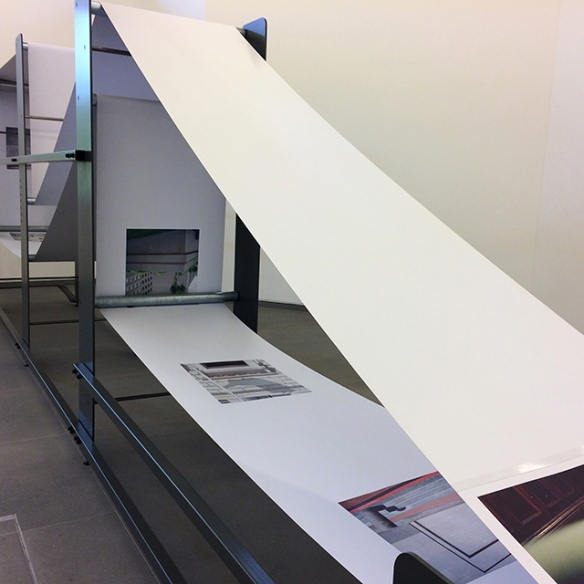
Finally the journey back south takes me to Vauxhall where Calla Henkel and Max Pitegoff are showing at Cabinet Gallery. In the middle of the gallery is a long one metre wide strip of vinyl which is being passed over motorised rollers in a complex system of zig-zags. Printed on this vinyl are occasional images of stonework lettering which, we are told, are addresses of American government organisations that have been carved onto their stone walls. Meanwhile in a sort of contra-punctual relation there are also images of the interior of an Irish bar in Berlin. Whilst the former is perhaps associated with military prowess, the latter still has associations of military exemption, a feature of Berlin life for many years. The structure of the present artwork in Cabinet alludes to a standard printing procedure of airing the vinyl strip to allow time for the inks to dry. But it is also suggestive of a much more poetical process whereby it is acting as a sort of collaging machine. Here the contrasting images from Berlin and Washington that have been printed onto the vinyl strip, whilst not actually drying together in a literal sense, are nevertheless settling together over time.

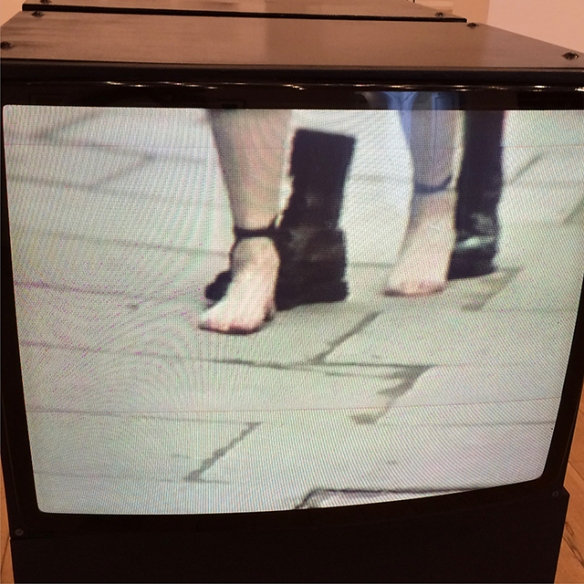
A short distance further south takes one to the South London gallery. Opposite is an important base camp for this final ascent, called Sophocles’ bakery which makes excellent cheese boreks. The placement of this bakery allows for a five minute walk, to consume the pastry, before arriving at the gallery. Inside Lubeina Himid has presented some collage-based works relating to her placement within a domestic and political culture and she carries an additional aura now as a Turner nominated artist. Meanwhile on a TV monitor is “roadworks” an early performance piece by Mona Hartoum. She walks barefoot through busy Brixton market and carefully drags DM boots attached by their laces behind each ankle seemingly oblivious to the constant chatter and comments. These video works under stressful situations, as they are described, perhaps helped to hone her abilities in making the powerful more static works she is known for today.

771
Harland Miller of White Cube with images based on imaginary book covers with very brief titles.

772
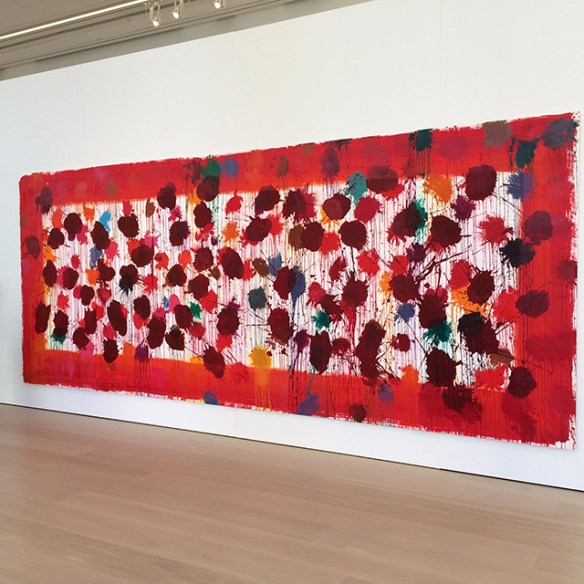
Howard Hodgkin large scale work.

773
Peter Marino at Gagosian Gallery in Davies Street with decorative bronze chests made in a classical style.

774
Grayson Perry of Victoria Miro Gallery at Serpentine Gallery.

775
Arthur Jafa at Serpentine Gallery with a performance of acrobatics in a metro train.

776
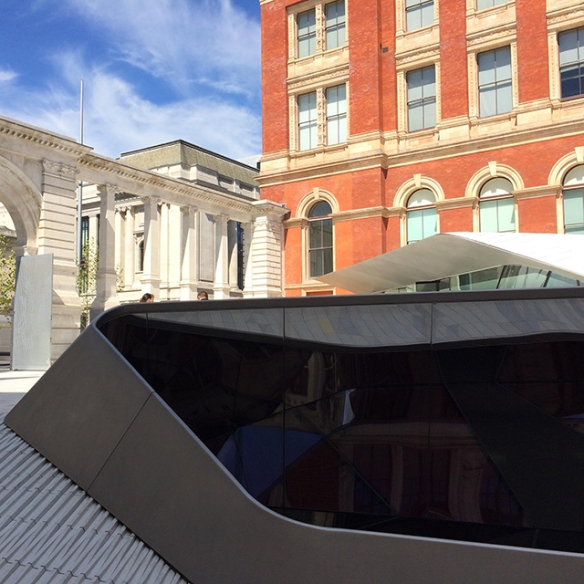
Victoria and Albert Museum have a new entrance and courtyard.

777
Calla Henkel and Max Pitegoff at Cabinet Gallery.

778
Lubaina Himid of Hollybush Gardens at South London Gallery.

779
Mona Hartoum of Lisson Gallery showing a performance by herself in South London Gallery.

Gallery Run 6th August

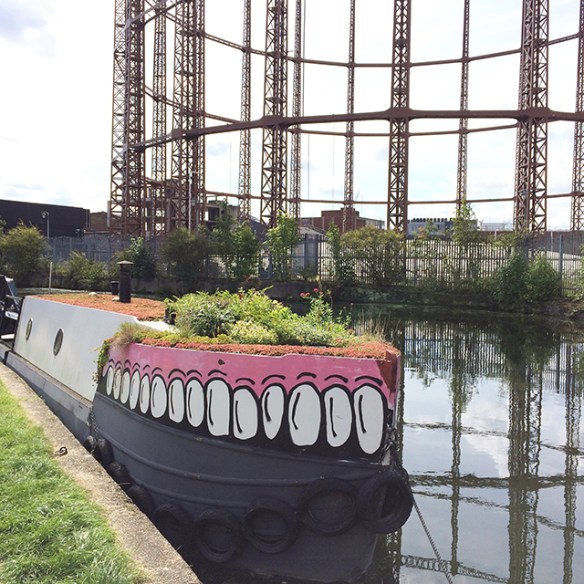
Sculpture in the City 2017 is a trail of artworks in London’s square mile and is the destination for today’s run. With the sun shining I head towards Limehouse Basin before taking an eastwards loop that comprises the three links of the Limehouse Cut, the River Lee and finally the Hertford Union Canal. Having effectively done three sides of a square, the loop rejoins the Regent’s Canal and the waterway makes quick progress along its direct route towards Islington. It drops me off at Old Street and from here there is only a short distance to go before the beginning of the trail on the A10 near Tower 42.

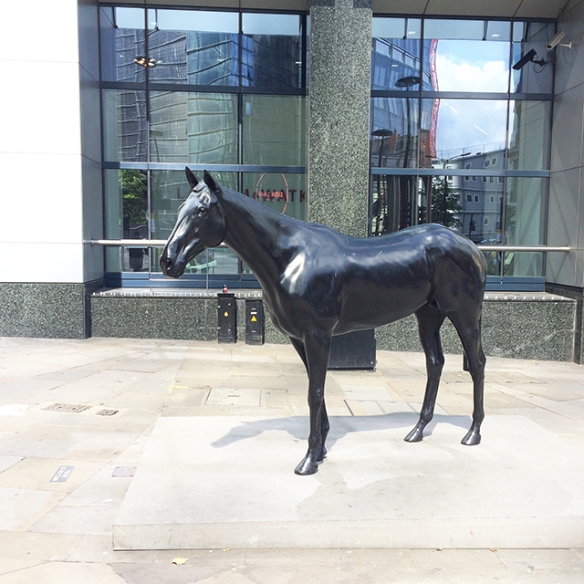
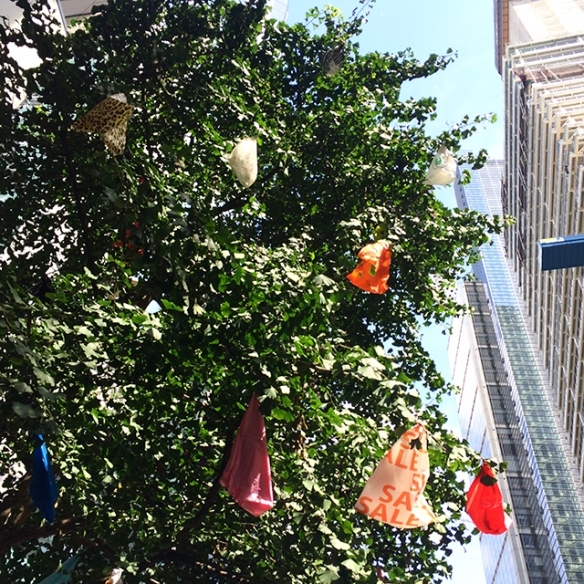
Mark Wallinger’s sculpture of a thoroughbred horse stands sleekly in the lunchtime sun absorbing the rays through a dark bronze patina. A group of children stand by it and pose for a family snap. Just down the A10 is the next piece by Martin Creed. He has used plastic bags placed amongst the branches of a tree to create a colourful spectacle whilst copying the manner in which an individual bag might create an unfortunate eyesore, thereby allying this attractive artwork to its antithesis created by chance from the city’s litter.

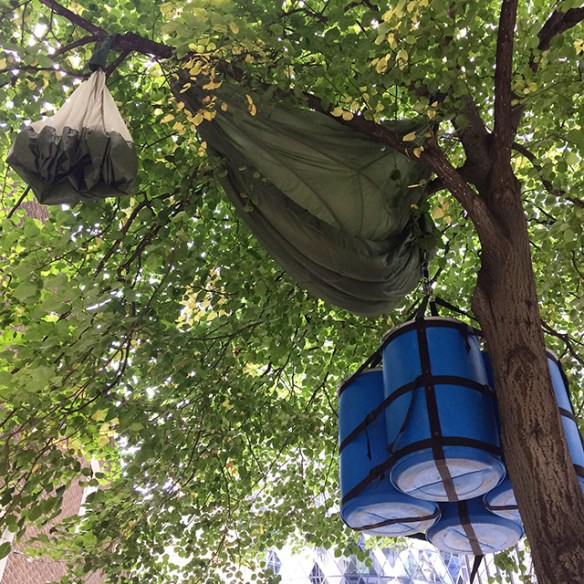
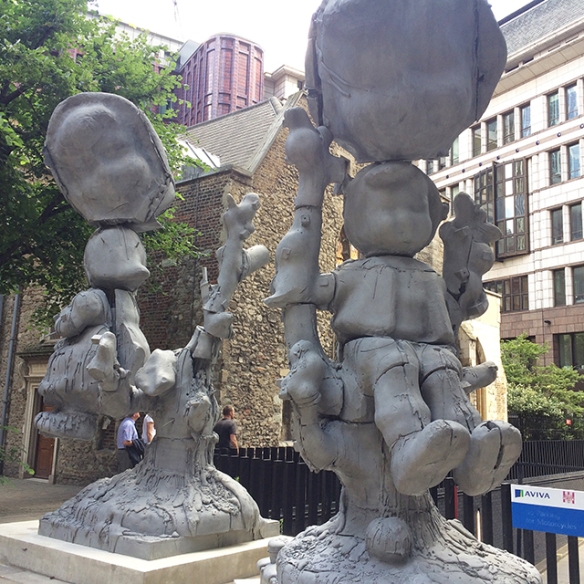
Last year the route was V shaped and the apex of the V was Leadenhall market. This had provided an enchanting gateway to the blue chip buildings that cluster around the core of the City in homage to some of the world’s finest architects. This year the destination is the same but the numbering of the trail suggests a more prosaic progress along the trail with a simple left turn off the A10. The magic is quickly restored, though upon seeing the next two artworks lit by shafts of sunlight that have made their way through this towering core of buildings. Ryan Gander’s artwork continues the theme of an incidental object that has attached itself to a tree. Not a bag this time but a parachute. Alongside this are four blue tanks and when put together the narrative suggests perhaps a vertical descent of some vital supplies over a last few fictitious seconds before becoming embedded amongst the branches one is currently looking at. In contrast, Paul McCarthy’s work nearby uses none of the resident objects in the plaza to create its narrative but rather through its scale looks as though it has always been here. It consists of two giant figures that are almost as big as the trees populating the plaza. Characteristic of the artist, little nut-like protrusions give the figures a cartoonish quality.

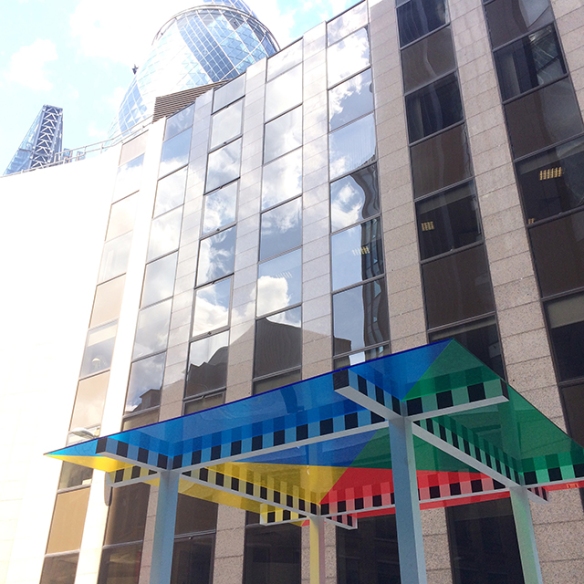
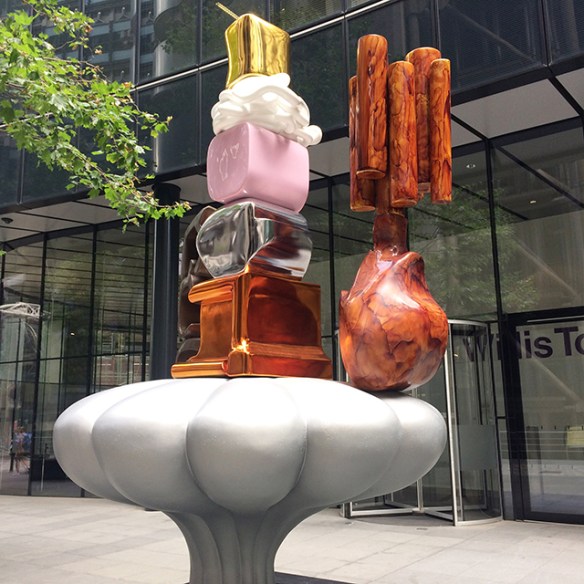
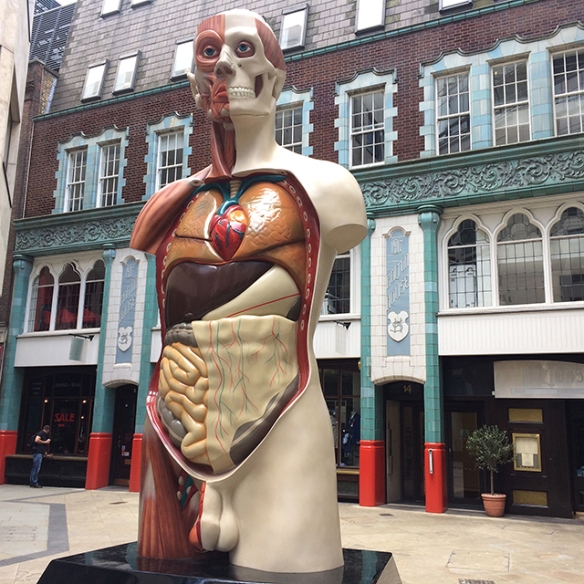
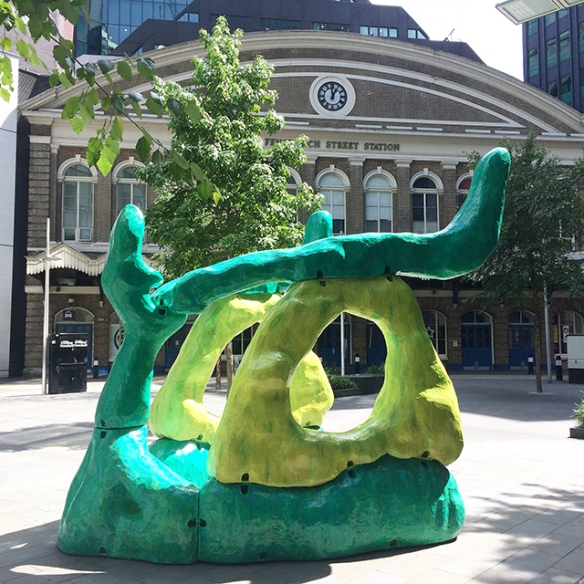
The remaining artworks are an eclectic mix. Daniel Buren presents a classic four colour composition with accompanying black and white striped frame whilst Gary Webb has used the natural colours of exotic materials to create a delicious looking sculpture stacked up like a fruit sundae. A little further along the street Damian Hirst presents a colourful bronze anatomical figure of a man. Finally Karen Tang’s piece called “Synapse”, a large fibreglass construction comprising five or six yellow and green sausage-like elements, gets the biggest endorsement of the day from a group of kids who rush over to it saying “wow”!

761
Regent’s Canal.

762
Mark Wallinger of Hauser and Wirth, Sculpture In The City 2017.

763
Martin Creed of Hauser and Wirth, Sculpture In The City 2017.

764
Ryan Gander of Lisson Gallery, Sculpture In The City 2017.

765
Paul McCarthy of Hauser and Wirth, Sculpture In The City 2017.

766
Daniel Buren of Lisson Gallery, Sculpture In The City 2017.

767
Gary Webb of The Approach Gallery, Sculpture In The City 2017.

768
Damien Hirst, Sculpture In The City 2017.

769
Karen Tang, Sculpture In The City 2017.

Gallery run 21st July

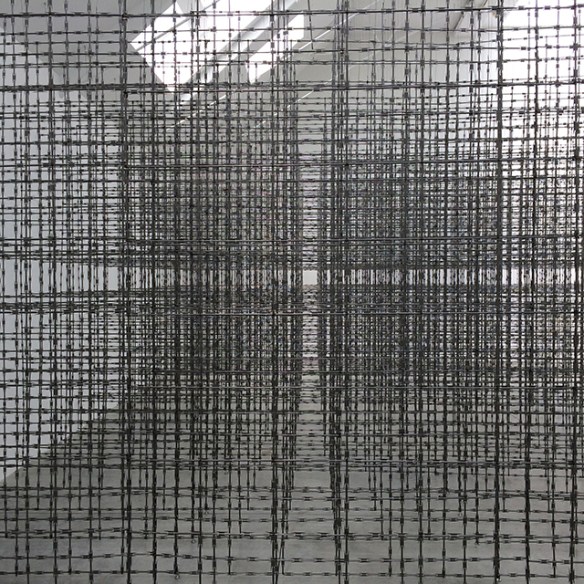
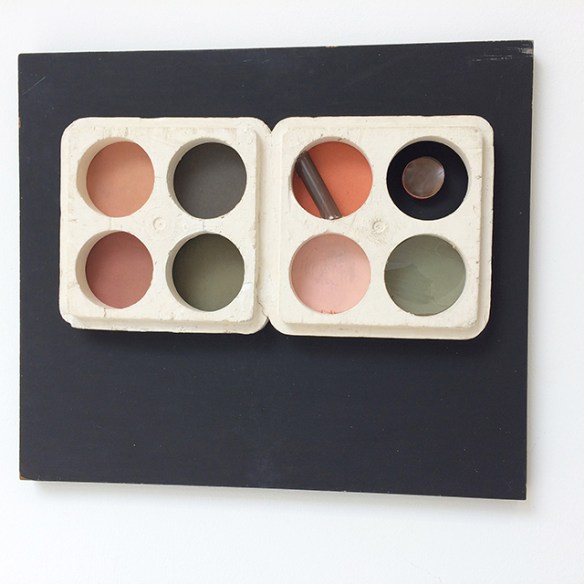
To get to Lisson Gallery, I jog along the green corridor of St Jame’s Park, Green Park and Hyde Park before cutting through the Paddington Basin and finally taking the underpass under the busy A40 and Edgeware Road. Lisson Gallery is hosting a group show themed around Chardin and in true Lisson spirit, the artworks are decidedly minimal as though the artists know there is nothing to be gained in trying to outdo the old master’s realistic rendering of light. The artworks are good though and include a great piece by Audrey Barker that looks like the palette of colours in an oversized make-up box. In the gallery’s other building, the central room has been filled with razor wire. Santiago Sierra creates spaces that are reminiscent of borders and boundaries to try to make us reflect on the effect of separation and the extreme measures sometimes used to enforce it. The grid pattern of the razor wire is actually remarkable on account of its regularity, allowing distinct shapes and patterns to be picked out from different viewpoints.

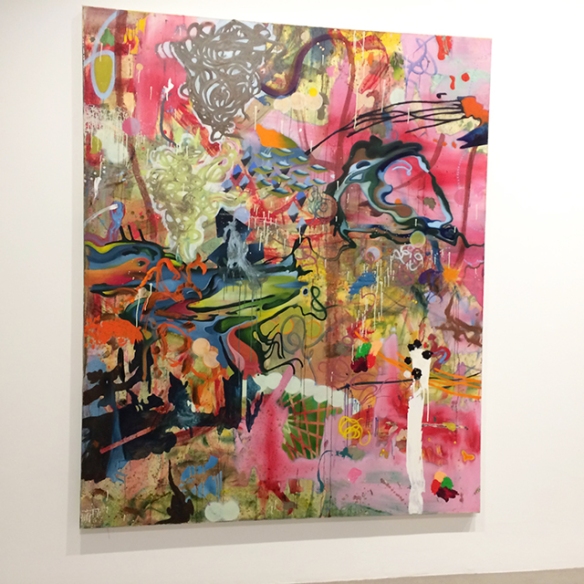
The next destination is Camden Arts Centre on the outskirts of Hampstead. Daniel Richter is showing a retrospective of his painting that includes figurative and abstract works. One of the latter works stands out as stunning having an enormous quantity of elements and layers to it. Meanwhile in an adjacent room a second artist, Jennifer Tee has made juxtapositions of woven fabrics and plastic objects that seem to be colour-matched and produce a strong overall effect of unity.

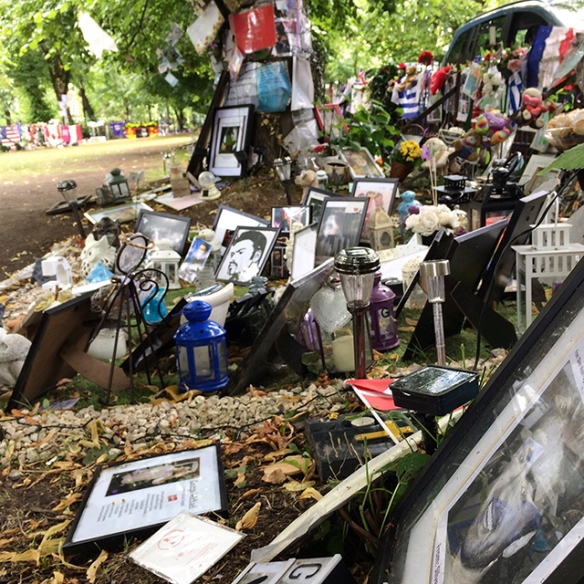
Jogging up to Highgate, a number of shrines come into view occupying a small section of tree-lined grassland cordoned off from the main village green. There are candles, flags and photographs and it quickly becomes clear that these are dedicated to George Michael. But there is also an intensity to the tributes suggesting that he really did die before his time.

After several more miles of green space, albeit with a dusty stretch through Angel, Wharf road plays host to the next gallery, Parasol Space. Vibrant work by Monique Frydman is on show. Close by, Stuart Shave Modern Art is showing the work of gallery artist Katy Moran. She has incorporated great brushstrokes into her paintings that seem to be made up of different colours, as though she loaded up the width of her brush with a selection of different colours. Then having been passed across the surface, the resulting strokes have brought these colours to life as coloured streaks which remain differentiated from their neighbours.

Finally Carl Freedman gallery is showing Nel Aerts. She has produced sublime cartoon-like paintings which portray the artist herself experiencing a period of slight isolation during a residency she was doing at one of Van Goch’s former dwellings. The gallery manager sneezes at the front desk which is out of sight and in that split second when I’m wondering whether to acknowledge it, he suddenly remembers that the gallery lights have been switched off and kindly rushes to put them on. The colourful paintings acquire an even greater intensity and new details appear.

741
Audrey Barker at Lisson Gallery with a fab palette of colours in an exhibition celebrating Chardin.

742
Santiago Sierra of Lisson Gallery with a no-go space full of razor wire.

743
Daniel Richter at Camden Arts Centre, with a retrospective of his paintings including this great abstract piece.

744
Jennifer Tee at Camden Arts Centre with a great, colourful installation.

745
George Michael shrines around trees on the way up to Highgate village from Hampstead.

746
Monique Frydman at Parasol Unit with great abstract pastels built up from rubbings and a vocabulary of repeated marks.

747
Katy Moran of Stuart Shave Modern Art with great multi-coloured brush strokes.

748
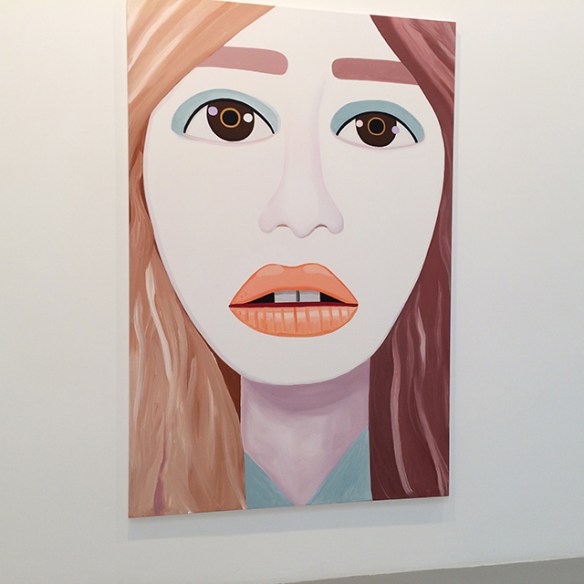
Fiona Ackerman at Beers London.

749
Nel Aerts of Carl Freedman with paintings and fabric cartoon-like figures, mainly the artist herself, inspired by a residency in a former home to Van Gogh.

Gallery run 14th June

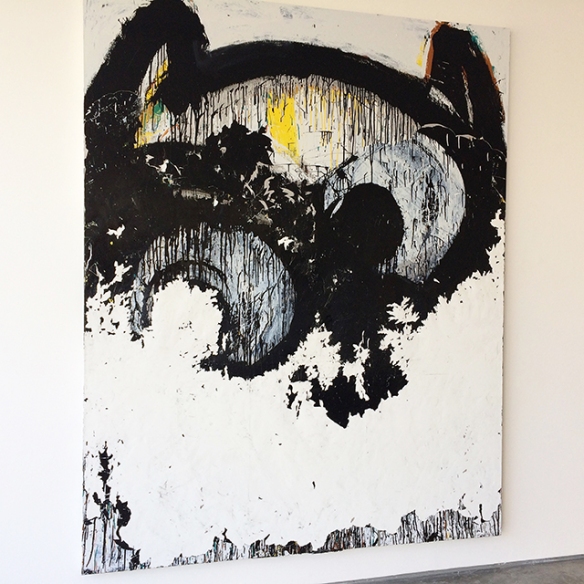
Today is scheduled to be hot at 27 degrees and suncream and a sports cap are necessary to protect against about 4 hours of direct sun. I head north west towards the Lisson Gallery using the most picturesque route available out of Peckham through a succession of small parks and across Lambeth Bridge. In gallery 1 Jorinde Voigt has beautiful drawings on display and the blurb explains that they are time based depictions of objects changing their appearances over time. We learn the artist was a cellist and of the possible connections between these drawings and musical scores. Meanwhile on close inspection the application of spray paint is immaculate and stands in contrast to the urgently scrawled text made as though by the hand of an experimental scientist. In gallery 2 Joyce Pensato has produced large paintings based on cartoon imagery ranging from Mickey Mouse to Batman’s mask. The application of paint is frantic and disorientating with hundreds of drips, scourings and a loose style more reminiscent of Abstract Expressionism than of Pop.

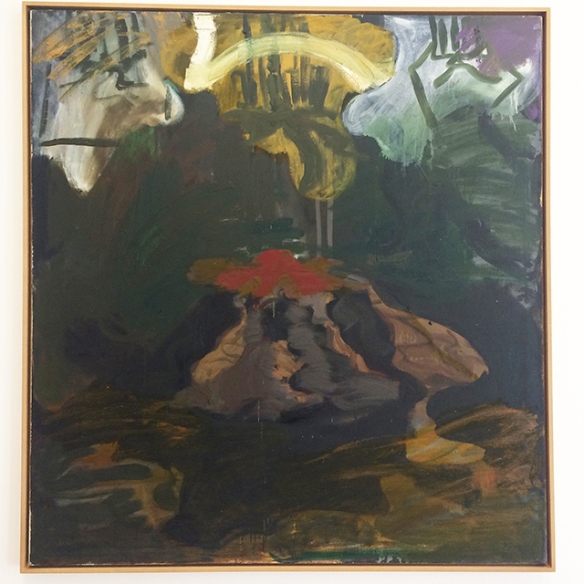
Then there is a short journey south to Michael Werner Gallery. The receptionist who always welcomes me is talking on the phone in Spanish, but still breaks off to give me a nod, and I make my way upstairs into the gallery. Marcus Lupertz is a geologist, we discover, and immediately the loosely rendered images take on a new dimension as though depicting living rock. A volcano bubbles away in one picture, at least to my imagination, but looks small and evokes no sublime terror but rather appears more domestic like a hot cauldron. Perhaps this is the effect of the artist’s own familiarity with his subject matter. David Zwirner is next a few streets away and here Lisa Yuskavage has painted large scale nudes, men and women in pairs, which can be linked to small jewel like studies shown upstairs. I admire her ability to work from studies in this way without losing any of the vitality of the original. Nearby at Victoria Miro, Milton Avery has produced beautifully rendered landscapes and portraits. We are told in the press release that he was influential to Rothko. A buyer asks for a quote and I overhear a figure in excess of £100,000 for one of the works on paper. This is A list.

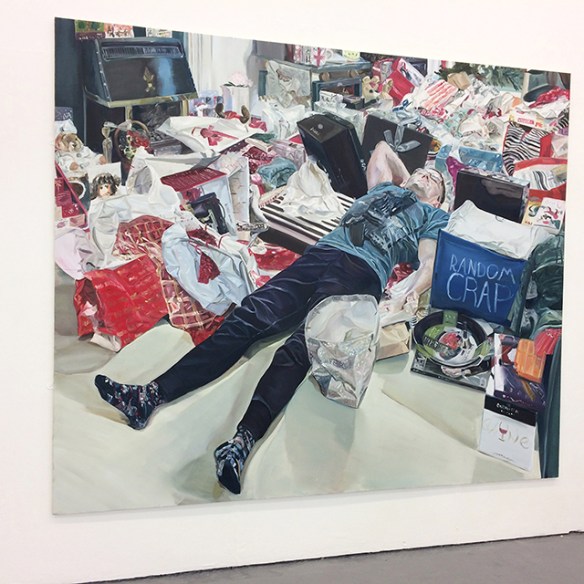
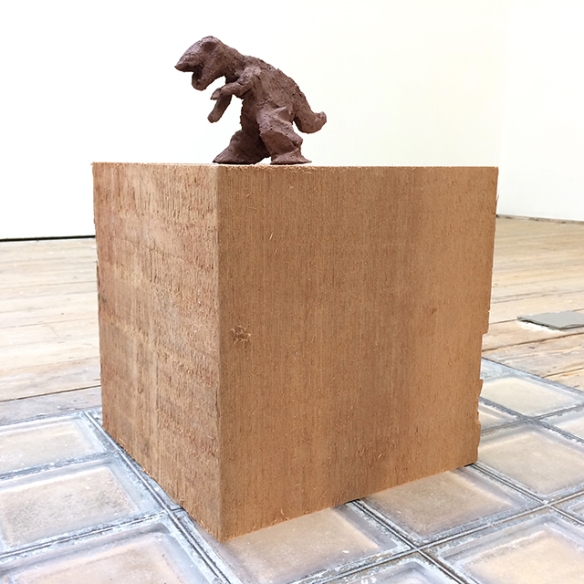
In the art colleges the student shows are continuing this week and it is the turn of the Slade MFA and PHD students to exhibit. A striking painting by Georgina Lowbridge depicts a man lying down amongst a pile of beautifully painted clutter. A young woman comes up and asks what I think of the paintings, and knowing they are hers I dutifully reply they are great, which is easy to say, in fact, because they are. After a great discussion about life at the Slade I mention that I had tried to see Florian Roithmayer’s work of cast clay on show in the observatory, a small circular building in the quad, to find out more about the PHD programme. In fact the building had been locked for lunchtime, though I didn’t mention this, but nevertheless had peered through the windows into the darkened space to his three mysterious sculptures. The most striking was a slab of clay, pinched and squeezed in a way, now quite familiar to abstract sculpture, but somehow there is excess here as though the slab has had a real going over.

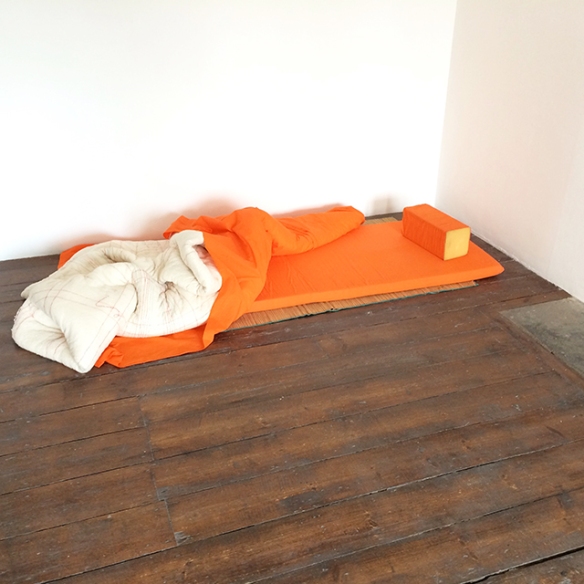
Back south the monthly visit to the Greengrassi, Corvi Mora complex in Kennington offers ample rewards with Anne Ryan displaying cutouts in the larger of the two spaces whilst upstairs a bed with bright orange sheets lies tucked in the corner. Its placement next to the concrete floor slab of a defunct fireplace merged now into the smooth white wall of the gallery, reminds me of nights spent by the fire in a small squat nearby. But the bed has rich memories of its own as a press release depicts an old photo from the 70’s showing the sculpture in its original exhibition at New York’s 303 gallery.

691
Jorinde Voigt of Lisson Gallery with intricate drawings using a style that’s almost scientific.

692
Joyce Pensato of Lisson Gallery with great cartoon imagery.

693
Markus Lupertz of Michael Werner Gallery with striking free brushwork in highly charged landscapes. As he was a geology graduate also, I fancy this to be a volcano but with unusual vantage point.

695
Lisa Yuskavage at David Zwirner London with powerful figurative paintings.

696
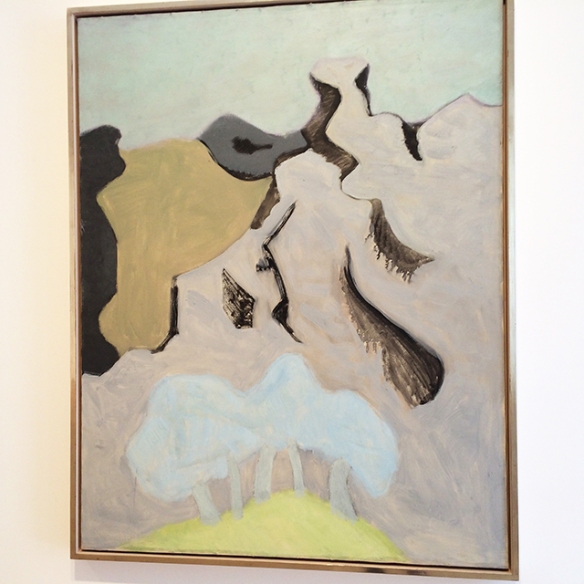
Milton Avery at Victoria Miro Gallery. This landscape has a beautiful use of colour including the delicately painted pale blue trees.

698
Dominic Dispirito at Slade School of Fine Art with great spray painted artworks.

694
Georgina Lowbridge completing her MFA at Slade School of Fine Art with three great paintings including this one. She told me she had sussed out using this clean and carefully limited palette of colours during the course and it certainly seems to work.

697
Anne Ryan of Greengrassi with a new move away from her narrative paintings. The installation is made up of over 100 cut-out images.

699
Rirkrit Tiravanija of Pilar Corrias exhibiting in a group show at Corvi Mora.
The artwork uses the space well and reminds me of a mis-spent gap year living in squats.

Gallery run 5th May

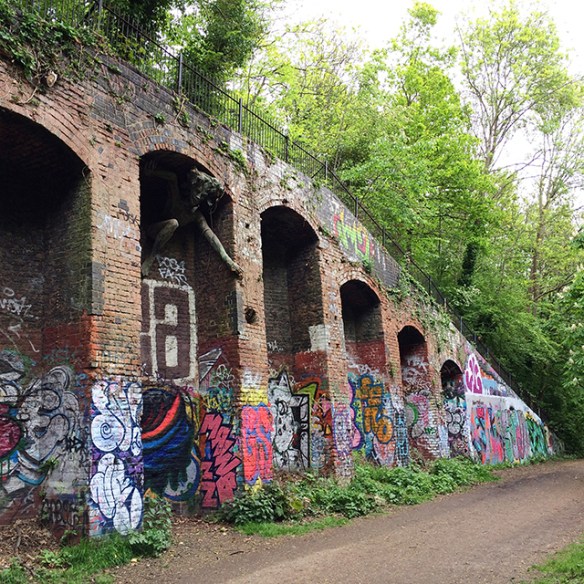
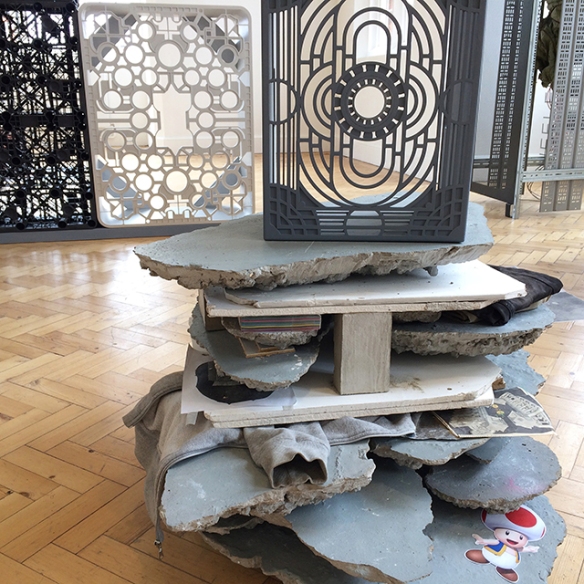
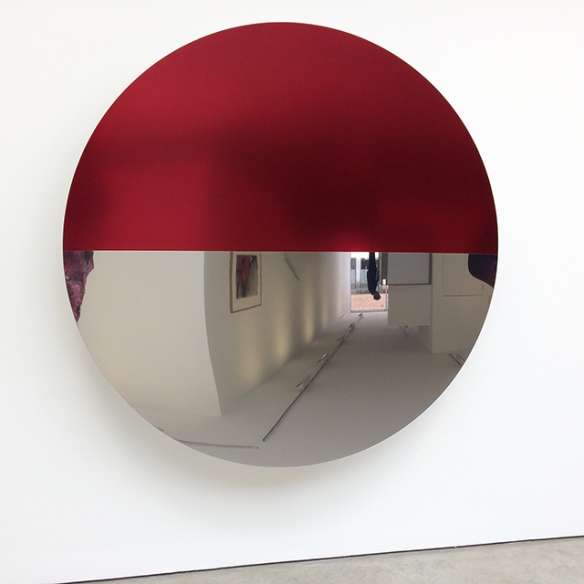
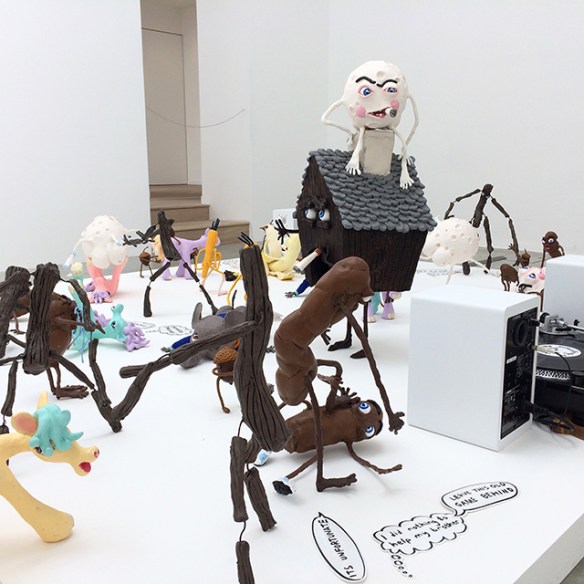
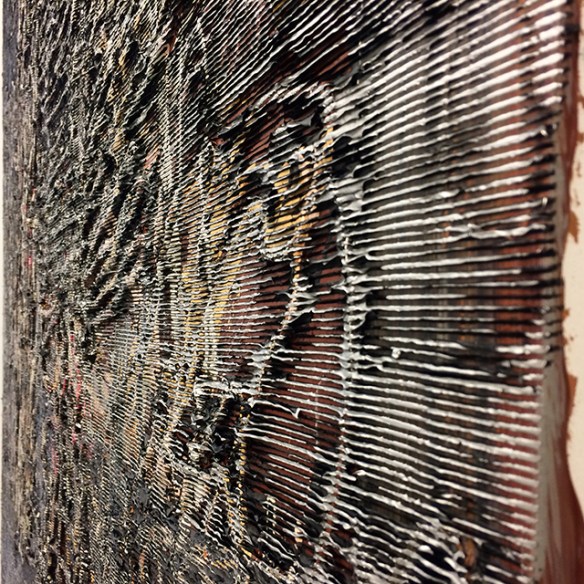
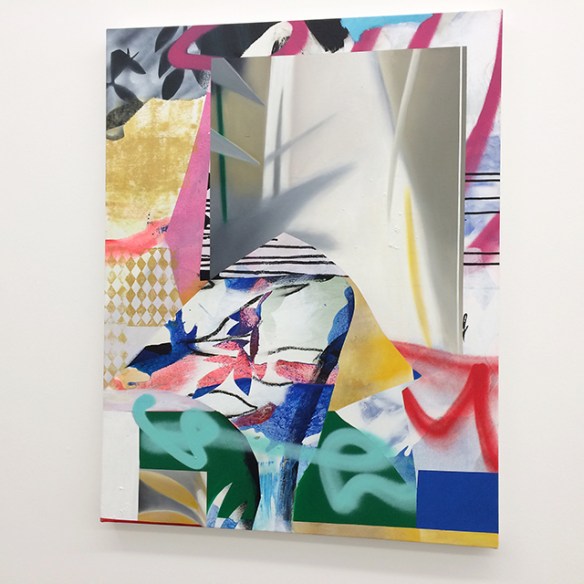
This week’s run is the big one up to Highgate which I do when a new show is on at the Camden Arts Centre near Hampstead. There is just enough time to get round the 6+ hour circuit and with the sun shining, I set off. First stop is Brick Lane to pick up an apple strudel from Bagel Bake and build up the carbs. Then north to the Regent’s Canal…Islington….Finsbury Park….Parkland Walk. This is a stunning disused railway line with trees and graffiti. A mother panics briefly as her child has lagged behind, but quickly reappears thankfully and jogs on past me. A bicycle bell then rings behind me and as I step to one side a child thanks me as she shoots past catching up with her mum. Then onwards to ….Highgate….Hampstead Heath….two ponds and Louie’s and more carbs. Then the steep decline of Arkwright Road before arriving at the Camden Arts Centre. As I read the blurb on the hallway wall before going into the gallery, the assistant sneezes. “Bless you” seems a good thing to say. Going into the gallery, the name Paul Johnson seems familiar to me from the list of artists I have memorised from the galleries on my running circuits. Bruce Haines gallery possibly. This is confirmed by the BH gallery’s homepage, news splash. Sculptural shapes dominate the space, some carefully manufactured and others made from stacked detritus. Together they create a strong unified installation. In the gallery next door Greta Bratescu, who is still making work in her nineties, has a retrospective with some beautiful little drawings accompanying photographs and stitched fabric. Then it is south to Lisson Gallery. Anish Kapoor is showing new work including a concave mirror with the top half edited out using an unreflective layer. The effect is striking as the reflected objects move in relation to this stationary surface responding to the viewer’s own movements. Further down Bell Street at the other gallery, Djurberg and Berg are showing cartoon-like characters that have submitted to base desires and appear to be having a great time in their rectangular tableaux world. At Gagosian Gallery further south I enter the darkened setting of a Picasso show featuring bulls and minotaurs. An attendant shakes his head as I point to the phone and therefore no photo but a great show and some beautiful paintings. In Simon Lee Gallery there is the smell of fresh paint. The paintings have been covered in a silver surface which has then been raked off to reveal colourful underpainting. Then the final leg south to the building that jointly houses Greengrassi and Corvi-Mora. Downstairs Brian Calvin has made pop-art style portraits that are very expressive but beautifully simplified. Upstairs Giuseppe Gabellone has made a carefully crafted crate from bamboo and carved supporting units into which some organic shapes gently nestle. That is the ninth and last photo of the day.
647
Parkland Walk is a disused railway route turned into a nature reserve.

642
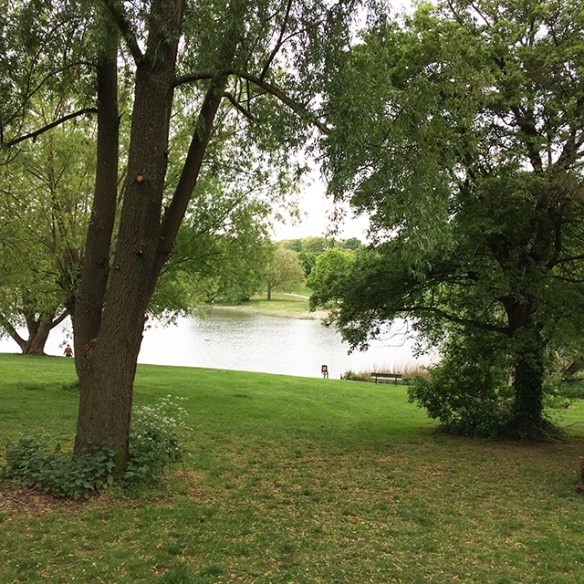
Hampstead Heath pond which I passed on the way back south from Highgate.

644
Paul Johnson of Bruce Haines Mayfair showing at Camden Arts Centre with sculptures mingled with consumer detritus.

648
Greta Bratescu at Camden Arts Centre. Drawings and thought provoking objects from the nonagenarian artist.

645
Anish Kapoor of Lisson Gallery with beautifully crafted concave mirrors and other objects.

643
Nathalie Djurberg and Hans Berg of Lisson Gallery with objects and cartoon-like figures doing whatever they want with no inhibitions.

649
Garth Weisler at Simon Lee Gallery with layered paintings all presenting a pleasing silver grid line surface.

641
Brian Calvin showing at Corvi Mora with simplified but expressive faces.

646
Giuseppe Gabellone at Greengrassi with what looks like a flat-pack object, but presented on a crate that follows the organic outlines with some of its wooden structure.

Gallery run 3rd February

East to West via Parkland Walk.

528
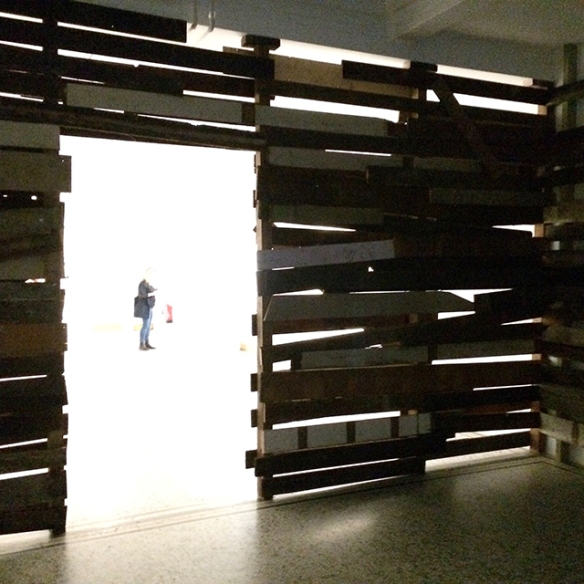
Joachim Koester at Camden Arts Centre with video installations and plank walls. The performers on film do dance-like moves which awaken memories of imitating films as children.

529
Brick Lane

527
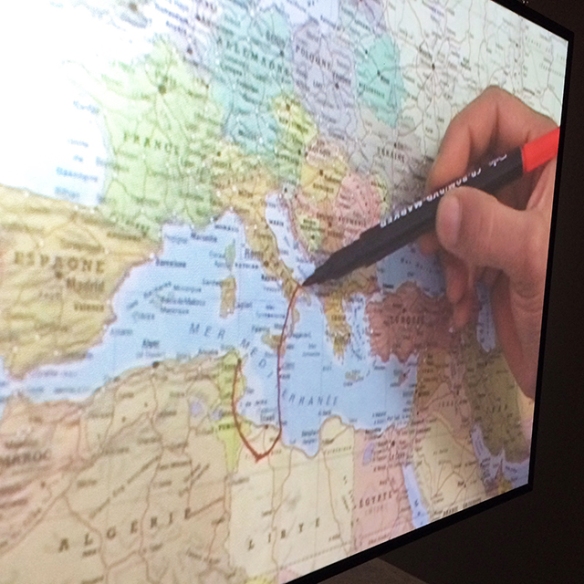
Bouchra Khalili at Lisson Gallery creates new maps of Europe with marker pen as he relates stories of people’s migration. There was a loud bellowing horn-like sound which I presumed to be a sound affect representing the arrival at a port, a major theme in this work.
It actually turned out to be workmen next door using some kind of heavy machinery as part of renovations.

526
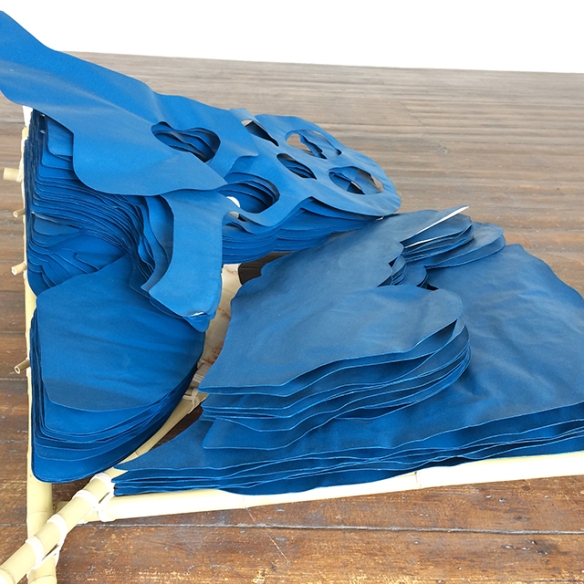
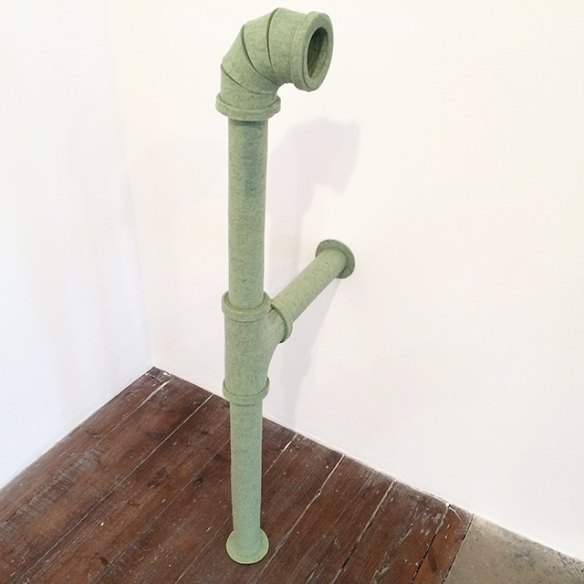
Johanna Unzueta at Greengrassi with felt pipework. Part of the Condo gallery exchange project.

525
Brad Grievson at Arcadia Missa in Condo an art exchange project featuring International gallery artists in London galleries.

524
Tomoaki Suzuki of Corvi Mora with carved miniature figures.

523
John Latham of Lisson Gallery.

522
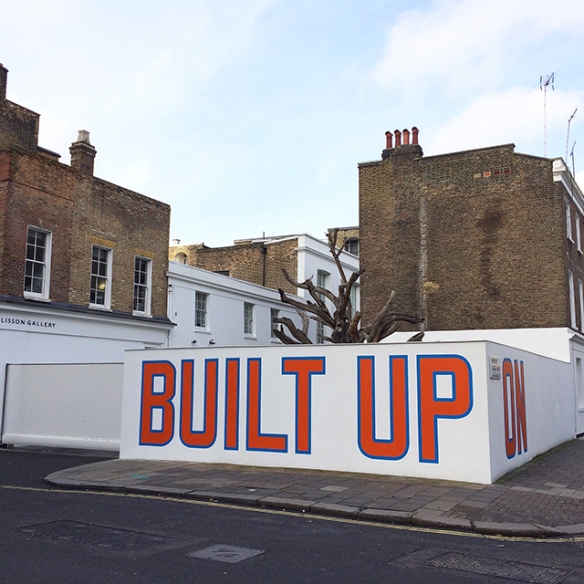
Laurence Weiner at Lisson Gallery with a text piece on a wall surrounding a rather elegantly pruned tree.

521
Karin Ruggaber of Greengrassi.

Gallery run 5th January

Lisson Gallery to Hackney on Regent’s Canal then SLG.

481
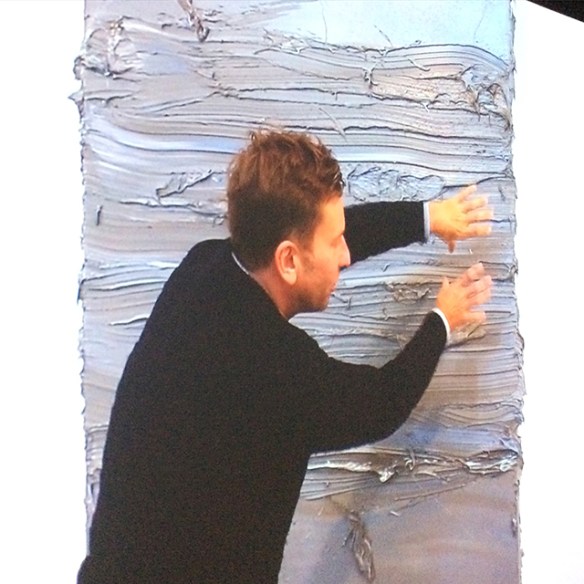
Jason Martin of Lisson Gallery in a film at the gallery with his exhibited paintings, describing the paint moving technique he has returned to after 20 years.

482
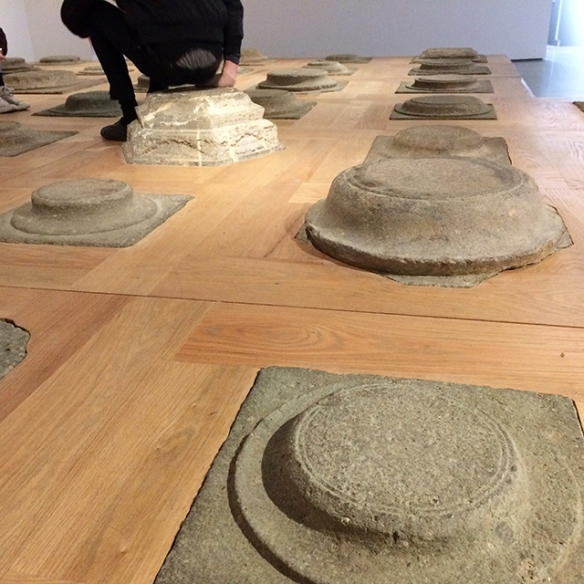
Ai Weiwei at Lisson Gallery with parts of a Chinese hall. Sitting on the stones is encouraged.

483
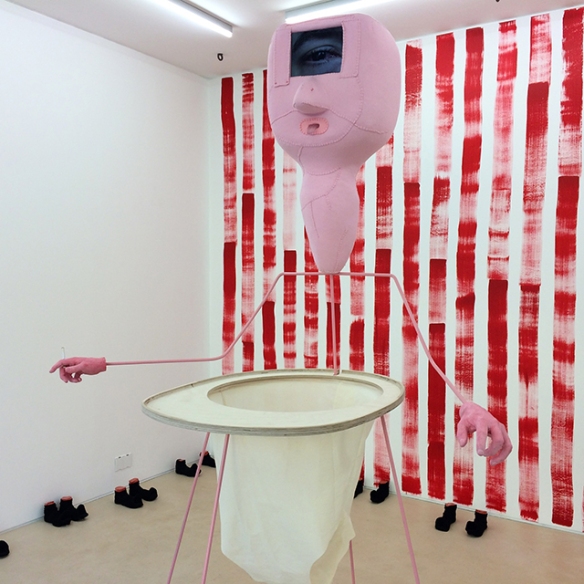
Jonathan Baldock at Peer with Emma Hart showing a giant baby walker in a less than flattering portrait of domestic bliss. Love Life.

484
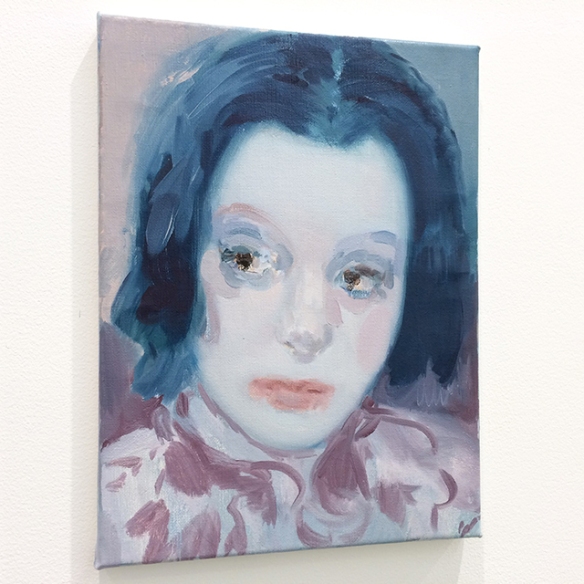
Kaye Donachie of Maureen Paley in a group show.

485
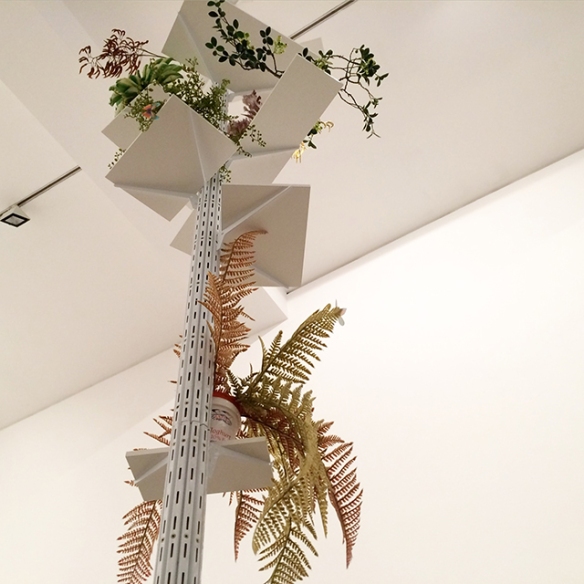
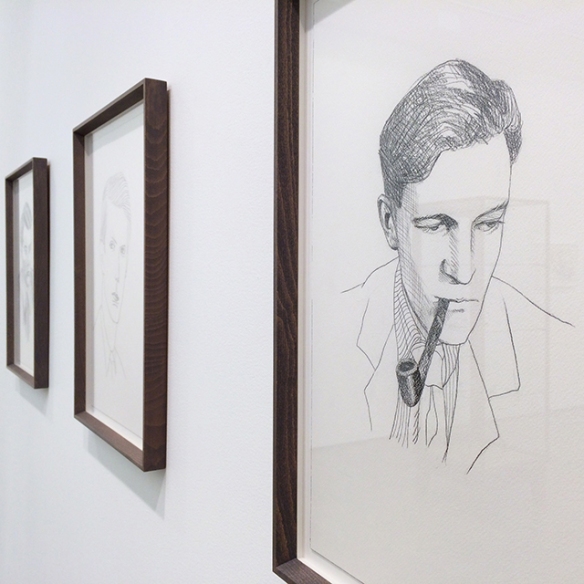
Silke Schatz at Wilkinson Gallery with work relating to political events whilst nature makes cameo appearances. A plant tree using shelf spurring.

486
Lucy McKenzie showing at Maureen Paley with images of our 4 infamous spies. Kim Philby.

487
Emma Hart at Peer with a two person show based on Punch and Judy called Love Life where domestic bliss is punctuated with arguments and repetition.

488
Brick Lane road sign.

489
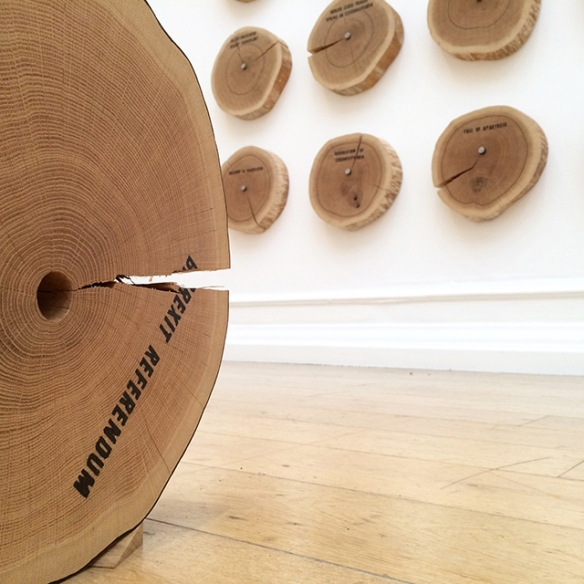
Roman Ondak at South London Gallery on day 99 of his 100 day show. 100 slices of oak tree each bearing annual events of the last century are transferred from floor to gallery wall. Just one peg left for this Brexit slice.

Gallery run 27th October

Regent’s Canal from the west to Hackney.

411
Tony Cragg at Lisson Gallery with sculptures inspired by organic and technological forms.

412
Maureen Gallace at Maureen Paley with work inspired by the artist’s local landscape.

413
Eddie Martinez of Timothy Taylor at Frieze 2016 sculpture park.

414
Rallou Panagiotou at Ibid Gallery with sculptures inspired by a derelict holiday resort.

415
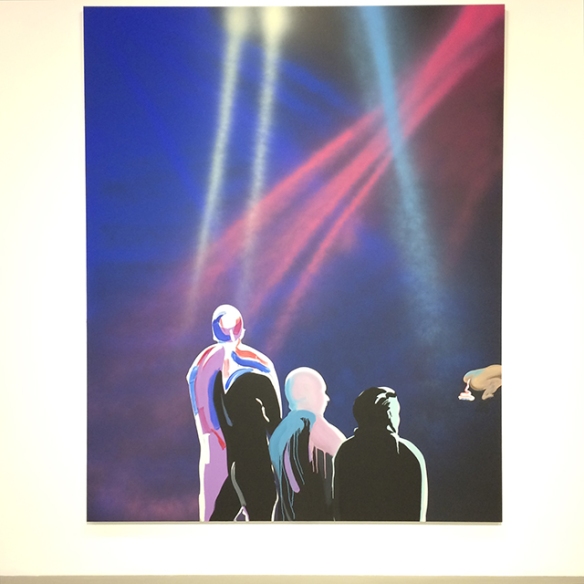
Tala Madani at Pilar Corrias with a metaphysical take on disco.

416
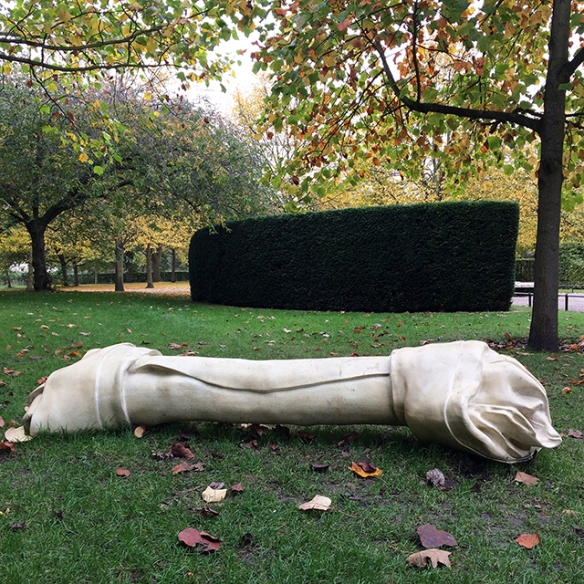
Nairy Bagrhamian at Marian Goodman Gallery in Frieze 2016 sculpture park.

417
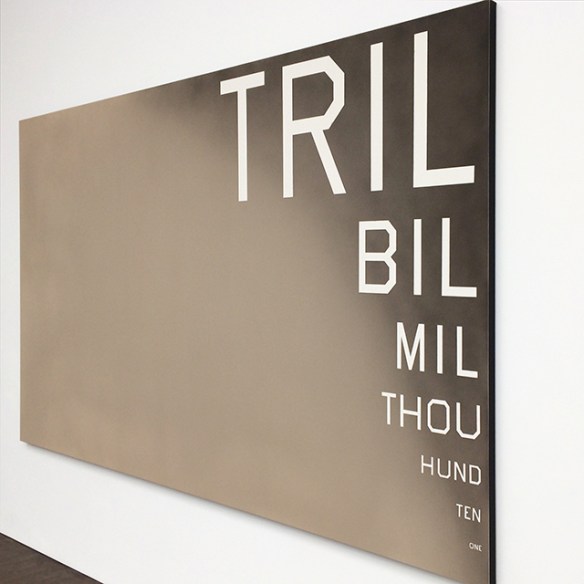
Ed Ruscha at Gagosian with works exploring ideas of extension in space and time.

418
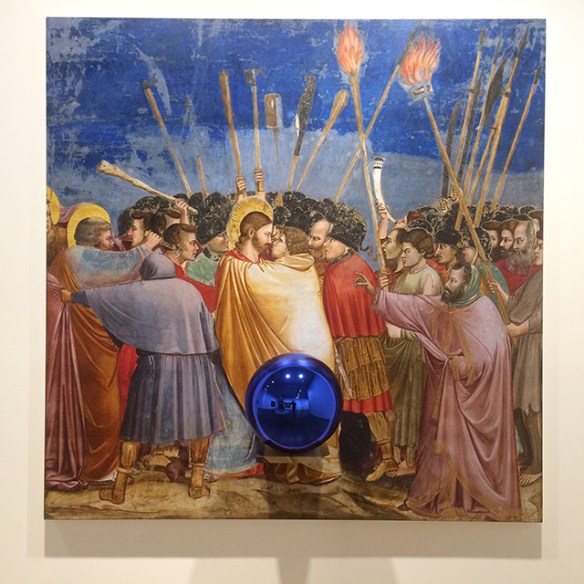
Jeff Koons at Almine Rech with recreations of old master paintings bearing a mirror ball. Inspiration from Kiss Of Judas by Giotto at The Arena Chapel in Padua.
419
David Adamo at Ibid Gallery with small figures on ceder plinths.